
In a small town in the south of France, a group of grown adults once gathered in ceremonial robes to settle a debate about beans. They were deadly serious. The beans, they insisted, were a matter of honour.
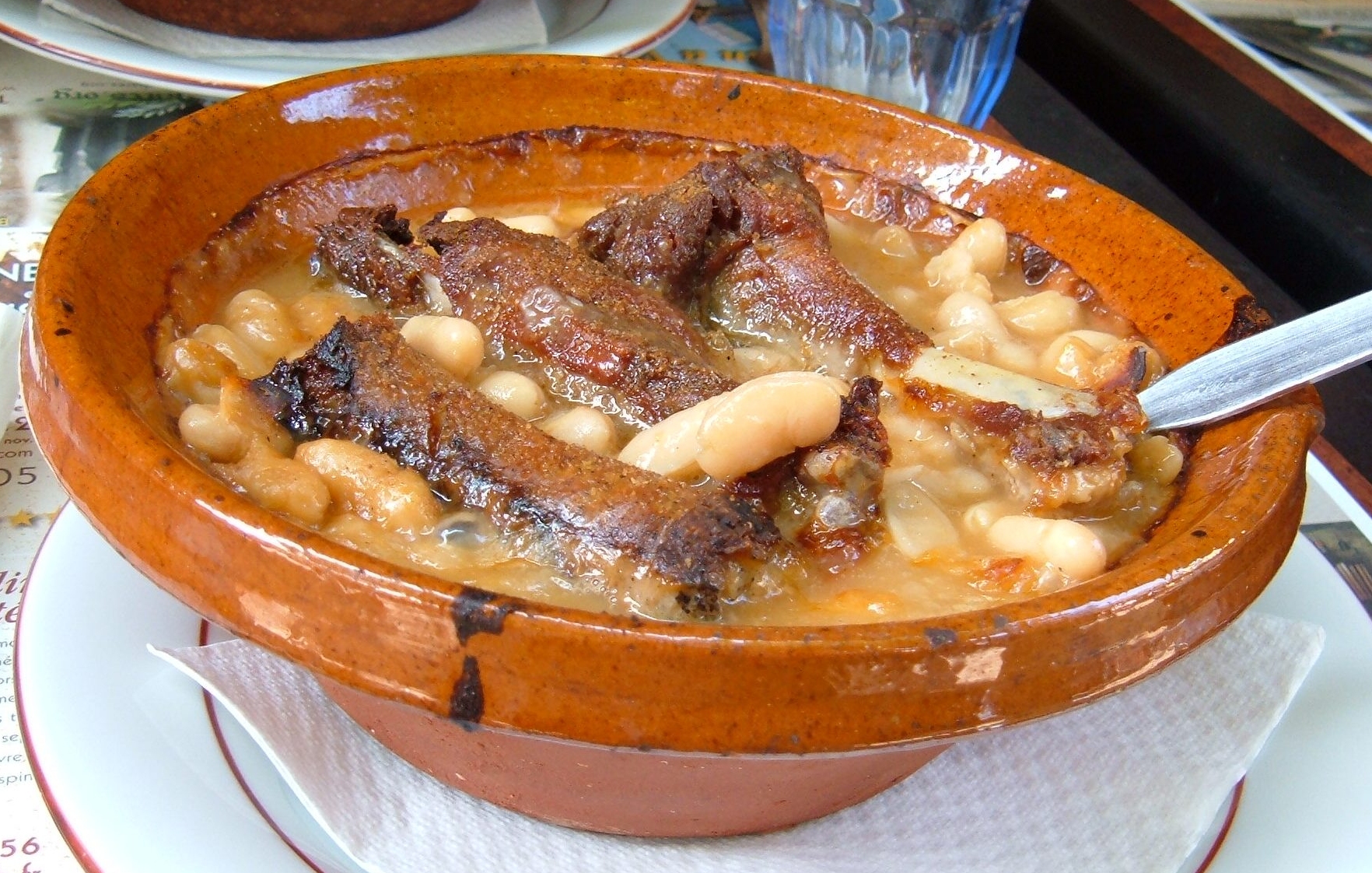
That is the world of cassoulet — a slow-cooked stew of white beans and meat that has divided the Languedoc region of France for the better part of seven centuries. Three towns claim ownership of the dish: Toulouse, Castelnaudary, and Carcassonne. Each one insists the others are doing it wrong.
Where the Argument Began
The most popular origin story dates to the Hundred Years War. According to local legend, the town of Castelnaudary was under siege by the English. Starving residents pooled everything they had — dried beans, salt pork, scraps of meat — and cooked it together in one great pot. The resulting stew gave the townspeople the strength to fight back and drive the English away.
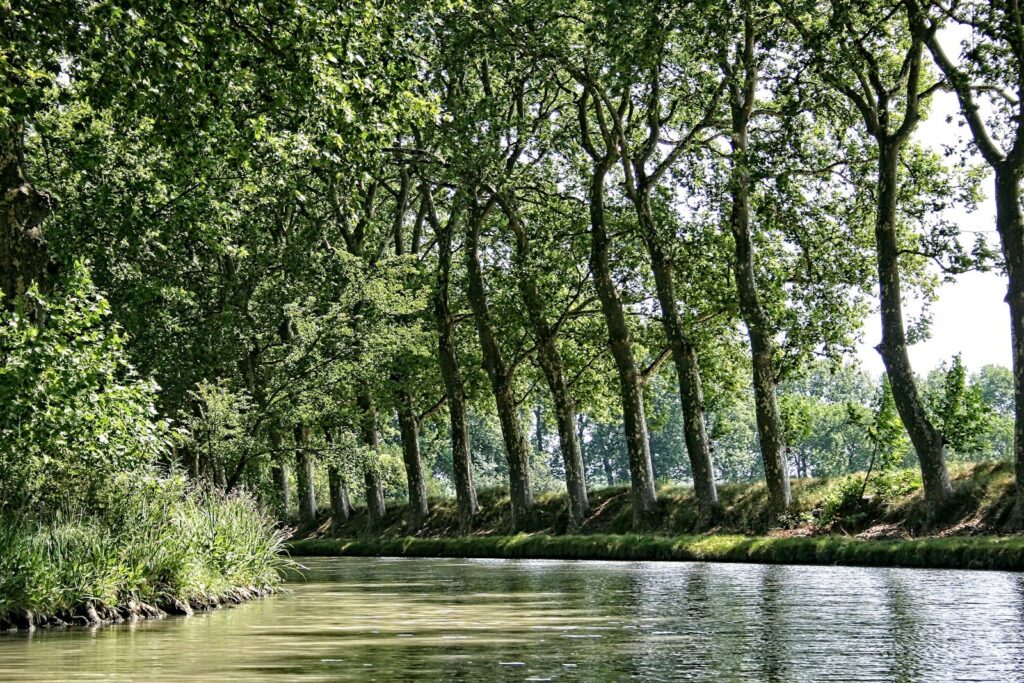
It’s a good story. Castelnaudary, a canal town on the Canal du Midi, repeats it often: the Castelnaudary tourist office tells the siege legend on its own cassoulet page. Toulouse and Carcassonne, predictably, find it unconvincing.
Three Towns, Three Recipes
The three towns don’t just disagree on history. They disagree on what goes in the pot.
Castelnaudary builds its cassoulet on lingot beans and pork: knuckle or shoulder, pork rind, salt pork and pure-pork sausage, finished with confit duck or goose legs. That is the recipe its tourist office publishes, and locals guard it closely.
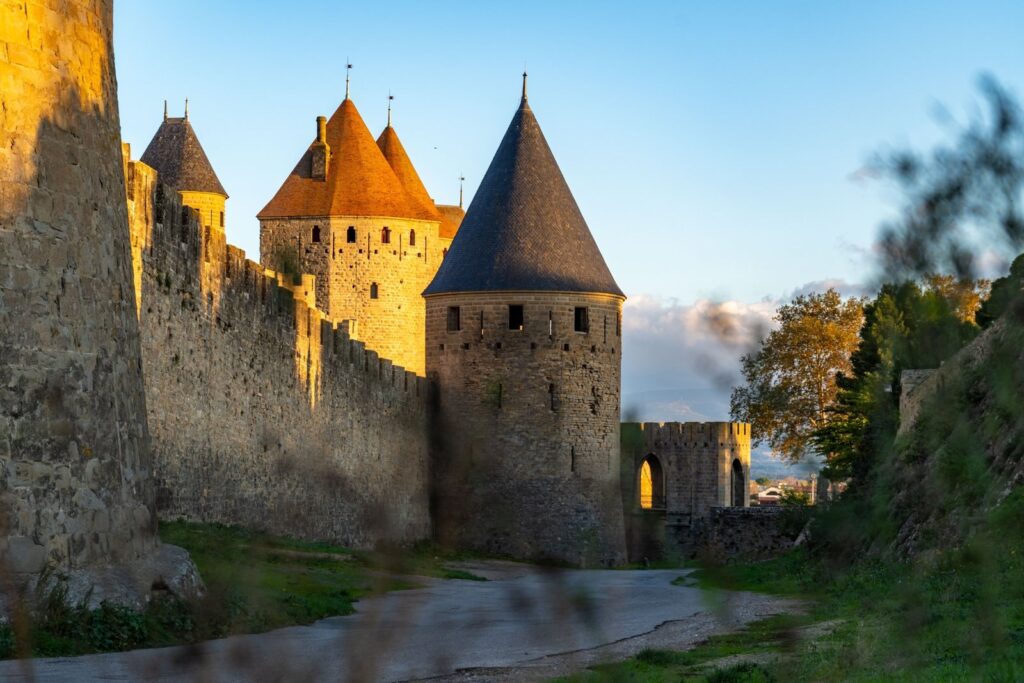
Carcassonne disagrees. They add partridge during hunting season, and sometimes lamb. The medieval walled city brings a wilder, earthier edge to the stew.
Toulouse — the largest of the three cities — uses its own celebrated sausage, the Toulouse sausage, along with duck confit. Toulouse partisans consider their own sausage the heart of the dish.
The Brotherhood Takes Charge

In 1970, Castelnaudary decided enough was enough. It founded the Grande Confrérie du Cassoulet de Castelnaudary — the Grand Brotherhood of the Cassoulet — a formal body dedicated to defending the authentic recipe. Members wear ceremonial robes and carry official titles. They hold a Grand Chapitre every spring and take part in the town’s cassoulet festival in August.
Their line is clear: a true cassoulet is cooked in a cassole — the wide-mouthed earthenware dish, made in the nearby village of Issel, that gives the stew its name. The beans are lingots, grown on the Lauragais plain around the town.
Toulouse has its own culinary brotherhood too. They have opinions about the Brotherhood of the Cassoulet’s opinions.
Enjoying this? France lovers get stories like this every week. Subscribe free →
The Seven-Hour Rule

Whatever goes into the pot, one thing all three towns agree on: cassoulet cannot be rushed. The stew simmers low and slow for hours. A crust forms on top. A true cook breaks that crust and pushes it down into the beans. Then another crust forms. This process repeats — seven times, according to the strictest traditionalists.
It really does take most of a day. The Brotherhood’s own recipe, published by the Castelnaudary tourist office, simmers a pork-rind broth for about an hour, cooks the beans in it for about another hour, then bakes the cassoulet for two to three hours in a slow oven, pushing the crust down each time it forms. The old cooks said seven times. If you want to try it at home, the Fête du Cassoulet recipe page walks through the Castelnaudary method step by step, and our home version is just below.
The result is something dense, warming, and deeply satisfying — a dish built for cold evenings and long tables. If you’ve ever wondered why southern French cooking feels so different from the light dishes of the coast, cassoulet is a large part of the answer.
How to Make Cassoulet at Home
We built this one on the Castelnaudary Brotherhood’s own recipe, with swaps you can find in an American grocery store: white beans from the shelf and duck confit from a tin or vacuum pack. Start the night before, then let a slow oven do the work while you read the paper.
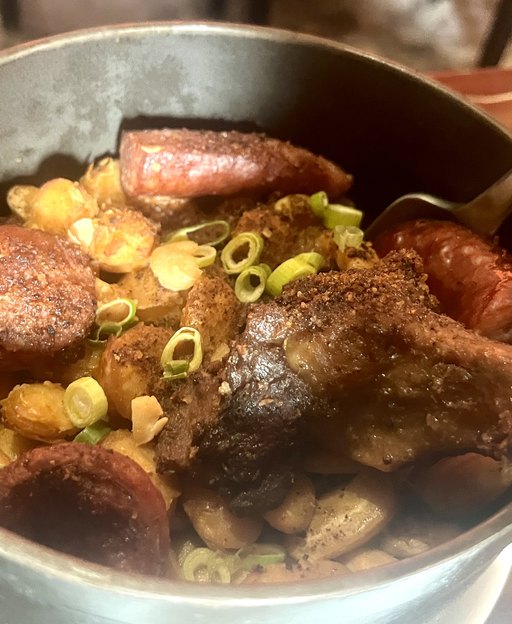
Cassoulet (Home Version of the Castelnaudary Recipe)
Ingredients
Equipment
Method
- The night before, cover the beans with plenty of cold water and leave them to soak.
- Next day, drain the beans, put them in a pan of fresh cold water, bring to the boil and boil for 5 minutes. Drain.
- Meanwhile, put the stock, the pork rind (if using) cut into wide strips, the onion, carrot and bouquet garni in a large pot. Simmer gently for 1 hour, then lift out the vegetables and herbs. Keep the rind.
- Add the beans to the broth and simmer gently for about 1 hour, until they are soft but still whole. Start checking after 45 minutes, and add hot water if they are no longer covered.
- While the beans cook, warm the duck confit skin side down in a large frying pan over low heat until the fat runs, then set the duck aside. Brown the sausages in the duck fat and set aside. Brown the pork pieces well on all sides and set aside. Keep the fat.
- Crush the garlic and salt pork together to a paste (a mortar or a food processor works). Drain the beans, keeping the broth hot, and stir the paste into the beans. Taste the broth; season with pepper, and salt only if it needs it.
- Heat the oven to 150°C / 130°C fan / 300°F / gas 2. Line the bottom of the dish with the pork rind, if using. Add a third of the beans, then the duck and pork, then the rest of the beans. Push the sausages into the beans so their tops still show.
- Pour in hot broth until it just covers the beans. Grind pepper over the top and spoon over 1 tablespoon of the duck fat.
- Bake for 2½ to 3 hours. Each time a golden-brown crust forms, push it gently down into the beans (the old cooks in Castelnaudary said seven times). If the top looks dry, add a few spoonfuls of hot broth.
- Serve it bubbling, straight from the dish, without stirring.
Notes
Where to Eat It

Every restaurant in all three towns serves cassoulet. Every one of them believes theirs is the best. If you visit Castelnaudary, the locals will tell you there’s no point ordering it anywhere else, and the tourist office keeps a list of where to eat a good cassoulet in town.
Most of Castelnaudary’s restaurants lead with cassoulet. The town holds a cassoulet festival every August — la Fête du Cassoulet, five days of free concerts and cassoulet in every restaurant — where the rivalry reaches its peak and visitors arrive from across France to sample and judge.
In Toulouse, the dish turns up in old brasseries and neighbourhood bistros. In Carcassonne, you can eat it inside the walls of the medieval city itself, which does add something to the experience.
This part of France rewards slow travel. If you’re planning your route through the south, the France planning guide is a good place to start — the Languedoc is often missed by visitors who stick to Paris and Provence, and that is their loss.
The Dordogne to the north offers its own quieter rewards too. The forgotten villages along France’s most beautiful river sit just a few hours from cassoulet country, and the two make an excellent pairing for a week’s driving through the southwest.
If you find yourself in the area in autumn, the cave paintings of Lascaux in the nearby Dordogne are one of France’s most extraordinary hidden treasures — though be warned, the original cave has been sealed for decades to preserve the art.
Who Actually Wins?
Nobody. And that’s exactly the point.
The argument has lasted this long because it doesn’t need to be settled. The rivalry keeps the tradition alive. It keeps the Brotherhood in ceremonial robes. It keeps visitors arriving in Castelnaudary for the August festival, in Toulouse for the brasseries, in Carcassonne for the castle and the cassole.
Seven centuries on, nobody in southern France is ready to declare a winner. The beans keep cooking. The crusts keep forming. And the argument continues, with great warmth and no intention of resolution.
Join the France Lovers
Three times a week, get France’s hidden gems, seasonal guides, local stories, and the art of la vie française — straight to your inbox.
Subscribe free — enter your email:
🇫🇷 Discover the France Most Tourists Never Find
Get our free guide to 25 hidden villages of France — then join our readers for weekly stories about places most guidebooks never mention.
Get Your Free Village Guide →Free forever · Unsubscribe anytime
🇫🇷 You Might Also Love

Leave a Reply