
In the 14th century, dairy farmers in the mountains of Savoy had a problem. Their landlords came each season to measure how much milk their cows produced — and rent was calculated on that number.
So the farmers did what any sensible person would do. They cheated.
A Secret Hidden in the Milking
When the landlord’s agent arrived, the farmers only half-milked their cows. The agent recorded the yield, calculated the rent, and left satisfied.
Then the farmers went back to the barn.
They squeezed the udder a second time — “reblocher” in the old dialect of Savoy. This second milking was richer than the first. The fat content was higher, the milk creamier. It was, in a word, perfect for making cheese.
That cheese took its name from the trick that created it: Reblochon.
The Cheese That Landlords Never Knew Existed
For generations, this was a secret cheese. Made in the high Alpine chalets where cattle grazed in summer, it was rarely sold. Farmers kept it for themselves, or shared it with the Carthusian monks who travelled the mountain paths of the Thônes Valley.
It was food born of necessity, of quiet defiance, and of the deep satisfaction of turning a tax dodge into something genuinely delicious.
By the 16th century, local markets in the Aravis mountains were trading Reblochon openly. But it stayed a regional secret for centuries — something the mountain people of Haute-Savoie knew about, and the rest of France did not.
What Makes Reblochon Extraordinary
Reblochon is made from raw, unpasteurised milk — as tradition demands. It comes in two forms: “fruitière” (made in a cooperative dairy) and “fermier” (made on the farm itself). The fermier version carries a green casein label pressed into the rind. The fruitière carries red.
The cheese is soft and pale, with a washed rind that turns peachy-orange as it matures. When ripe, it smells faintly of cream and mountain cellars. At room temperature, the centre is almost liquid.
It can only be made from the milk of three Alpine breeds: Abondance, Tarine, and Montbéliarde. Since 1958, it has been protected by France’s AOC designation — meaning it can only be produced in a defined zone of Haute-Savoie, centred on the Aravis mountains and the valley of Thônes.
Each wheel weighs between 450 and 550 grams. It takes roughly 4.5 litres of milk to make just one.
Enjoying this? France lovers get stories like this every week. Subscribe free →
How the French Actually Eat It
Reblochon’s most famous role today is in tartiflette — a gratin of potatoes, lardons, onions, and white wine, with a whole Reblochon melted over the top. It is warming, rich, and deeply satisfying in the way only mountain food can be.
Tartiflette is not an ancient dish. The Reblochon makers’ own website dates the recipe to the 1980s and says it grew out of an older Savoyard dish, the péla: potatoes, onions and Reblochon cooked in a long-handled pan over the fire. The Reblochon makers say they did not invent tartiflette, though the cheese trade certainly did well from it. Today it is one of the best-known dishes of the French Alps, and our recipe for it is just below.
But the older tradition is simpler. A slice of Reblochon with good bread, left out to soften for an hour before eating. A glass of Savoie white wine alongside. The French do not rush their cheese.
How to Make Tartiflette at Home
This is the dish we’d want waiting after a cold day in the mountains, and it is easier than it looks: one pan, one baking dish and one whole cheese. We follow the recipe the Reblochon makers publish themselves.
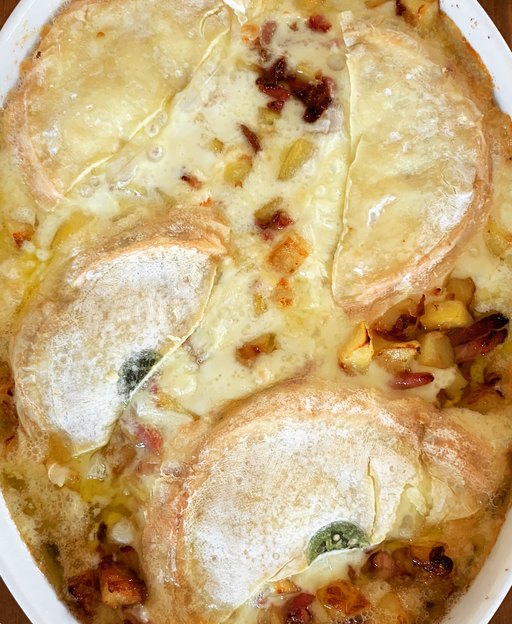
Tartiflette (Savoie Potato, Bacon and Reblochon Bake)
Ingredients
Equipment
Method
- Peel the potatoes and cut them into chunks about 2 cm (¾ in). Slice the onions.
- Put the lardons and onions in a large frying pan over medium heat and cook for about 3 minutes, until they start to colour.
- Add the potatoes and cook over medium heat for about 20 minutes, turning them now and then, until tender. Heat the oven to 200°C / 180°C fan / 400°F / gas 6.
- Pour in the wine and let it bubble for about 5 minutes. Season with pepper and a little nutmeg if you like. Don’t add salt: the lardons and cheese bring plenty.
- Cut the Reblochon in half through its thickness, keeping the rind on. Cut one half into small pieces and stir them into the potatoes.
- Tip everything into a baking dish of about 2 litres (2 quarts). Lay the other half of the cheese on top, rind side up, cut in two or four to fit the dish.
- Bake for 15 to 25 minutes, until the cheese has melted and the top is golden and bubbling. Serve hot with a green salad.
Notes
Where to Find the Real Thing
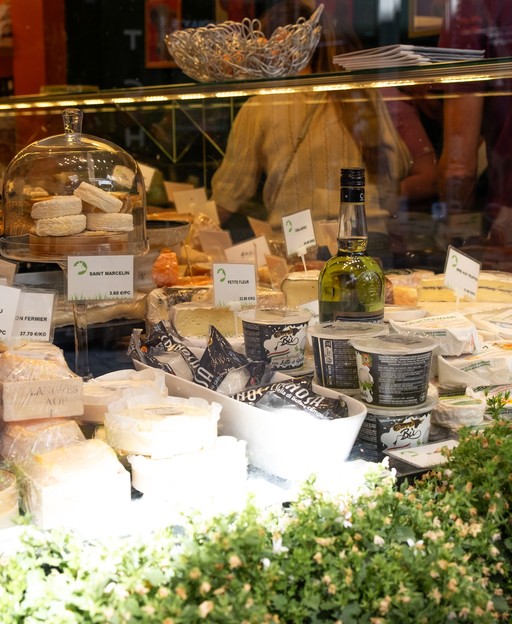
The town of Annecy in Haute-Savoie is the natural base for Reblochon country. The Thursday and Saturday markets in Thônes — the historic heart of Reblochon production — sell fermier wheels direct from the farms that make them.
If you’re planning to explore the mountains, it helps to understand what they were before the resorts arrived. Read our piece on what the French Alps were like before ski culture changed everything.
Every good fromagerie in France will stock it. Ask for “Reblochon fermier” with a green label. Bring it to room temperature before eating. It will taste of cold Alpine mornings, rich cream, and a very old, very human story.
For help planning the rest of your French trip, start at our France travel planning guide.
There is something deeply satisfying about a cheese with this history behind it — not just the flavour, though the flavour is remarkable, but the knowledge that someone seven hundred years ago looked a tax collector in the eye and decided the cows had a little more to give. The French have always understood that the best things in life are worth protecting. Even if that means milking the cow twice.
Join the France Lovers
Three times a week, get France’s hidden gems, seasonal guides, local stories, and the art of la vie française — straight to your inbox.
Subscribe free — enter your email:
Free forever · Unsubscribe anytime
🇫🇷 You Might Also Love
Tours & experiences you might love


Powered by Viator. Some links are affiliate links — we may earn a small commission at no extra cost to you.

Leave a Reply