
Avignon sits on the banks of the Rhône in the south of France, about 700 kilometres from Paris. For most of the 14th century, it served as the seat of the papacy — and the city has never quite forgotten it. The massive Palais des Papes still dominates the skyline. The medieval walls still ring the old town. And the famous Pont Saint-Bénézet still reaches out across the river, stopping abruptly halfway. If you are planning a trip to the south of France, Avignon deserves more than a passing glance. This Avignon travel guide covers everything you need to know before you visit.
Love France? Join 7,000+ readers on our free newsletter → lovetovisitfrance.substack.com
Why Avignon Is Worth Your Time
Most travellers to the south of France focus on Aix-en-Provence or the coastal cities. Avignon tends to draw a different crowd — people who want history they can walk inside. The Palais des Papes is not a ruin. You walk through vast papal chambers, climb towers with views over the Rhône, and get a genuine sense of what it meant when Avignon was the centre of the Christian world.
The intact medieval walls, the famous bridge, and a lively old town make this one of the most complete medieval cities in France. It also sits in a useful location. Arles, Les Baux-de-Provence, the Luberon villages, and the Pont du Gard Roman aqueduct are all within an hour’s drive. Avignon makes an excellent base for exploring the hidden villages of Provence without paying the Provence premium for accommodation.
The Palais des Papes
Seven popes ruled from Avignon between 1309 and 1377. The Palais des Papes was their home, their fortress, and their seat of power. It is one of the largest medieval Gothic buildings in Europe. Allow two to three hours to do it justice — the scale surprises most visitors.
The palace divides into two sections. The Palais Vieux (Old Palace) dates from the 1330s and has a fortified, austere feel. The Palais Neuf (New Palace), added later in the 14th century, has more ornate decoration. The Chambre du Cerf contains fragments of original frescoes — hunting scenes that give a rare glimpse into medieval papal life. The audio guide is excellent and worth taking.
Book tickets in advance, especially in summer. The queue at the door can be long. In July, the main courtyard hosts performances for the Festival d’Avignon, one of the world’s leading performing arts festivals.
Opening Hours and Entry Prices
The palace is open every day except 1 January, 1 May, and 25 December. Summer hours (July to September) run from 09:00 to 20:00. Entry costs around €15 for adults and includes a multimedia guide. A combined ticket with the Pont Saint-Bénézet saves money if you plan to visit both sites.
The Pont Saint-Bénézet
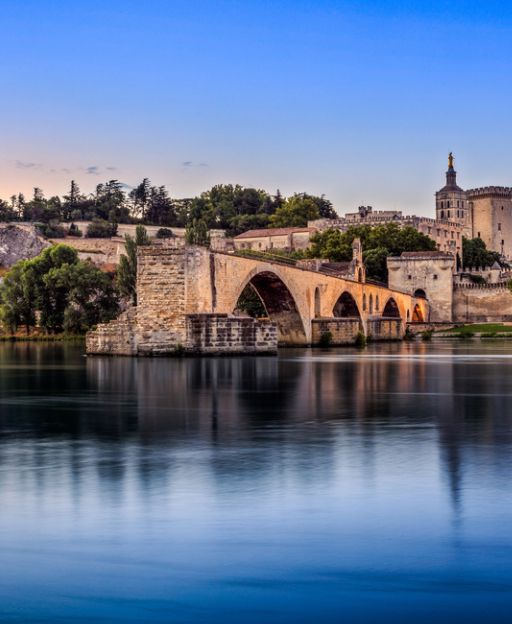
If you know one thing about Avignon, it is probably the bridge. The nursery rhyme “Sur le Pont d’Avignon” has made this medieval structure famous far beyond France. The original bridge dated from the late 12th century and once had 22 arches crossing the Rhône. Today only four arches survive — floods destroyed the rest over the centuries.
Walking out onto the bridge gives you a striking view back over the ramparts and the Palais des Papes. The small chapel of Saint Nicolas sits on the second pier, added in the 14th century. Entry costs around €5 and is included in the combined ticket with the palace.
For the classic view of the bridge and palace together, cross to Villeneuve-lès-Avignon on the opposite bank. The view from there at sunrise or sunset is spectacular and well worth the short trip.
Planning a trip to the south of France?
Our free newsletter covers Provence, the Luberon villages, Avignon, and beyond — every week, straight to your inbox.
The Rocher des Doms
Just above the Palais des Papes sits the Rocher des Doms, a rocky outcrop with a long history of settlement. Today it is a public garden with views across the Rhône to Villeneuve-lès-Avignon and, on clear days, the Alpilles hills to the south. Entry is free. It is an ideal spot to rest between the main sights.
A small lake sits at the centre of the gardens. It sounds like a minor detail, but it is genuinely peaceful — a contrast to the busy medieval streets below. If you visit in the morning, the light over the river is beautiful.
The Old Town
Avignon’s medieval walls run for around 4.3 kilometres around the old town. They are some of the best-preserved city walls in France, restored in the 19th century. Walking sections of them gives you a different perspective on the city.
Inside the walls, the Place de l’Horloge is the main square — busy, tourist-heavy, but a useful landmark. The streets behind it are quieter and more interesting. Les Halles d’Avignon, the covered market, is a highlight if you visit on a weekday or Saturday morning. Local producers sell vegetables, cheese, charcuterie, and olives from the surrounding countryside. It is an excellent place to pick up lunch supplies.
The Rue des Teinturiers runs alongside a small canal lined with plane trees. Small restaurants and independent shops line the old buildings that once housed the city’s dyers. It is quieter than the main tourist streets and gives a better sense of how locals use the city.
Day Trips from Avignon
Avignon’s position in the Rhône Valley makes it one of the best bases in the south of France.
- Pont du Gard: The Roman aqueduct sits about 25 kilometres west. It is a UNESCO World Heritage Site and one of the most impressive ancient structures in France. Arrive early to beat the crowds.
- Les Baux-de-Provence: This perched medieval village, about 30 kilometres south, is dramatic and beautiful. The ruined castle and the Carrières de Lumières light show are both worth your time.
- Arles: About 35 kilometres south, Arles has a Roman amphitheatre still in use, a superb Saturday market, and strong connections to Vincent van Gogh, who lived here from 1888 to 1889.
- The Luberon villages: Gordes, Roussillon, Bonnieux, and Ménerbes sit between 45 and 60 kilometres from Avignon. They are the classic Provence villages — beautiful, photogenic, and busy in high summer.
When to Visit Avignon
April, May, and October are the best months to visit. The weather is warm, the crowds are manageable, and accommodation prices are lower than in summer. Spring brings blossom to the gardens and excellent light for photography.
July brings the Festival d’Avignon. The city fills with theatre, dance, and street performance. It is electric and chaotic in equal measure. Hotel prices rise sharply, and booking months ahead is essential. If the festival does not interest you, avoid July — the city becomes extremely crowded.
September and early October offer the best combination of good weather, lower crowds, and reasonable prices. For more on timing your France trip, our month-by-month France visitor guide covers the full year.
How to Get to Avignon
The TGV high-speed train from Paris Gare de Lyon reaches Avignon TGV station in about two hours and forty minutes. This is the most practical option for most visitors. Services run frequently throughout the day. Book in advance through the SNCF website for the best prices.
Avignon has two stations. The TGV station sits about four kilometres outside the city walls. Shuttle buses and taxis connect it to the old town. Avignon Centre station sits right beside the walls and handles regional services, including trains to Arles and Nîmes. For more detail on getting around France by rail, see our guide to travelling France by train.
You do not need a car to enjoy Avignon itself. For day trips to the Luberon or Pont du Gard, hiring a car or joining an organised tour from the city both work well.
Where to Stay in Avignon
Staying inside the walls (intra muros) puts you within walking distance of all the main sights and gives you the experience of moving through the medieval city. It is worth spending a little more to stay in the old town if your budget allows. The streets around the Rue de la République offer a good range of options.
If you are watching your budget, hotels just outside the walls are significantly cheaper. The town of L’Isle-sur-la-Sorgue, about 25 kilometres east, is a pleasant alternative with good antique markets at weekends and a quieter atmosphere.
Practical Tips
- Buy a combined ticket for the Palais des Papes and Pont Saint-Bénézet — it saves money if you plan to visit both.
- Arrive early at the palace. Crowds build by mid-morning in summer. The first hour after opening is the best time to visit.
- Les Halles closes at lunchtime. The covered market is open Tuesday to Sunday from 06:00 to 13:30. Go in the morning.
- Park outside the walls. Driving into the old town is not advisable. Use one of the car parks near the Porte de la République.
- Pack a layer. The Mistral wind can blow hard through the Rhône Valley, especially in spring. Evenings can feel cool even when the daytime temperature is warm.
Frequently Asked Questions
How many days do you need in Avignon?
Two full days works well for Avignon itself. One day covers the Palais des Papes, the Pont Saint-Bénézet, and the Rocher des Doms gardens. A second day lets you explore the old town at a slower pace, visit Les Halles market, and walk the ramparts. Add a third day if you plan day trips to Pont du Gard or the Luberon villages.
Is Avignon worth visiting without a car?
Yes. The city itself is entirely walkable, and the TGV from Paris makes it easy to arrive without driving. For day trips, organised tours from the city centre cover Pont du Gard, Les Baux-de-Provence, and the Luberon villages. A hire car gives more flexibility, but it is not essential for a stay focused on Avignon itself.
What is the best way to get from Paris to Avignon?
The TGV from Paris Gare de Lyon to Avignon TGV station takes around two hours and forty minutes. This is faster than flying once you factor in airport transfers and check-in. Book through the SNCF website in advance to get the best prices. Multiple services run every day throughout the year.
When is the Festival d’Avignon held?
The Festival d’Avignon takes place every July. It is one of the world’s leading performing arts festivals, with hundreds of theatre and dance productions staged across the city, including in the Palais des Papes courtyard. The festival brings enormous crowds. Book accommodation and tickets months ahead if you want to visit during this period.
Get more from your France trip
Every week our free newsletter covers the places, traditions, and hidden corners that guidebooks miss. Join 7,000+ France lovers.
Thinking about it seriously?
If you’ve started actually planning a move, our complete our complete Moving to France guide walks through every step, every cost, and the paperwork that catches most people out.
You Might Also Enjoy
- The Hidden Villages of Provence You Need to Know
- Aix-en-Provence: A Complete Travel Guide
- Best Time to Visit France: A Month-by-Month Guide
Plan Your France Trip
Ready to start planning? Our France trip planning hub covers the best regions to visit, how to get around, when to go, and what to budget.
Join 7,000+ France Lovers
Every week, get France’s hidden gems, local recipes, and travel inspiration — the kind you won’t find in any guidebook.
Subscribe free — enter your email:
🇫🇷 Discover the France Most Tourists Never Find
Get our free guide to 25 hidden villages of France — then join 7,000+ readers for weekly stories about places most guidebooks never mention.
Get Your Free Village Guide →Love more? Join 64,000 Ireland lovers → · Join 43,000 Scotland lovers → · Join 30,000 Italy lovers →
Free forever · One email per week · Unsubscribe anytime
Tours & experiences you might love


Powered by Viator. Some links are affiliate links — we may earn a small commission at no extra cost to you.

Leave a Reply