
Carcassonne is France’s greatest medieval fortress city — a double-ringed walled town in the Aude département of southern France that draws more than three million visitors every year. Recognised as a UNESCO World Heritage Site in 1997, it stands as one of Europe’s most complete surviving examples of medieval military architecture, with 52 towers, two concentric rings of ramparts stretching nearly 3 kilometres, and a walled street pattern that feels unchanged from the 13th century. If you love history, dramatic scenery, and food and wine from the Languedoc, Carcassonne belongs near the top of your French travel list.
Inside the Walls: What Makes La Cité So Extraordinary
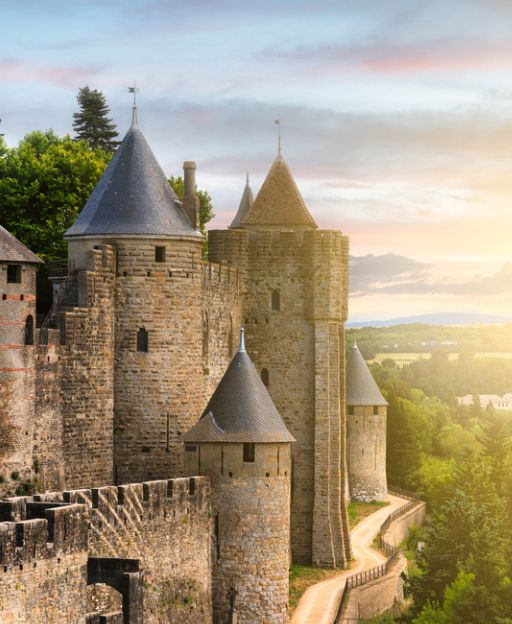
The walled upper town, known simply as La Cité, sits on a rocky spur above the River Aude. Its origins stretch back to the Roman period, but it was during the Visigoth and then Frankish eras that the first serious fortifications took shape. The Cathars held Carcassonne until 1209, when Simon de Montfort and the crusading army broke the resistance and the city passed under French royal control. The walls you walk along today owe much of their current appearance to the architect Eugène Viollet-le-Duc, who began a sweeping restoration programme in 1853 after the French government declared the site a historic monument.
Viollet-le-Duc restored the towers, rebuilt collapsed sections of the outer wall, and re-pointed stonework that centuries of neglect had left crumbling. Critics then and since have debated his decisions — particularly his choice to add pointed slate roofs to the towers in a northern-French style rather than the flat terracotta typical of the south — but few argue with the result. The two concentric rings of ramparts, separated by a narrow walkway called the lices, create a layered defensive system that medieval engineers designed to channel attacking forces into a killing ground. When you walk the lices on a quiet morning before the coaches arrive, the silence and the scale of the stonework produce a genuinely powerful effect.
The outer wall runs for approximately 1.5 kilometres and the inner wall for 1.2 kilometres. Together they enclose an area of roughly 11 hectares, containing a small working village of around 100 permanent residents alongside the hotels, restaurants, and souvenir shops that serve the tourist trade.
What to See and Do Inside La Cité
The Château Comtal is the centrepiece of any visit to La Cité. The Trencavel viscounts built the original fortress in the 12th century, and the French royal administration subsequently enlarged it into its current form. Entry costs €9.50 for adults (free for EU residents under 26), and that price gives you access to the inner courtyards, the museum of medieval archaeology, and the rampart walkway that offers the best elevated views across both rings of walls and down to the lower town. Guided tours run throughout the day in French and English and typically last around 50 minutes.
The Basilique Saint-Nazaire stands near the Château Comtal and dates to the 12th century, making it one of the oldest religious buildings in the city. The builders mixed Romanesque and early Gothic styles, and the nave retains some of the finest medieval stained glass in southern France. The rose window on the south transept is particularly striking — the deep blues and reds catch the afternoon light beautifully. Entry is free, though you should expect crowds during July and August.
Beyond the major monuments, La Cité rewards slow exploration on foot. The narrow lanes inside the walls — Rue Cros-Mayrevieille, Rue Saint-Louis, and the smaller alleys that branch off them — hold a mixture of boutiques selling Occitan textiles and ceramics, crêperies and cassoulet restaurants, and the occasional wine cave stocking bottles from the Languedoc appellations that surround the city. Cassoulet — a slow-cooked bean stew with duck confit and Toulouse sausage — is the dish you will find on almost every menu, and the local version has a slight edge on what you find elsewhere because the Aude produces excellent duck. For more on the medieval villages and fortresses of the wider region, our guide to medieval villages in France gives you plenty of context.
La Bastide Saint-Louis: The Other Side of Carcassonne
Most visitors spend the whole of their time inside the medieval walls, but the lower town — La Bastide Saint-Louis — offers a quieter, more local experience and some excellent restaurants that charge rather less than the tourist-facing places in La Cité. The French royal administration laid out La Bastide in 1260 on a grid plan typical of the bastide towns found across the south-west, and the Place Carnot at its heart functions today as the social centre of the city. The market on Tuesday and Thursday mornings fills the square with stalls selling Aude wines, local cheese, charcuterie, olives, and seasonal vegetables — it is a genuinely local market rather than a tourist-oriented performance.
The Canal du Midi, the 17th-century waterway that connects Toulouse to the Mediterranean and ranks as another UNESCO World Heritage Site, runs past the edges of Carcassonne and you can walk or cycle along the towpath for several kilometres in either direction. The stretch between Carcassonne and the village of Trèbes to the east is particularly pleasant in the morning, when the plane trees that line the canal shade the path and the water reflects the sky. Boat hire is available at the port from several operators, and a two-hour cruise gives you a completely different perspective on the landscape of the Aude.
When to Visit Carcassonne: Avoiding the Crowds
July and August bring the bulk of those three million annual visitors. La Cité becomes extremely crowded between 10am and 5pm, parking near the walls fills before 9am, and restaurant queues can stretch outside. If you have flexibility, the shoulder seasons deliver a significantly better experience. April through June gives you mild temperatures typically between 15°C and 22°C, the spring wildflowers on the hillsides, and crowds that thin out noticeably outside the Easter fortnight. September and October are arguably the finest months — the summer heat softens, the vendange (grape harvest) fills the surrounding countryside with activity, and the crowds drop by a third compared with peak season.
Winter visits are genuinely viable and often overlooked. The walls look dramatic under low winter light or a dusting of frost, and you can walk the lices almost alone on a Tuesday morning in January. The Château Comtal closes for annual maintenance in January and part of February, so check the Centre des Monuments Nationaux website for current opening dates before you travel. The famous fireworks display on 14 July — Bastille Day — draws an enormous crowd and simulates a medieval siege on the walls, which is spectacular to watch if you position yourself well and book accommodation months in advance.
How to Get to Carcassonne
Carcassonne Airport (CCF), situated about 3 kilometres west of the city centre, receives Ryanair direct flights from Dublin, London Stansted, Edinburgh, Brussels, and several other European cities. The airport is small and simple to navigate, and a taxi to the city centre costs around €15 to €20. Bus services connect the airport to the city but run infrequently, so most visitors arriving by air take a taxi.
By train, Carcassonne sits on the main line between Toulouse and Montpellier. The journey from Toulouse takes approximately 50 minutes on direct services, and trains run roughly every hour throughout the day. From Paris, you can reach Toulouse by TGV in around 4.5 hours and then connect to Carcassonne, making a same-day journey entirely feasible. The railway station in Carcassonne sits in the lower town, about 500 metres from the Canal du Midi and a 15-minute walk from the footbridge that leads up to La Cité.
By car, Carcassonne sits 90 kilometres south-east of Toulouse along the A61 autoroute, a journey that takes around one hour in normal traffic. From Montpellier, the drive covers about 160 kilometres and takes roughly 1 hour 40 minutes. Parking in La Cité is limited and expensive; the large car parks on the south side of the walls fill by mid-morning during summer. The Pôle Touristique car park on the D104 is the best option if you arrive after 9am. For a broader overview of planning your trip to southern France, our complete France travel guide covers transport, regions, and practical tips.
Where to Stay in Carcassonne
Staying inside the walls of La Cité is expensive but unforgettable. The three hotels within the fortifications — including the five-star Hôtel de la Cité and smaller boutique options — charge between €100 and €300 per night for most of the year, rising significantly during July and August. The main advantage is access to the streets once the day-trippers leave in the late afternoon — the atmosphere inside the walls after 6pm, when the coaches have departed and the light falls golden on the stonework, is quite different from the midday tourist rush and well worth the premium if budget allows.
The lower town offers a much wider range of hotels, guesthouses, and self-catering apartments at considerably more competitive prices. A comfortable three-star hotel near Place Carnot will cost €60 to €100 per night in the shoulder season, and the walk up to La Cité takes around 20 minutes via the footbridge over the River Aude. Several guesthouses and chambres d’hôtes in the surrounding villages of the Aude offer an even quieter base if you have a car, with the added bonus of vineyard views and home-cooked dinners.
Frequently Asked Questions About Visiting Carcassonne
Is Carcassonne Worth Visiting?
Yes, absolutely — Carcassonne ranks among the most impressive medieval sites in all of Europe, and the scale and completeness of the fortifications set it apart from other castles and walled towns on the continent. The crowds during July and August can make a visit feel rushed and commercialised, but an early-morning arrival or a shoulder-season trip reveals a place of genuine historical power.
How Long Do You Need in Carcassonne?
One full day covers the main highlights — the Château Comtal, Basilique Saint-Nazaire, a walk around the lices, and lunch in the lower town — comfortably. Two days lets you add the Canal du Midi, a wine-tasting excursion into the Corbières or Minervois vineyards, and the relaxed evening atmosphere inside the walls that day visitors miss.
What Is the Best Time to Visit Carcassonne?
September and October offer the best combination of good weather, manageable crowds, and the visual bonus of the vendange season in the surrounding vineyards. April and May are the second-best option, with mild temperatures and the landscape at its greenest before the summer heat arrives.
How Much Does It Cost to Enter the Château Comtal?
Adult entry to the Château Comtal and rampart walkway costs €9.50. EU citizens under the age of 26 enter free of charge, and the site also participates in the France Monuments Nationaux pass scheme. The Basilique Saint-Nazaire is free to enter.
Join 7,000+ France Lovers
Every week, get France’s hidden gems, local recipes, and travel inspiration — the kind you won’t find in any guidebook.
Free forever · One email per week · Unsubscribe anytime
Image Credit: Shutterstock
Tours & experiences you might love


Powered by Viator. Some links are affiliate links — we may earn a small commission at no extra cost to you.

Leave a Reply