Ingredients
Equipment
Method
Day 1: dough and folds
- Mix the flour, salt and sugar in a large bowl. Stir the yeast into the cold water, pour it into a well in the flour and mix to a dough. Knead on the work surface for 10 minutes until smooth, put it in a lightly oiled bowl, cover and chill for at least 2 hours.
- Put the butter between two sheets of baking parchment and beat and roll it into a 20 x 15 cm (8 x 6 in) slab. Keep it wrapped and chill it.
- Roll the dough on a floured surface to a 40 x 20 cm (16 x 8 in) rectangle. Lay the butter slab over the middle third. Fold one side of the dough over the butter, then the other side over the top, like a letter, and press the edges to seal. Wrap and chill for 30 minutes.
- Roll the folded dough out again to 40 x 20 cm (16 x 8 in), fold it in three the same way, wrap and chill for 30 minutes. Do this once more: three folds in all, never adding more butter. Wrap well and chill overnight.
Day 2: shape, rise and bake
- Roll the dough on a floured surface to about 60 x 30 cm (24 x 12 in) and trim the edges straight. Cut it in half lengthways into two long strips, then cut each strip into 6 or 7 tall triangles.
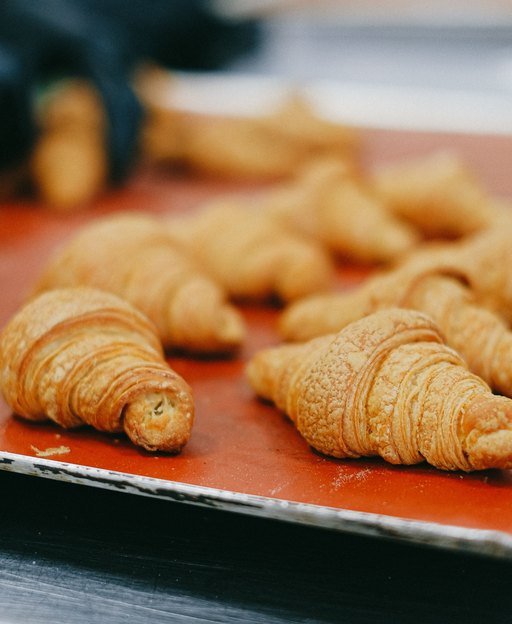
- Gently stretch the base of each triangle a little wider, then roll it up from the base to the tip without pressing down, and tuck the tip underneath. Curve the ends in if you like, and set them on lined trays, well apart.
- Cover loosely and leave to rise at room temperature for about 2 hours, until doubled and wobbly when you shake the tray. Keep them away from heat, or the butter melts out.
- Heat the oven to 200°C / 180°C fan / 400°F / gas 6. Brush the croissants with the beaten egg and bake for 15 to 20 minutes, until risen and a deep golden brown. Cool on a wire rack.
Notes
American swaps: strong white flour is bread flour. A European-style butter with more fat gives the best layers. One US packet of instant yeast is 7 g (2¼ tsp), so you need two.
Keep it cold: if the butter breaks through or the dough fights back while you roll, wrap it and chill for 15 minutes, then carry on.
Make ahead: the folded dough can be frozen before shaping; thaw it overnight in the fridge and carry on from Day 2.
The French way to eat one: torn by hand, dunked in a bowl of café au lait or hot chocolate.
Free from Love France: The Love France Guide No. 012: The French Breakfast, what really lands on the table and where to buy it (free PDF)