
She arrived in France at 14. She was dead at 37. In between, she lived one of history’s most dramatic lives — and history never told her story fairly.
Marie Antoinette remains one of France’s most famous figures. She is also one of the most misunderstood. Most people know the cartoon version: a shallow queen who spent fortunes on wigs while her people starved. The real woman was far more interesting — and far more sympathetic — than that.
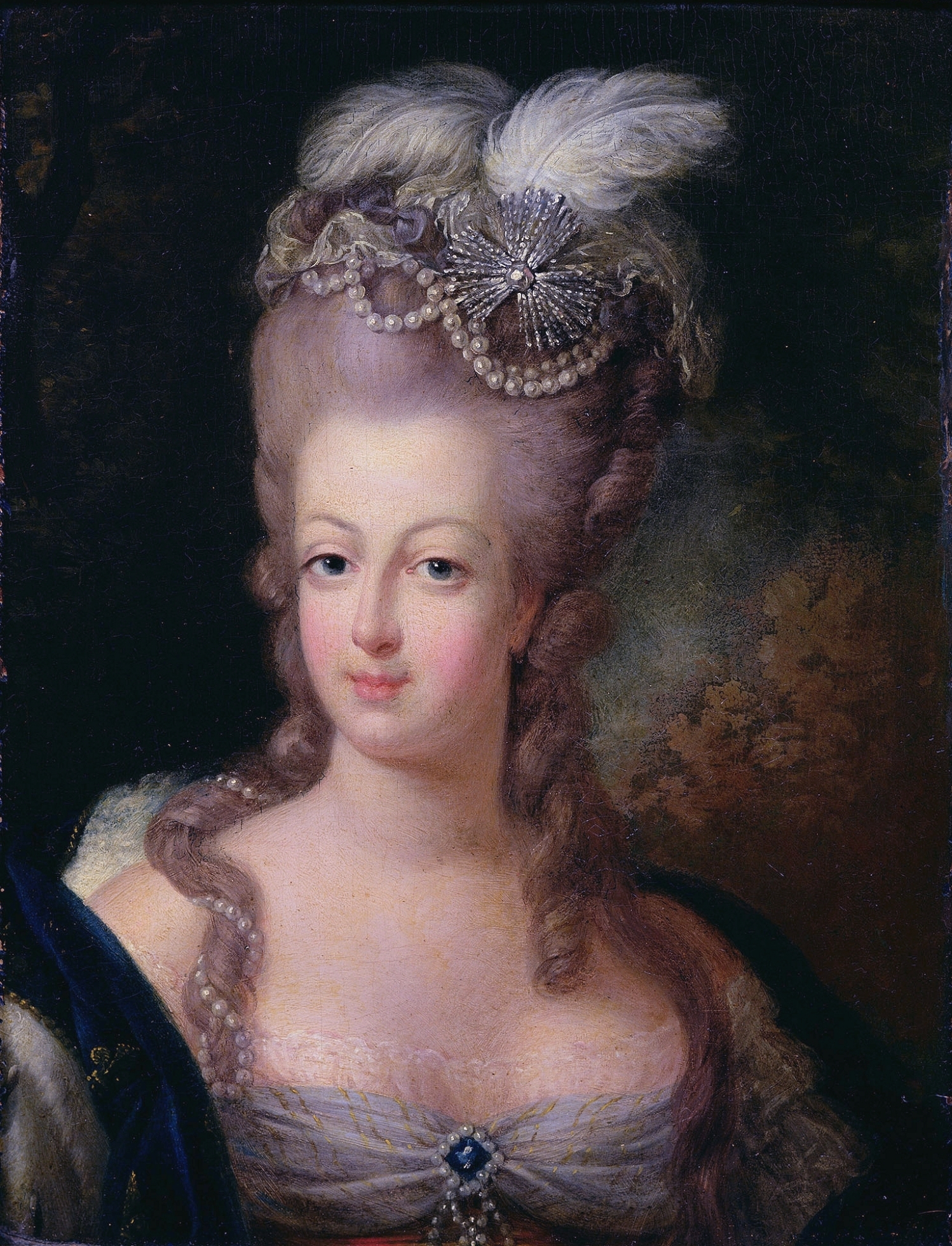
This is her story.
From Vienna to Versailles: A Child Bride
Marie Antoinette was born Maria Antonia in Vienna on 2 November 1755. She was the 15th child of Empress Maria Theresa of Austria and Emperor Francis I.
She grew up in the Habsburg court — pampered, educated, and trained for one purpose: a political marriage. In 1770, France chose her. She would marry Louis-Auguste, heir to the French throne.
She was 14. He was 15.
She crossed into France alone. Austrian protocol required it. Her servants, her clothes, even her dog — all left behind. She became French the moment she stepped over the Rhine.
The journey to Versailles took weeks. When she arrived, 20,000 people packed the palace grounds. The court inspected and judged her before she could speak a word of proper French.
She did something remarkable. She stepped forward, smiled, and curtsied to the crowd. The crowd roared. She had arrived — and she already understood how to play the room.
Life at Versailles: Beautiful, Brutal, and Utterly Lonely
Versailles was not simply a palace. It was a machine. Every moment of court life followed strict rules. Courtiers fought for the right to dress the queen. They squabbled over who could speak to her first. They jostled for the honour of holding a candle at her bedtime.
Marie Antoinette hated it. She found the ritual suffocating. She had little privacy and almost no freedom. Her daily life was a performance, staged for thousands of watching eyes.
Her husband was kind but awkward. Louis and Marie Antoinette did not consummate their marriage for seven years. The delay humiliated her. Without children, she had no clear purpose at court. The gossip turned vicious.
To cope, she built her own world. She hosted small private parties. She adored music, theatre, and fashion. She grew close with a tight circle of friends, particularly the Duchess de Polignac. That circle attracted scandal. The gossip spread further still.
Her spending was real. She was extravagant with clothing. She lost money at cards. But the figures her enemies quoted were wildly exaggerated. The royal family spent enormous sums across the board — and Marie Antoinette spent far less than the rumours suggested.
The nickname they gave her stung: Madame Deficit.
Yet contemporaries who met her noted her warmth and charm. She donated to charities. She visited poor families during harsh winters. She reduced the royal household’s bread consumption during famine. None of this reached the pamphlets that spread through Paris.
The Petit Trianon: Her One True Home
Louis XVI gave her the Petit Trianon as a personal gift when he became king in 1774. She adored it immediately.
The Petit Trianon sits at the edge of the Versailles gardens. It is small by royal standards — more elegant house than grand palace. Marie Antoinette redesigned its grounds in the English style. She planted trees and added winding paths. She filled the gardens with flowers and hidden corners.
Then she built something even more extraordinary.
The Hameau de la Reine — the Queen’s Hamlet — was a model farm she built between 1783 and 1789. It looked like a Norman village. Thatched cottages, a working mill, a real dairy. Cows and sheep grazed on the grounds. The image at the top of this article shows you what it looks like today.
🇫🇷 Enjoying this? 7,000 France lovers get stories like this every week. Subscribe free →
People mocked the Hameau. They called it a fantasy — a queen playing at being poor. But Marie Antoinette genuinely loved it there. She grew vegetables. She visited the animals. She escaped the rigid theatre of Versailles and breathed freely for a few hours.
Today, you can walk the same paths she walked. The thatched cottages still stand. The lake still reflects the sky. The Hameau de la Reine is one of the most quietly atmospheric places in all of France. If you plan to visit Versailles on a day trip from Paris, allow time for the Trianon estate — most visitors rush through the main palace and miss the best part.
The Lie That Stuck: “Let Them Eat Cake”
This is the most famous thing Marie Antoinette never said.
The phrase — “Let them eat cake,” or Qu’ils mangent de la brioche — appears in Jean-Jacques Rousseau’s Confessions. He wrote it years before Marie Antoinette arrived in France. He did not name the speaker. He called her simply “a great princess.”
No reliable historical source ever recorded Marie Antoinette saying it. Her letters contain no trace of it. Contemporary accounts from people at court do not mention it. Revolutionaries attached the quote to her as propaganda — and it worked brilliantly.
The real Marie Antoinette behaved quite differently during food shortages. She reduced bread at the royal table. She gave money from her own purse to poor families. She visited charitable institutions. None of this fit the narrative that enemies needed to build against her.
So they told a simpler story, and the simpler story won.
The Revolution: Her World Falls Apart
France’s financial crisis had been building for decades. By 1789, the state was bankrupt. The harvest had failed two years running. People starved in the streets of Paris. Anger rose — and it focused on the royal family.
The French Revolution began in the summer of 1789. In October, a mob marched to Versailles. They dragged the royal family back to Paris. Marie Antoinette never returned to Versailles.
The family lived under guard in the Tuileries Palace. In 1792, revolutionaries declared France a republic. They arrested the royals and locked them in the Temple fortress.
Louis XVI went to the guillotine on 21 January 1793. Marie Antoinette waited in her cell.
She had eight more months to live.
Her Trial and Death: Dignity at the End
Guards moved her to the Conciergerie prison in August 1793. By then, her hair had turned white. She was thin, unwell, and exhausted from months of grief and confinement. But she was not broken.
Her trial lasted two days. Prosecutors charged her with financial waste and plotting against France. Then they added something worse — a sexual charge involving her young son.
She stayed silent for a long moment. Then she turned to face the crowd and spoke directly to every mother in the room.
“Nature itself revolts at such a charge laid against a mother.”
The courtroom fell silent. Even some of her accusers shifted uncomfortably.
The jury found her guilty. The sentence was death.
On 16 October 1793, she rode a cart through Paris to the guillotine. She accidentally stepped on her executioner’s foot. She apologised immediately.
“Pardon me, sir. I did not do it on purpose.”
They were among her last words. She was 37 years old.
Where to Follow Her Story in France Today
Marie Antoinette left traces across France that heritage travellers can visit today.
Versailles — Petit Trianon and Hameau de la Reine: The queen’s personal estate is a short walk from the main palace. Most Versailles tickets include access, with a small supplement for the Trianon palaces. The Queen’s apartments inside the main palace are also open to visitors.
The Conciergerie, Paris: Her cell is preserved and open to the public. The Conciergerie sits on the Île de la Cité in central Paris, beside the Sainte-Chapelle. It is one of the most moving historical spaces in all of France — intimate, quiet, and sobering.
The Basilica of Saint-Denis, Paris: The French royal family found their burial place here. In 1815, workers reburied Marie Antoinette and Louis XVI here together. The basilica sits north of central Paris and is open to visitors year-round.
If you plan to follow her story on a heritage trip through France, these three sites connect the pieces. Walking through the Hameau de la Reine on a quiet morning — on the same paths she walked — makes French history feel very close indeed.
If you want to understand the world she lived in, the story of Louis XIV and the building of Versailles explains how the palace machine she found so suffocating came to be.
Frequently Asked Questions About Marie Antoinette
Was Marie Antoinette really as extravagant as people say?
She was extravagant with fashion and entertainment, but her enemies exaggerated the figures. She spent considerably less than the men at court, including her husband’s brothers. The “Madame Deficit” nickname was political propaganda more than an accurate account of royal finances.
Did Marie Antoinette really say “Let them eat cake”?
Almost certainly not. The phrase appears in Rousseau’s writing years before she arrived in France. No historical source records her saying it. Revolutionaries attached the quote to her as propaganda — and it stuck, despite being almost certainly invented.
Where can I visit Marie Antoinette’s personal spaces at Versailles?
The Petit Trianon and the Hameau de la Reine both sit on the Versailles estate. A short walk from the main palace takes you there. Most Versailles tickets include the Trianon palaces with a small additional fee. The Hameau de la Reine is open during the warmer months.
How old was Marie Antoinette when she died?
She was 37 years old. She faced the guillotine on 16 October 1793, nine months after her husband Louis XVI. She had lived in France for 23 years — arriving as a 14-year-old bride and dying as a prisoner of the revolution.
Where is Marie Antoinette buried?
Marie Antoinette and Louis XVI are buried at the Basilica of Saint-Denis, north of Paris. Their remains were reinterred there in 1815. The basilica also holds the tombs of many earlier French monarchs, including those from the time of the great dynasties of medieval France.
You Might Also Enjoy
- Versailles Day Trip from Paris: Everything You Need to Know (2026)
- The French Revolution: How France Changed the World Forever
- Louis XIV and Versailles: How the Sun King Shaped France and the World
Plan Your France Trip
New to France or planning your first heritage journey? Our France travel planning guide has everything you need to get started.
Join 7,000+ France Lovers
Every week, get France’s hidden gems, seasonal guides, local stories, and the art of la vie française — straight to your inbox.
Subscribe free — enter your email:
Free forever · One email per week · Unsubscribe anytime
Tours & experiences you might love


Powered by Viator. Some links are affiliate links — we may earn a small commission at no extra cost to you.

Leave a Reply