
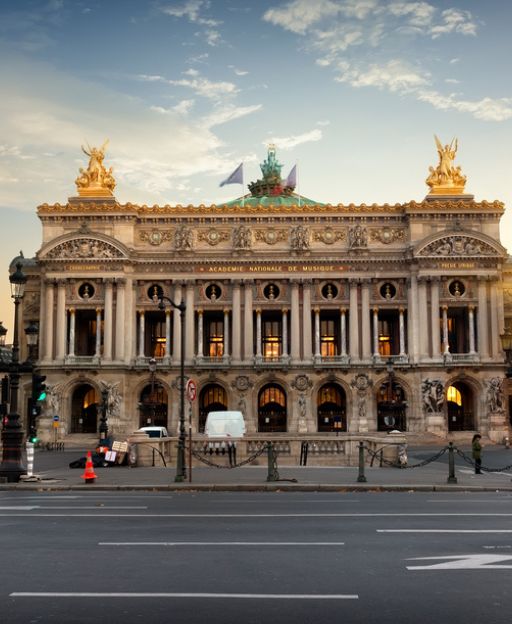
Beneath the most glamorous building in Paris, something unexpected is hiding. Not a wine cellar. Not a storage vault. A lake. Sealed inside a concrete chamber and fed by underground springs, it has been there since the 1860s. It is still there now.
How It Got There
In 1861, the architect Charles Garnier began building Napoleon III’s grand opera house. The site he chose — a marshy plot in Paris’s 9th arrondissement — sat above a network of underground waterways that nobody had properly mapped.
As workers dug the foundations, water poured in.
Garnier tried to drain it. His pumps ran without stopping for eight months. The water kept returning. No matter how fast the team removed it, underground sources refilled the pit overnight.
He changed his approach entirely. Rather than fighting the water, he built around it. His team sealed the underground chamber in a double skin of concrete and let it fill. The lake became part of the foundation itself — something the building would rest above for the next century and a half.
What Lives Down There Now
The lake sits roughly six metres below the ground floor of the opera. It stretches across a wide section of the building’s footprint. The water is cold and dark. Natural light never reaches it.
Nobody goes down there for pleasure. But people do go down.
The Paris fire brigade has used the lake for years as a diving training ground. Firefighters practise underwater skills in the dark chamber beneath one of the most ornate buildings on earth. The exercises happen in near-silence, far below the ticket-holders above.
There are also fish. Carp have lived in the lake for decades. They serve a practical purpose: if the fish die, something has changed in the water. They work as a living early-warning system, monitored without fuss by the building’s maintenance staff.
The Chandelier and the Phantom
In 1896, a counterweight came loose from the ceiling machinery. It fell and struck a concierge sitting in the audience below, killing her. The famous chandelier — seven tonnes of bronze and crystal — swayed but held.
Fourteen years later, a writer named Gaston Leroux published a novel. He had spent months studying the opera house. He knew about the underground lake. He wrote about a masked figure who lived in its shadows, moving through the building’s hidden lower levels.
The Phantom of the Opera was not entirely a fiction.
🇫🇷 Discover the France Most Tourists Never Find
Get our free guide to 25 hidden villages of France — then join 7,000+ readers for weekly stories about places most guidebooks never mention.
Get Your Free Village Guide →The Man Who Paid to Attend His Own Opening
Charles Garnier spent 15 years on the opera house. He managed every decision — the marble staircases, the bronze balustrades, the sight lines from every seat in the house. The building was the centrepiece of Napoleon III’s reimagined Paris.
When it finally opened in January 1875, Garnier attended the ceremony.
He had not been invited. Most accounts agree that Garnier bought his own ticket and sat without ceremony among the crowd. Dignitaries took credit on the stage. The man who had given the building its existence sat quietly in the dark.
What Most Visitors Never Notice
The floors you cannot see
The Palais Garnier has 17 floors in total. Seven sit above street level. Ten go underground, descending in layers toward the lake at the bottom. The building contains over 2,000 rooms. Most have never appeared on a public tour, and many have never been formally catalogued.
The ceiling that caused a scandal
In the main auditorium, the painted dome is the work of Marc Chagall. He created it in 1964, covering the original ceiling with vivid, dreamlike panels full of dancers, musicians, and fragments of Paris. Traditionalists objected loudly. They still do. The ceiling is also extraordinary — luminous blues and golds floating above the red velvet below.
The bees on the roof
Above all of this — above the golden statues and the copper dome — four beehives sit on the roof in quiet rows. The Paris Opéra has kept bees there since 2008. The honey is sold in the gift shop downstairs.
The Palais Garnier runs public tours most mornings. Visiting before midday makes a real difference — the building is calmer and the light inside changes beautifully as the sun moves. Start planning your time in France at our France travel planning guide. For ideas beyond central Paris, our guide to the best day trips from Paris covers some routes that most visitors never find.
The lake is not on any tour. You cannot book a ticket to stand beside it. But knowing it is there changes how the lobby above feels. Every footstep crosses above still water. The chandelier hangs over secrets. And somewhere in the dark below, carp are circling.
Join 7,000+ France Lovers
Three times a week, get France’s hidden gems, seasonal guides, local stories, and the art of la vie française — straight to your inbox.
Subscribe free — enter your email:
Free forever · Unsubscribe anytime
🇫🇷 You Might Also Love
Tours & experiences you might love


Powered by Viator. Some links are affiliate links — we may earn a small commission at no extra cost to you.

Leave a Reply