
In France, there is a word for wandering through a city with no particular aim. It is not laziness. It is not being lost. It is an art form — and the French have practised it for centuries.
What Flâner Actually Means
The French verb flâner (fla-nay) has no direct English translation. “To stroll” or “to wander” come close, but neither captures it fully. To flâner is to walk slowly with open eyes and no agenda at all.
A person who does this is a flâneur (masculine) or flâneuse (feminine). The concept dates back centuries in French literature. The 19th-century poet Charles Baudelaire gave the flâneur his modern form — an observer of city life, drifting through crowds without urgency, taking everything in.
Baudelaire described the flâneur as someone who makes their home in the crowd — not rushing, not shopping, not ticking anything off a list. Simply watching the world move.
Unlike other French concepts that puzzle outsiders, flânerie needs no explanation once you feel it. You simply know it when it happens.
How the French Still Practise It
Walk any French city on a Sunday morning and you will see flânerie in action. A man pauses to read the headlines posted in a café window. Nearby, a woman stands on a bridge watching the river. Down the street, an elderly couple walks slowly through the market without buying a thing.
There is no phone in hand. No podcast in the ear. No destination ticked off a list.
In French culture, se promener — taking a walk — is a legitimate activity in itself. You do not need a reason to walk. You do not need to arrive anywhere. The walk is the point.
This also explains why French cafés charge more the moment you sit down. The terrace is not a stop on the way somewhere else. It is the destination — a place to slow down and watch the city from a fixed point.
Why Tourists Almost Always Miss It
Most visitors to Paris move between monuments. The Eiffel Tower. The Louvre. Sacré-Cœur. They follow a map, check off a list, and return to the hotel exhausted.
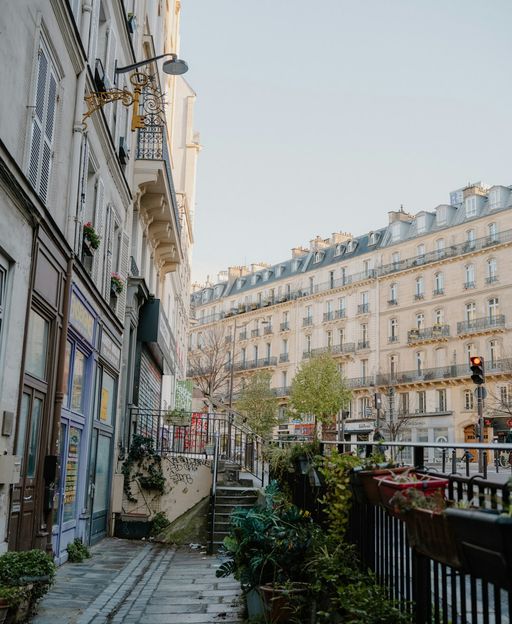
France’s best moments are not in any guidebook. They live in the Montmartre passageway that opens onto an unexpected courtyard. Another is the Bordeaux back street where a baker stacks bread before 7am. Then there is the Lyon staircase that connects two hilltop districts most tourists never reach.
These places do not appear on maps. You only find them by walking with no destination.
🇫🇷 Discover the France Most Tourists Never Find
Get our free guide to 25 hidden villages of France — then join 7,000+ readers for weekly stories about places most guidebooks never mention.
Get Your Free Village Guide →Where Flânerie Works Best in France
Paris is the original home of the flâneur. The covered passages — les passages couverts — date from the 19th century. The Galerie Vivienne and the Passage des Panoramas still stand today, glass-roofed and mostly overlooked, perfect for an hour of slow exploration.
But flânerie belongs to every French city. Lyon’s Presqu’île rewards slow walking between two rivers. Bordeaux’s Saint-Michel quarter changes character block by block. Montpellier’s medieval Écusson district has streets barely wider than your shoulders.
Even small Provençal villages invite it. A half-hour walk through Gordes or Les Baux-de-Provence reveals more than two hours of guided touring. Slow down, and France shows you things that speed keeps hidden.
How to Build Flânerie Into Your Trip
The method is simple. Pick a neighbourhood. Leave the map behind. Walk.
Set one rule: no itinerary, no time limit, no ticking off sights. When something catches your eye — a doorway, a courtyard, a smell from a kitchen window — stop. Look properly. Let the place come to you.
The French phrase for this is se laisser porter par la ville — letting yourself be carried by the city. Begin your France planning at our complete France travel guide, but leave space in every day for this.
What does flâner mean in French?
The verb flâner means to wander slowly through a city with no fixed destination. It describes purposeful idleness — walking to observe and discover, not to arrive. A person who practises it is a flâneur (masculine) or flâneuse (feminine).
Where is the best place to practise flânerie in Paris?
The covered passages are ideal — try the Galerie Vivienne near the Palais-Royal or the Passage des Panoramas near the Grands Boulevards. The Marais district, the quays along the Seine, and the backstreets of Montmartre also reward slow, unplanned walking.
How is flânerie different from just going for a walk?
Flânerie has a specific quality: it is observational. The goal is to notice the city — its details, its rhythms, its people — not simply to cover ground. A flâneur moves at the pace of attention, not the pace of exercise.
Can tourists practise flânerie, or is it something only the French do?
Anyone can do it. The only requirement is to resist the urge to see everything. Give yourself two free hours in one neighbourhood with no plan — walk, stop, look. Most visitors who try it say it becomes the highlight of their trip.
France is best understood slowly. Not in landmarks and highlights, but in ten-minute pauses on an unknown street, watching a city move at its own pace. That is flânerie. That is what the French have always known — and what every visitor deserves to discover.
Join 7,000+ France Lovers
Three times a week, get France’s hidden gems, seasonal guides, local stories, and the art of la vie française — straight to your inbox.
Subscribe free — enter your email:
Free forever · Unsubscribe anytime
🇫🇷 You Might Also Love
Tours & experiences you might love


Powered by Viator. Some links are affiliate links — we may earn a small commission at no extra cost to you.

Leave a Reply