
By 9 o’clock on a Saturday morning at the Arcachon Basin, the oysters are already on the table. Not in a restaurant. Not at a starched-tablecloth dining room with a sommelier hovering nearby. Out here, you stand at a rough wooden counter facing the water.
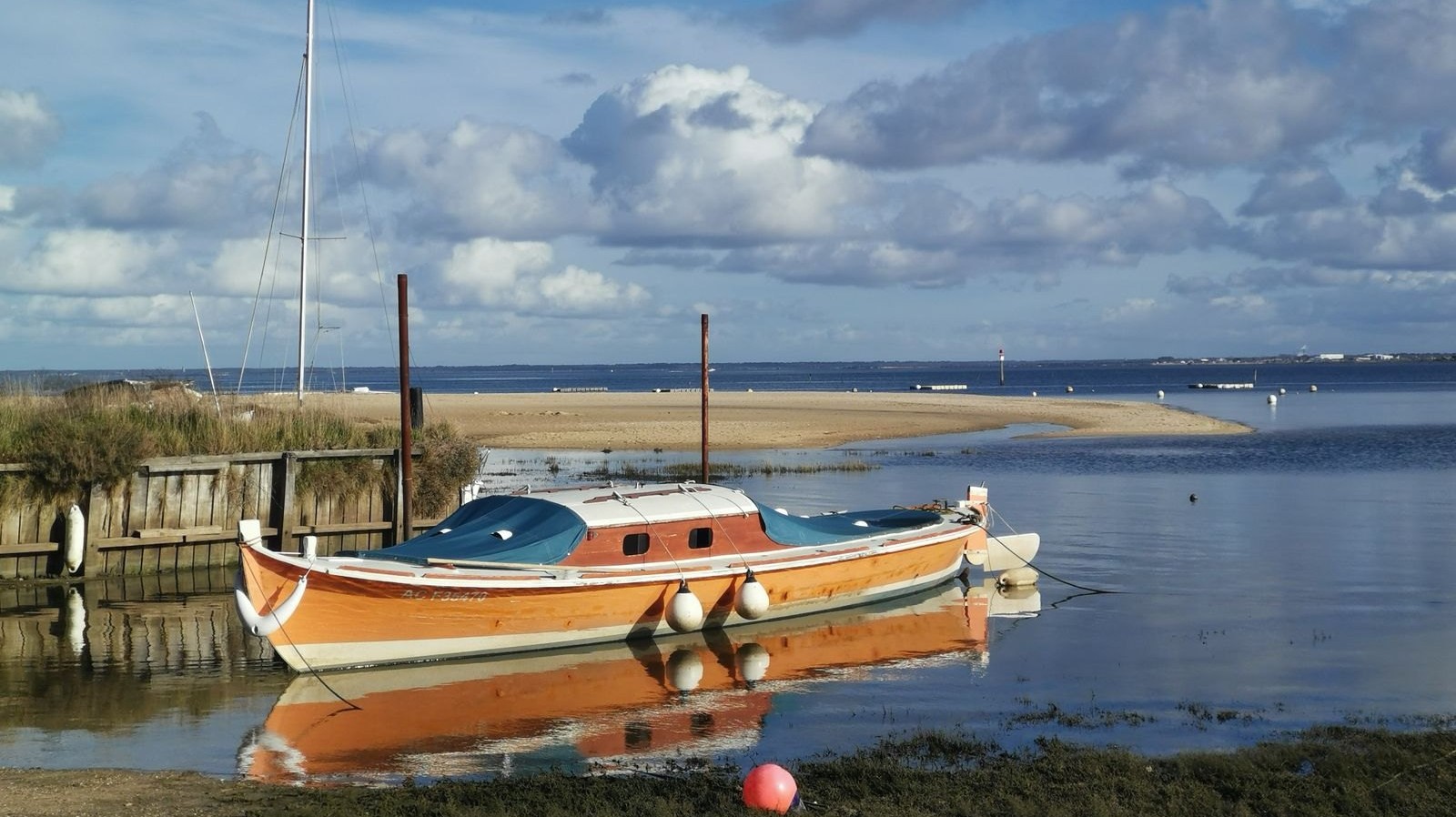
A dozen freshly shucked oysters arrive on a bed of crushed ice. A cold glass of dry white wine is pushed in your direction. Nobody tells you to sit down, because there is nowhere to sit. This is how France really eats oysters.
The Basin That Quietly Feeds a Nation
The Arcachon Basin sits on France’s Atlantic coast, a short drive south of Bordeaux. It is a sheltered inland sea — roughly 155 square kilometres of warm, shallow water — cut off from the open Atlantic by a narrow gap at its entrance. Tidal waters rush in and out twice a day, keeping the basin clean and mineral-rich.
France grows around 75,000 to 80,000 tonnes of oysters a year, close to nine in ten of all the oysters farmed in Europe. The Arcachon Basin is one of its best-known oyster regions. When French families gather for Christmas or New Year, and when oysters appear on menus across the country in autumn, oysters from these shallows are part of the feast.
The farms here are called parcs à huîtres. At low tide, you can see them stretching across the basin floor — long rows of metal cages arranged in neat grids, barely visible above the waterline. Inside each one, hundreds of oysters are growing slowly in the phytoplankton-rich water.
The farming families who tend them have done this work for generations. Some for over a century. The knowledge — when to move the cages, when the water temperature shifts, when the season peaks — is passed down at the dinner table, not in any classroom.
The Morning Ritual Nobody Mentions in the Guidebooks
Most visitors arrive at the Arcachon Basin for the Dune du Pilat — the highest sand dune in Europe — or to take a ferry across to the pine-covered peninsula of Cap Ferret. Few realise that the most genuine experience here starts before the tourist boats begin to run.
The oyster farmers open their small wooden shacks — called cabanes — at dawn. By nine in the morning, oysters are being shucked on the counter and laid out on ice. Families who drove down from Bordeaux for the weekend are already gathered around the wooden boards, leaning on the railing above the water.
A dozen oysters costs around six euros. A glass of pale, dry white wine — sometimes a local muscadelle, sometimes a crisp Entre-Deux-Mers — is poured alongside. You eat standing up. The light is still soft. Fishing boats are heading out across the basin.
This is not a staged experience designed for visitors. It is Tuesday for the people who live and work here. The fact that it happens to be extraordinary is entirely beside the point.
What Makes an Arcachon Oyster Different
Not all oysters taste the same, and not all basins produce the same flavour. The Arcachon oyster belongs to the Pacific variety — the huître creuse — which was brought in from Japan and Canada in the early 1970s, after disease wiped out the Portuguese oyster that French farms had relied on until then. The Pacific oyster adapted quickly to the basin’s warm, shallow conditions and soon became the standard here.
What gives Arcachon oysters their character is the water itself. The basin is warmer than the open Atlantic and slightly less salty. It is rich in the tiny algae that oysters feed on. The result is an oyster that is notably plump, with a mild, clean flavour and a faintly sweet, almost nutty finish.
They are less briny than the oysters of Brittany, more subtle than those from Normandy.
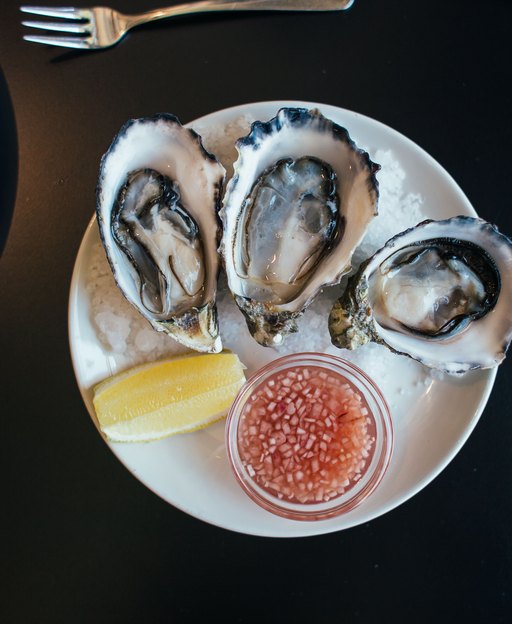
Locals eat them with nothing more than a small squeeze of lemon, or a drop of shallot vinegar: the sauce mignonette served with oysters across France. Tabasco and cocktail sauce are not part of the ritual. The oyster already has a flavour. The point is to taste it. Our mignonette recipe is just below.
Enjoying this? France lovers get stories like this every week. Subscribe free →
How to Serve Oysters with Mignonette at Home
You don’t need a cabane on the water to eat oysters the French way. Three ingredients make the mignonette, the shallot vinegar that sits beside so many French oyster platters, and the only skill to learn is opening the shells safely. Here is how we do both.
Oysters with Mignonette Sauce (Shallot Vinegar)
Ingredients
Equipment
Method
- Stir the vinegar, shallot, crushed pepper and salt together in a small bowl. Cover and chill for at least 1 hour so the shallot softens into the vinegar.
- Keep the oysters cold until you open them: in the bottom of the fridge, lying flat with the rounded side down. Use only oysters with tightly closed shells.
- To open each oyster, fold a thick towel several times and hold the oyster in it, rounded side down, with the hinge (the pointed end) towards you, or wear a cut-resistant glove. Push the tip of an oyster knife into the hinge and twist until the shell pops. Keep the blade pointing away from your hand.
- Slide the knife along the inside of the top shell to cut the muscle, lift off the top shell, then slide the knife under the oyster to free it, keeping as much of the liquid in the shell as you can. Check it is alive: prick the edge with the knife tip and it should flinch. Throw away any oyster that does not react, smells bad or looks dry.
- Set the opened oysters on a platter of crushed ice or coarse salt so they sit level. Serve at once with the lemon wedges, the mignonette with a small spoon, and bread and salted butter.
Notes
The Coloured Cabanes of Cap Ferret
Take the ferry from Arcachon town across the water to Cap Ferret — a narrow spit of land running parallel to the coast, covered in tall maritime pines — and you arrive at one of the most quietly beautiful corners of France.
Along Cap Ferret’s eastern shore, facing back across the basin, a row of brightly painted wooden shacks lines the water’s edge. They come in vivid blues, reds, yellows, and deep ochres. These are the oyster cabanes, and each one belongs to a farming family that has worked these waters for decades.
Most serve food at outdoor tables set on wooden docks directly over the water. You sit — or stand — with oysters in front of you and look out across the flat basin towards the vast white slope of the Dune du Pilat in the distance. On a clear winter morning, the light here is extraordinary. The water reflects the sky. A heron stands motionless on a nearby post. Nobody is in a hurry.
Some of the cabanes have been in the same family since the 1920s. You can feel that continuity in the way the counter is worn smooth, in the way the owner shucks without looking up, in the regulars who arrive at the same time every Saturday without needing to say why.
Planning Your Visit to the Arcachon Oyster Farms
The oyster season at Arcachon runs year-round, but the flavour peaks between September and April, when the water is cooler and the oysters are firmer and more intensely flavoured. Summer brings larger crowds and heat that can affect both the experience and the quality of the oysters themselves.
On weekends, particularly Saturday mornings, the best cabanes fill up by ten o’clock. Arriving before 9am means you get the full ritual: the quiet water, the first glass of wine, the freshest oysters of the day. Weekday mornings offer the same experience with far fewer people and a pace that feels properly unhurried.
Getting there is straightforward. From Bordeaux, the drive takes about an hour by road. Trains run regularly from Bordeaux Saint-Jean station to Arcachon, with the ferry to Cap Ferret departing from the Jetée Thiers pier. The whole outing — train, ferry, cabanes, ferry back — makes an ideal day trip from the city.
If you are planning a wider trip to the region, the Bordeaux travel guide covers the vineyards, châteaux, and food culture of the area in full. For a wilder stretch of France’s Atlantic coast, the Brittany coast guide explores a completely different mood. And if you are still at the early stages of planning, the France trip planning guide is the place to start.
France has a particular talent for turning something simple into something you will never forget. A wooden counter. A dozen oysters. A glass of cold wine. The smell of the sea.
There is no fanfare here. No theatre. Just the basin, the water, and the quiet ritual of people who have been doing this, in this same place, for over a hundred years.
Join the France Lovers
Three times a week, get France’s hidden gems, seasonal guides, local stories, and the art of la vie française — straight to your inbox.
Subscribe free — enter your email:
Free forever · Unsubscribe anytime
Love France? So Do We.
Join our free newsletter and get the best of France — travel tips, hidden villages, food traditions, and cultural stories — straight to your inbox every week.
Free. No spam. Unsubscribe anytime.
📥 Free Download: France Travel Planning Guide
Itineraries, insider tips, and the places you must not miss on your next trip to France.
🇫🇷 You Might Also Love
Tours & experiences you might love


Powered by Viator. Some links are affiliate links — we may earn a small commission at no extra cost to you.

Leave a Reply