
In the summer of 1905, Henri Matisse arrived in a small fishing village at the foot of the Pyrenees. The light stopped him cold. It hit the water at an angle unlike anything he had seen in Paris — brighter, harder, and more alive. He picked up his brushes and started painting in ways he had never dared before.
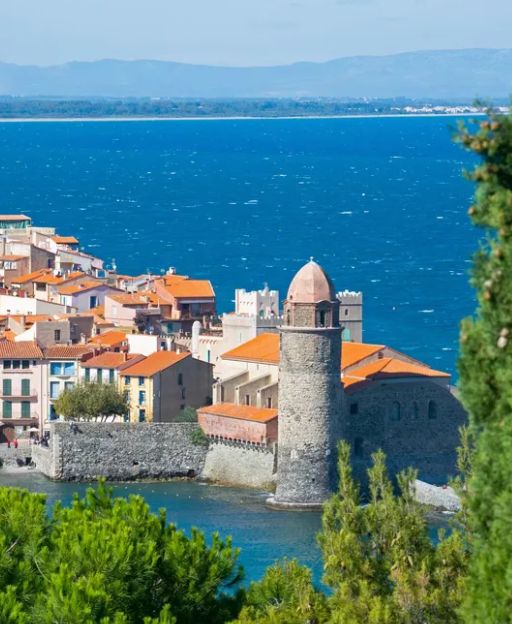
The Summer That Changed Modern Art
Matisse came to Collioure in June 1905 with his friend André Derain. They had planned a short stay. They ended up spending three months, painting almost every day.
The Mediterranean light at Collioure does something specific. Shadows read purple, not grey. Colours intensify rather than bleach in the heat. The whole bay pulses with a clarity that feels almost aggressive to a painter trained in northern studios.
Both artists abandoned the muted, realistic palette they had spent years perfecting. They worked directly from sensation — raw yellows, electric oranges, blocks of vivid pink and green that had no obligation to represent nature faithfully.
That autumn, they exhibited the work in Paris. Critics reacted with horror. One reviewer wrote that the paintings looked as though wild beasts had made them — les fauves in French. The word stuck. Fauvism, the movement that broke colour free from expectation, began on this small Catalan bay.
A Town That Earns Its Reputation
Collioure sits 26 kilometres north of the Spanish border, where the Pyrenees drop almost vertically into the sea. You can walk the entire town in twenty minutes. Most visitors take far longer.
The harbour is anchored by the Château Royal de Collioure, a fortress built by the Knights Templar and later expanded by the Kings of Aragon and then France. It stands directly in the water, with fishing boats tying up within metres of its ancient walls.
Behind the harbour rises the Église Notre-Dame-des-Anges, whose distinctive round tower once served as the town’s lighthouse. Pink and ochre facades line the waterfront. Orange-tiled rooftops stack up the hillside behind. This is the view Matisse painted more than forty times. It has not changed much since.
Collioure belongs to the wider Roussillon — a region with a strong Catalan identity and centuries of French-Spanish crossover. Our guide to the corner of France that has always felt closer to Barcelona gives you the full picture. For trip planning, start with our France planning hub.
The Anchovy Business Nobody Mentions
Collioure has a second identity that most visitors miss entirely. The town produces some of the finest anchovies in France — a tradition stretching back to at least the 14th century.
Fishing boats land catches of anchovies in summer. Workers at family-owned establishments salt and press them using the old method, a process that takes months. The result bears no resemblance to the soft, briny versions in supermarket jars. A Collioure anchovy is firm, rich, and made for good bread and a glass of local Banyuls wine.
The Roque anchovy factory has operated continuously since 1870. It welcomes visitors through the summer season and sells directly from its shop on the main street.
Enjoying this? 7,000 France lovers get stories like this every week.
Thinking about it for retirement? If you’ve started thinking seriously about retiring there, our complete our full Retire in France guide covers the visa, healthcare, cost-of-living, and the regions worth shortlisting.
Walking Where Matisse Stood
Collioure runs a free, self-guided trail called the Chemin du Fauvisme. It places twenty high-quality reproductions of the 1905 Matisse and Derain paintings at the exact spots where each work was painted.
You walk the same paths. You stand where they stood. Then you look at what they made from those views — and notice what they changed, what they kept, and what they invented entirely.
The trail takes roughly an hour to complete. It asks nothing except attention. Most visitors find it quietly remarkable — the kind of experience that makes a place feel genuinely different from a standard tourist stop.
When to Visit Collioure
July and August bring the crowds. Restaurants fill by noon. The harbour path becomes difficult to walk without stopping every few metres. The light is extraordinary in summer — you can see precisely why Matisse responded so strongly — but the town works harder in the heat.
May, June, and September give you the better balance. The sea stays swimmable from late May onwards. Restaurants run full menus. Prices drop noticeably. The Chemin du Fauvisme feels like your own discovery rather than part of a guided group.
Collioure also works as a base for the Côte Vermeille — the rocky, dramatic stretch of Mediterranean coastline between the town and the Spanish border. The inlets and headlands here are some of the most striking coastal scenery in southern France.
Frequently Asked Questions About Collioure
Is Collioure worth a day trip from Barcelona?
Yes. Trains run regularly from Barcelona to Perpignan, and from Perpignan a bus or local train reaches Collioure in under an hour. The full journey takes roughly two hours each way. Most visitors spend a full day and find it easily worth the trip.
What is the Chemin du Fauvisme in Collioure?
The Chemin du Fauvisme is a free, self-guided walking trail. It places large reproductions of Matisse and Derain’s 1905 paintings at the exact spots where each was made. The route covers the harbour, hillside paths, and key viewpoints above the town, and takes about an hour to complete.
When is the best time to visit Collioure, France?
May, June, and September offer the best experience — warm weather, a swimmable sea, open restaurants, and far fewer visitors than peak summer. July and August are very busy and very hot. The town stays open year-round, though some smaller businesses close in winter.
How long do you need to see Collioure properly?
A full day covers the harbour, the Château Royal, the Chemin du Fauvisme, and a proper waterfront lunch. Staying overnight means you see the town after day-trippers leave — the harbour quietens, restaurants slow down, and Collioure becomes a different place entirely.
The light that changed Matisse still falls on Collioure the same way. The fishing boats still leave before dawn. Stand at the harbour at the right angle — castle behind you, Pyrenees ahead, sea catching the afternoon sun — and you might understand for a moment why a painter arrived here and forgot everything he had learned.
Join 7,000+ France Lovers
Three times a week, get France’s hidden gems, seasonal guides, local stories, and the art of la vie française — straight to your inbox.
Subscribe free — enter your email:
📲 Know someone who’d love this? Share on WhatsApp →
Love more? Join 65,000 Ireland lovers → · Join 43,000 Scotland lovers → · Join 29,000+ Italy lovers →
Free forever · Unsubscribe anytime
🇫🇷 You Might Also Love
Tours & experiences you might love


Powered by Viator. Some links are affiliate links — we may earn a small commission at no extra cost to you.

Leave a Reply