
In a small town in the south of France, a group of grown adults once gathered in ceremonial robes to settle a debate about beans. They were deadly serious. The beans, they insisted, were a matter of honour.
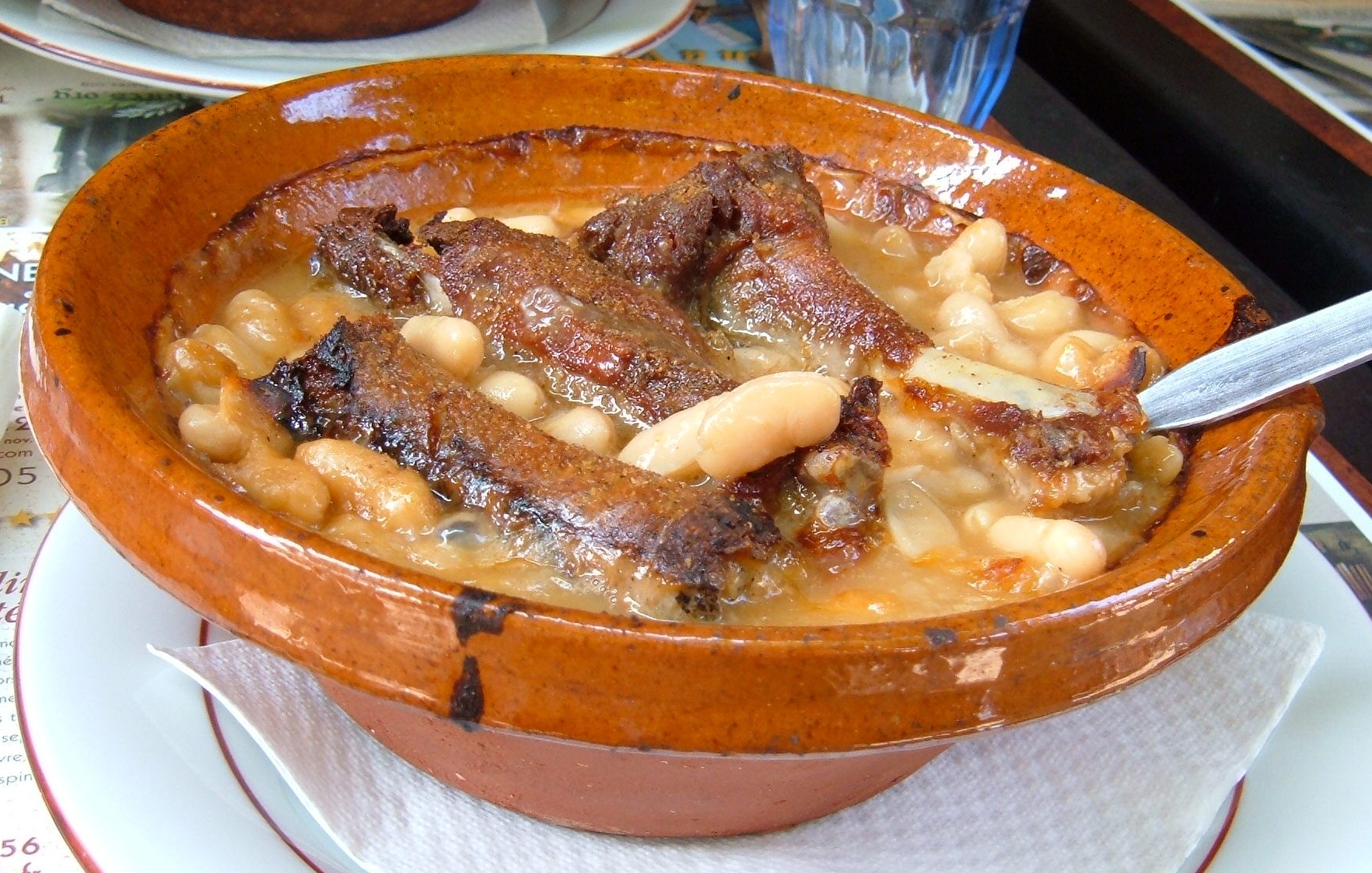
That is the world of cassoulet — a slow-cooked stew of white beans and meat that has divided the Languedoc region of France for the better part of seven centuries. Three towns claim ownership of the dish: Toulouse, Castelnaudary, and Carcassonne. Each one insists the others are doing it wrong.
Where the Argument Began
The most popular origin story dates to the Hundred Years War. According to local legend, the town of Castelnaudary was under siege by the English. Starving residents pooled everything they had — dried beans, salt pork, scraps of meat — and cooked it together in one great pot. The resulting stew gave the townspeople the strength to fight back and drive the English away.
It’s a good story. Castelnaudary repeats it often. Toulouse and Carcassonne, predictably, find it unconvincing.
Three Towns, Three Recipes
The three towns don’t just disagree on history. They disagree on what goes in the pot.
Castelnaudary uses pure pork: pork knuckle, pork rind, smoked sausage, and a generous amount of lard. Nothing else. To add anything else, they argue, is to ruin it.
Carcassonne disagrees. They add partridge during hunting season, and sometimes lamb. The medieval walled city brings a wilder, earthier edge to the stew.
Toulouse — the largest of the three cities — uses its own celebrated sausage, the Toulouse sausage, along with duck confit. The duck gives a richness that partisans from Castelnaudary consider an unnecessary complication. Toulouse partisans consider it essential.
The Brotherhood Takes Charge
In 1955, Castelnaudary decided enough was enough. They founded the Confrérie du Cassoulet — the Brotherhood of the Cassoulet — a formal body dedicated to defending the authentic recipe. Members wear ceremonial robes and carry official titles. They hold annual banquets. They issue proclamations.
Their official decree: a true cassoulet must be at least 30% meat by weight, cooked in a cassole — the wide-mouthed earthenware dish that gives the stew its name. The beans must be lingots blancs, grown locally in the Lauragais plain.
Toulouse has its own culinary brotherhood too. They have opinions about the Brotherhood of the Cassoulet’s opinions.
Enjoying this? 7,000 France lovers get stories like this every week.
Thinking about it seriously? If you’ve started actually planning a move, our complete our complete Moving to France guide walks through every step, every cost, and the paperwork that catches most people out.
The Seven-Hour Rule
Whatever goes into the pot, one thing all three towns agree on: cassoulet cannot be rushed. The stew simmers low and slow for hours. A crust forms on top. A true cook breaks that crust and pushes it down into the beans. Then another crust forms. This process repeats — seven times, according to the strictest traditionalists.
Some argue you need a minimum of seven hours. Others say twelve. Nobody says two.
The result is something dense, warming, and deeply satisfying — a dish built for cold evenings and long tables. If you’ve ever wondered why southern French cooking feels so different from the light dishes of the coast, cassoulet is a large part of the answer.
Where to Eat It
Every restaurant in all three towns serves cassoulet. Every one of them believes theirs is the best. If you visit Castelnaudary, the locals will tell you there’s no point ordering it anywhere else.
Castelnaudary has 10,000 people and roughly 50 restaurants. Most of them lead with cassoulet. The town holds a cassoulet festival every August — la Fête du Cassoulet — where the rivalry reaches its peak and visitors arrive from across France to sample and judge.
In Toulouse, the dish turns up in old brasseries and neighbourhood bistros. In Carcassonne, you can eat it inside the walls of the medieval city itself, which does add something to the experience.
This part of France rewards slow travel. If you’re planning your route through the south, the France planning guide is a good place to start — the Languedoc is often missed by visitors who stick to Paris and Provence, and that is their loss.
The Dordogne to the north offers its own quieter rewards too. The forgotten villages along France’s most beautiful river sit just a few hours from cassoulet country, and the two make an excellent pairing for a week’s driving through the southwest.
If you find yourself in the area in autumn, the cave paintings of Lascaux in the nearby Dordogne are one of France’s most extraordinary hidden treasures — though be warned, the original cave has been sealed for decades to preserve the art.
Who Actually Wins?
Nobody. And that’s exactly the point.
The argument has lasted this long because it doesn’t need to be settled. The rivalry keeps the tradition alive. It keeps the Brotherhood in ceremonial robes. It keeps visitors arriving in Castelnaudary for the August festival, in Toulouse for the brasseries, in Carcassonne for the castle and the cassole.
Seven centuries on, nobody in southern France is ready to declare a winner. The beans keep cooking. The crusts keep forming. And the argument continues, with great warmth and no intention of resolution.
Join 7,000+ France Lovers
Three times a week, get France’s hidden gems, seasonal guides, local stories, and the art of la vie française — straight to your inbox.
Subscribe free — enter your email:
🇫🇷 Discover the France Most Tourists Never Find
Get our free guide to 25 hidden villages of France — then join 7,000+ readers for weekly stories about places most guidebooks never mention.
Get Your Free Village Guide →Love more? Join 65,000 Ireland lovers → · Join 43,000 Scotland lovers → · Join 30,000 Italy lovers →
Free forever · Unsubscribe anytime
🇫🇷 You Might Also Love
Tours & experiences you might love


Powered by Viator. Some links are affiliate links — we may earn a small commission at no extra cost to you.

Leave a Reply