
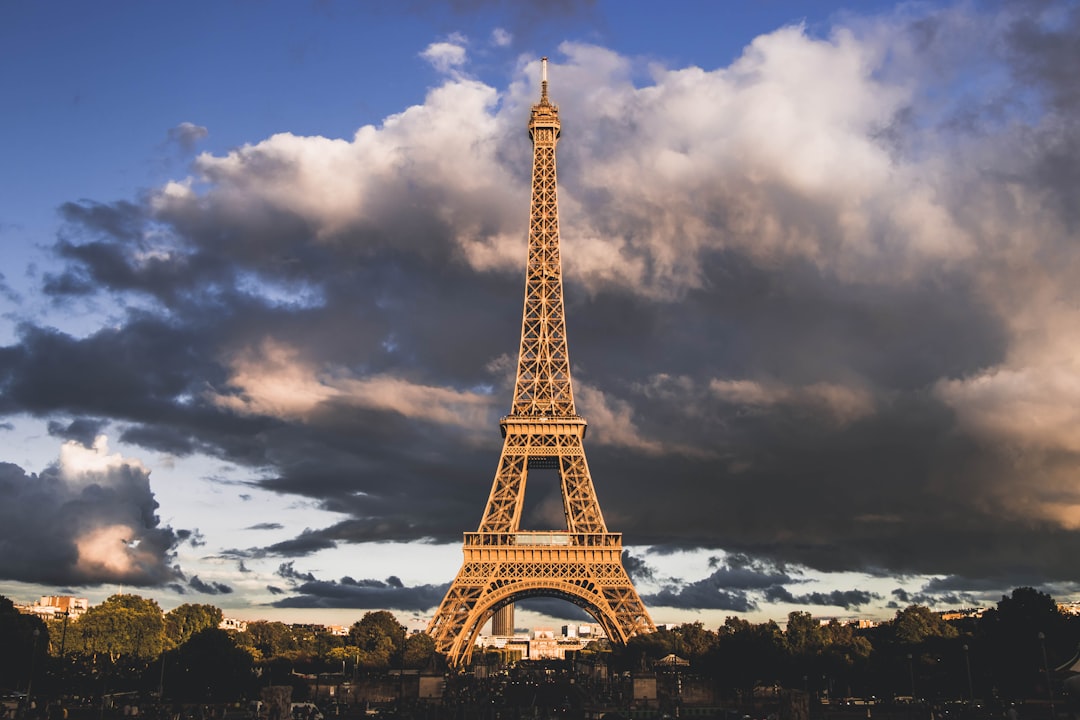
There is a window of roughly 45 minutes each evening when Paris looks exactly the way you always imagined it would. The sky shifts from blue to amber. The iron of the Eiffel Tower catches the light and goes bronze. People stop talking. A few take out their phones, realise no camera quite captures it, and put them away again.
This is golden hour at the Eiffel Tower — one of the most reliably moving things you can do in Paris, and one that costs nothing beyond the time it takes to get there.
If you want to see it properly, a little planning goes a long way. Here is what you need to know.
What is Golden Hour — and When Does It Happen in Paris?
Golden hour is the period just after sunrise and just before sunset when sunlight travels at a low angle through the atmosphere. This scatters the blue wavelengths and leaves warm reds, oranges and yellows. The result is softer, richer light than at any other time of day.
In Paris, the evening golden hour is the one most visitors aim for. The exact timing shifts throughout the year. In June and July, sunset does not come until around 9.45pm to 10pm, which means the golden light arrives around 9pm. In late September and October, it is closer to 7.30pm to 8pm. By December, you are looking at around 4.30pm to 5pm — earlier, but no less beautiful.
A reliable way to check the exact sunset time for any given date is to search “sunset time Paris” in any browser the day before you plan to go. Golden hour typically begins around 45 to 60 minutes before sunset.
The Best Spots to Watch from the Seine
The Pont de Bir-Hakeim is one of the most popular spots, and for good reason. The two-level bridge gives you an elevated view of the tower framed by its iron arches — the kind of angle that turns up in film posters. Expect a crowd, especially in summer.
For something quieter, the Trocadéro esplanade offers the full-frontal view that most people picture when they think of the Eiffel Tower. The fountains and terraced gardens give you room to spread out. Arrive 20 minutes before golden hour begins to secure a good spot.
If you prefer to walk rather than stand in one place, the banks of the Seine between the Pont d’Iéna and the Pont de l’Alma are an excellent option. The Eiffel Tower shifts in and out of view as you walk, which means you get several different angles over the course of the same evening. This stretch of the riverbank is largely flat, well-lit after dark, and accessible from multiple Metro stations.
The Champ-de-Mars park, directly beneath the tower, is another option — but the angle from here means you are looking straight up rather than across, which is not always the most dramatic view during golden hour. It works better for the evening light show that follows (more on that below).
Golden Hour Versus the Eiffel Tower Light Show
These are two separate events and it is worth understanding the difference.
Golden hour is a natural phenomenon driven by the position of the sun. It lasts around 45 minutes and ends as the sky darkens toward blue and then black.
The Eiffel Tower light show is a man-made event. The tower is fitted with 20,000 light bulbs which blink and sparkle for five minutes at the top of every hour after dark. It runs from nightfall until 1am (2am on 14 July and 31 December). The show is free to watch from ground level.
The two events do not overlap — golden hour is finished before the light show begins. If you want both, plan to arrive for golden hour and then stay on as the sky darkens to wait for the first sparkle of the evening.
The Best Times of Year to Visit
Every season offers something different at golden hour. Here is a practical breakdown.
Summer (June – August): The late sunsets mean you are still out at 9.30pm or 10pm, which suits long evenings along the Seine. The downside is that this is peak tourist season, and popular viewpoints fill up early. Arrive at least 30 minutes before golden hour if you want space at Trocadéro.
Autumn (September – November): Many experienced Paris visitors rate this as the best time. The crowds thin out after mid-September, and the warm tones of the autumn leaves add to the already golden light. Sunset shifts earlier each week, which makes planning easier.
Winter (December – February): The early sunsets — around 5pm in December — mean you can catch golden hour without staying out late. The air is often clear and cold, which gives the light a sharp quality. The tower itself is sometimes lit with seasonal colours in December. Crowds at viewpoints are much smaller than in summer.
Spring (March – May): Sunsets gradually move later as the season progresses. By May you are approaching the long summer evenings again. Spring weather in Paris is changeable, but a clear spring evening around 8pm with a warm sky and the first café terraces open is hard to beat.
Practical Tips for the Evening
Getting there: The closest Metro stations to the Trocadéro viewpoint are Trocadéro (lines 6 and 9) and Bir-Hakeim (line 6). For the Seine riverbank walk, Alma-Marceau (line 9) is a convenient starting point. The Champ-de-Mars park is closest to the École Militaire stop (line 8).
What to bring: A jacket or light layer is useful even in summer — river breezes pick up in the evening. If you plan to stay for the light show, you may be outside for two hours or more. Comfortable shoes matter. There are food stalls and crêpe vendors near Trocadéro and along the Champ-de-Mars, so you do not need to eat beforehand.
Photography: If you are using a phone camera, the standard mode will likely struggle with the contrast between the bright sky and the darker tower. Try switching to “pro” mode and reducing exposure slightly, or simply use portrait mode to let the camera prioritise the tower over the background. A small portable tripod is helpful if you want sharp shots in the fading light.
Crowds: Trocadéro is the busiest viewpoint at any time of year. If you want a quieter experience, the Pont de Grenelle — slightly further south along the Seine — gives you a clear view of the tower and is far less visited. It takes about 20 minutes on foot from Trocadéro.
A Note on Managing Expectations
Golden hour at the Eiffel Tower is genuinely one of those experiences that lives up to the reputation. But it is worth being honest about what it involves.
Paris in summer is busy. The most popular viewpoints are crowded. People bump into you. Someone will step in front of your photograph. The golden light lasts 45 minutes and then it is gone.
None of this ruins the experience. It just means that arriving with a plan — knowing which spot you want, how to get there, and roughly when the light will peak — makes a real difference. The people who find it magical are usually the ones who showed up with at least a rough idea of what they were doing.
The people who find it underwhelming are usually the ones who wandered over at the wrong time and stood in the wrong place.
One More Thing: The Walk Back
Whatever spot you choose for golden hour, the walk back into central Paris after dark is worth taking slowly. The river is lit up, the cafés are busy, and the tower sparkles from a distance every time the clock ticks over to the hour.
This is one of those evenings in Paris that tends to stretch longer than planned — and that is rarely a bad thing.
Photo by Alexis Minchella on Unsplash
Thinking about it seriously?
If you’ve started actually planning a move, our complete our complete Moving to France guide walks through every step, every cost, and the paperwork that catches most people out.
Tours & experiences you might love


Powered by Viator. Some links are affiliate links — we may earn a small commission at no extra cost to you.

Leave a Reply