
Before France was France, there were the Gauls. Long before Julius Caesar marched his legions across the Alps, a proud people lived across the land we now call France. They built towns, forged iron, traded wine, and worshipped in sacred groves. The Romans called them Galli. The Gauls called themselves something closer to Celtae. This is their story — and it belongs to anyone with French roots.
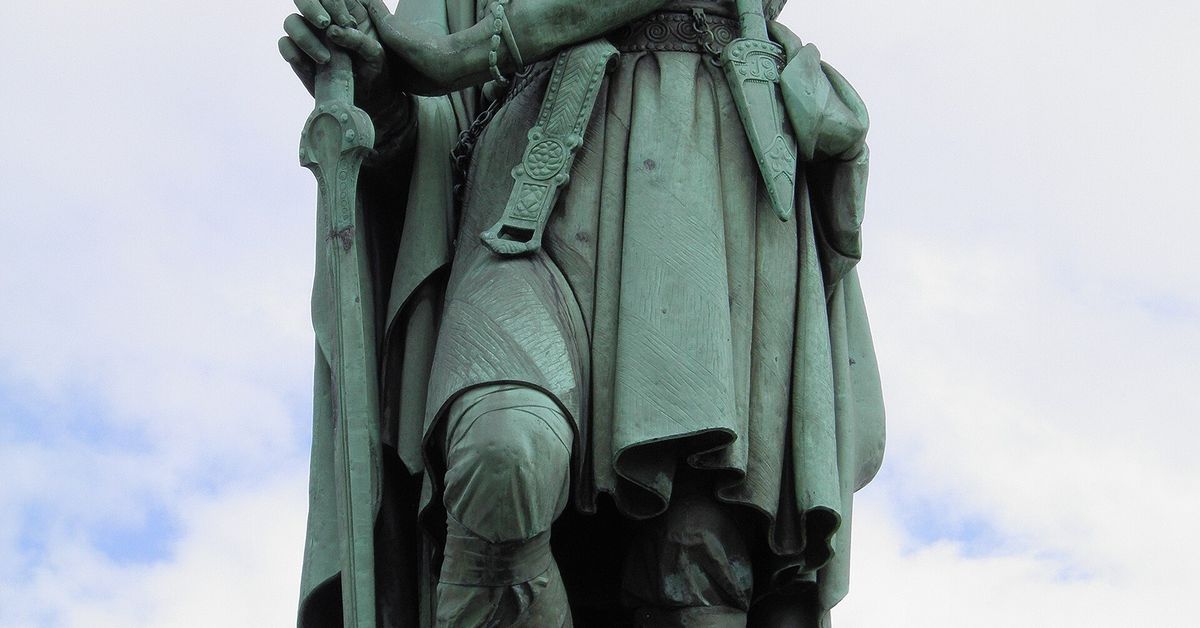
Image: Carole Raddato via Wikimedia Commons (CC BY-SA 2.0)
Who Were the Gauls?
The Gauls were Celtic peoples who settled across what is now France, Belgium, Switzerland, and northern Italy from around 500 BC. They were not one unified nation. They lived in tribal kingdoms, each with its own leaders, customs, and territory.
Major tribes included the Arverni in the Massif Central, the Aedui in Burgundy, the Belgae in the north, and the Parisii — the tribe who gave Paris its name. The Arverni and Aedui were long-standing rivals for power across central France.
The Gauls were skilled craftsmen. They made intricate jewellery, high-quality iron weapons, and wooden barrels. The Romans used clay amphorae until they encountered Gaulish coopers — then they adopted the barrel forever. The Gauls built large fortified towns called oppida, which served as centres of trade and power.
They were not the primitive barbarians Roman writers described. The Gauls had complex social structures, religious traditions, and trade networks that stretched from the Mediterranean to the British Isles.
Three Classes, One Society
Gaulish society had three main groups: the druids, the warriors, and the farmers.
The druids held enormous power. They served as priests, judges, teachers, and astronomers. They kept oral traditions alive, memorising vast quantities of law, history, and poetry. Writing was sacred to them, so they left little written down. This is partly why we know so much more about the Romans than the Gauls.
Gaulish warriors were feared across the ancient world. They sacked Rome in 390 BC. They raided as far east as Greece and modern-day Turkey. Armed with long iron swords and heavy shields, Gaulish warriors were among the most feared in the ancient world. Many wore torcs — twisted metal necklaces — as marks of rank and bravery.
Farmers and artisans formed the foundation of Gaulish life. They grew wheat, raised cattle, and worked the forests. Their iron tools and two-wheeled war chariots ranked among the finest in Europe.
Sacred Groves and Gaulish Gods
The Gauls did not worship in temples. They found the sacred in forests, rivers, and open sky.
Their chief gods included Taranis, the thunder god, Epona, the goddess of horses, and Cernunnos, the antlered lord of nature and the underworld. Druids performed rituals at sites called nemeton — sacred groves where they believed the divine was close.
Many French place names still carry this Gaulish root. Nîmes comes from Nemausus — a sacred spring the Gauls believed held healing power. Nanterre and Nantua share the same origin. The landscape of modern France still bears Gaulish names, even if most visitors never notice.
🇫🇷 Enjoying this? 7,000 France lovers get stories like this every week.
Thinking about it for retirement?
If you’ve started thinking seriously about retiring there, our complete our full Retire in France guide covers the visa, healthcare, cost-of-living, and the regions worth shortlisting.
Subscribe free →
Vercingetorix: The Last Free Gaul
No figure stands taller in the Gaulish story than Vercingetorix.
He was a young chieftain of the Arverni tribe, born around 82 BC in the highlands of what is now the Auvergne. When Caesar’s armies swept through Gaul, Vercingetorix did something no Gaulish leader had done before. He united warring tribes under a single command.
His strategy was bold. He ordered Gaulish towns burned rather than left for Roman armies to use as supply bases. He cut Roman food lines and avoided open battle where Caesar’s disciplined legions had the advantage.
It nearly worked.
At Gergovia — near modern Clermont-Ferrand — Vercingetorix defeated Caesar’s legions outright. Caesar described it as one of his worst days in Gaul. The tide seemed to be turning.
The final battle came at Alesia, in what is now Burgundy. Caesar surrounded the hilltop fortress with two rings of fortifications. One ring faced inward, penning Vercingetorix inside. The other faced outward, to hold off a Gaulish relief army. Tens of thousands of warriors were trapped between Roman walls.
After weeks of siege and starvation, Vercingetorix made his decision. He rode out of Alesia on his horse. Then he circled Caesar’s throne. He laid down his armour and sat at the Roman’s feet. He spent six years in a Roman prison. In 46 BC, Caesar paraded him through Rome. Then Vercingetorix was executed.
He became, centuries later, one of France’s great national symbols. A giant bronze statue of him stands on the hill above Alise-Sainte-Reine today — his long hair and fierce gaze facing the horizon.
What Rome Did to Gaul
Caesar’s conquest of Gaul took eight brutal years. Roman sources estimated one million people died in the fighting.
After the conquest, Rome reorganised the land into provinces. New roads crossed the country. Roman towns grew at river crossings and trade routes. Amphitheatres, baths, and temples rose across the land — including the great arena at Nîmes, still standing today.
But the Gauls did not vanish. They adapted.
Gaulish nobles adopted Roman names and customs. Gaulish merchants served Roman markets. Over generations, two cultures merged into something new: Gallo-Roman civilisation.
The Latin of Roman settlers fused with local Gaulish speech. This blend became Old French. Modern French words for oak (chêne), sheep (mouton), lark (alouette), birch (bouleau), and road (chemin) trace directly to Gaulish. The Gauls shaped the French language without ever intending to.
The name “France” itself comes from the Franks — a Germanic people who ruled the region after Rome fell. But the Franks built on Gallo-Roman foundations that the Gauls had laid across centuries.
Where the Gauls Live On
Traces of the Gauls appear across modern France.
Nîmes was the Gaulish settlement of Nemausus before Rome arrived. Lyon grew from Lugdunum — a place the Gauls held sacred. Paris traces back to Lutetia, the river island home of the Parisii tribe.
In Burgundy, archaeologists have excavated Mont Lassois — a major Gaulish hill-fort from the sixth century BC. Near there, the grave of a Gaulish princess held a stunning treasure: the Vix Krater, a 1.6-metre bronze cauldron from around 500 BC. It is one of the largest ancient bronze vessels ever found. It sits in a museum at Châtillon-sur-Seine today, extraordinary and largely unknown.
The Gauls also live on in Asterix. Created in 1959, the comic series about a stubborn Gaulish village that refuses to submit to Rome has sold over 385 million copies worldwide. The Gauls lost the real war. They conquered French popular culture.
The Gauls and Your French Heritage
If your family name traces to France, the Gauls are part of your story.
French-Canadian families with roots in Normandy, Brittany, or the Loire Valley descend from the Gallo-Romans. This was the civilisation the Gauls helped build. Acadian families from Nova Scotia and Louisiana carry bloodlines that stretch back to a France the Gauls shaped.
To trace your French ancestry is to follow a thread that begins long before France had a name. The Gaulish spirit — proud, independent, resistant to outside pressure — runs through French history. You can see it in the French Revolution, in the wartime Resistance, and in the strikes and protests that modern France treats as a civic birthright.
France is what it is, in part, because of the Gauls. And if France is in your blood, so are they.
Frequently Asked Questions About the Gauls
Who were the Gauls in ancient history?
The Gauls were Celtic peoples who lived across what is now France, Belgium, and parts of Switzerland from around 500 BC. They organised into rival tribal kingdoms, built fortified towns called oppida, and had complex religious and social systems led by a priestly class known as druids.
What language did the Gauls speak?
The Gauls spoke Gaulish, a Celtic language related to ancient Welsh, Irish, and Breton. After Roman conquest, Gaulish merged with Latin to form the foundations of Old French. Many modern French words — including mouton (sheep), chêne (oak), and chemin (road) — trace directly to Gaulish roots.
What happened to the Gauls after Julius Caesar’s conquest?
The Gauls did not disappear. They merged with Roman settlers to form Gallo-Roman culture. Gaulish nobles adopted Latin names and Roman customs. Over centuries, Gaulish-Latin speech evolved into Old French, and eventually into the French spoken today.
Where can you visit Gaulish heritage sites in France?
Key sites include Alise-Sainte-Reine in Burgundy (the site of the Battle of Alesia) and Mont Lassois near Châtillon-sur-Seine (a major Iron Age hill-fort). The Musée d’Archéologie Nationale at Saint-Germain-en-Laye near Paris holds one of France’s finest collections of Gaulish artefacts.
Did the Gauls really sack Rome?
Yes. Around 390 BC, a large Gaulish force led by the chieftain Brennus defeated a Roman army at the River Allia and marched into Rome itself. They occupied much of the city for several months before receiving a ransom payment and withdrawing. It was one of the worst defeats in early Roman history and one the Romans never forgot.
You Might Also Enjoy
- The Normans Who Changed the World
- Napoleon’s France: The Man Who Remade Europe
- How to Trace Your French Ancestry – Step-by-Step Guide
Plan Your France Trip
Ready to visit the land the Gauls built? Our France travel planning hub has everything you need — from ancestral regions to Gaulish heritage sites and the best routes across the country.
Join 7,000+ France Lovers
Every week, get France’s hidden gems, seasonal guides, local stories, and the art of la vie française — straight to your inbox.
Subscribe free — enter your email:
Love more? Join 64,000 Ireland lovers → · Join 43,000 Scotland lovers → · Join 30,000 Italy lovers →
Free forever · One email per week · Unsubscribe anytime
Tours & experiences you might love


Powered by Viator. Some links are affiliate links — we may earn a small commission at no extra cost to you.

Leave a Reply