
Just over an hour south-east of Paris, Moret-sur-Loing sits almost exactly as it did in the 19th century. The old stone bridge still spans the Loing river. The medieval gates still stand at either end of the high street. The watermill still marks the riverbank. If the town looks faintly familiar, there is a good reason: the Impressionist painter Alfred Sisley spent the last two decades of his life here, painting it more than 400 times.
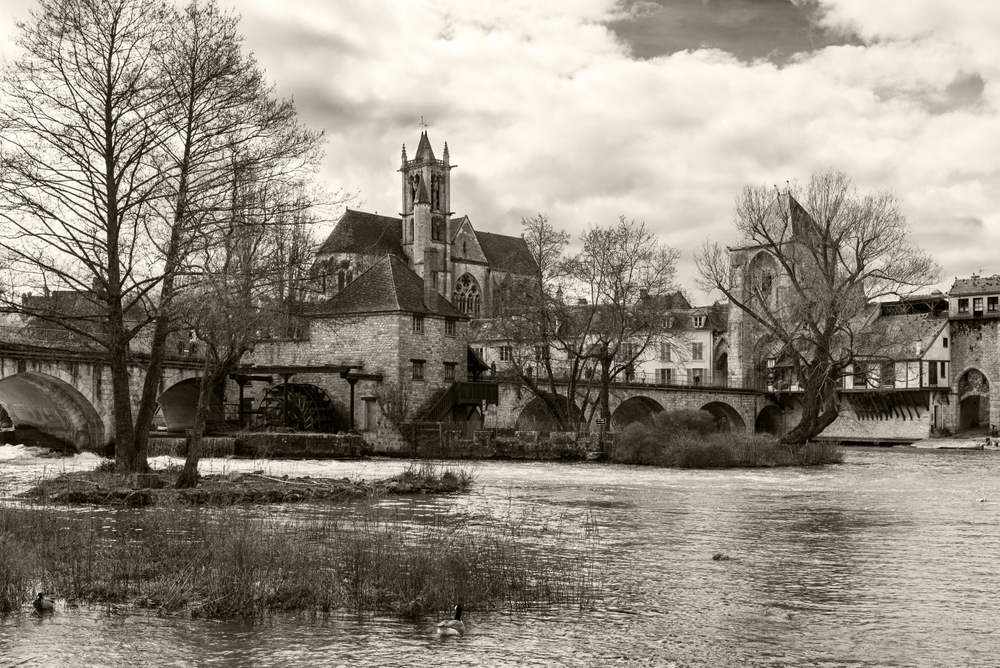
Moret-sur-Loing is not on most tourist itineraries. It does not have a famous château or a Michelin-starred restaurant. What it has is a rare quality in France: it looks today almost exactly as it did a century and a half ago. That makes it one of the most intact medieval towns within easy reach of Paris, and one of the most quietly rewarding day trips the Île-de-France has to offer.
Enjoying this? Get more stories like this delivered to your inbox. Subscribe to our free France newsletter and never miss a place worth visiting.
A Brief History of Moret-sur-Loing
The town stands at the point where the Loing river meets the Seine, roughly 75 kilometres south-east of Paris in the Seine-et-Marne department. Its strategic position on a river crossing gave it early importance. By the 12th century, the French kings had recognised its value: Louis VII granted the town a royal charter, and successive monarchs added to its privileges and its fortifications.
The medieval walls were built to protect a town that sat on a major route south from Paris towards Burgundy. Much of that defensive architecture still stands. The Porte de Bourgogne — the Burgundy Gate — guards the eastern approach to the town, and the Porte de Samois stands at the western end. Both are solid, unrestored stone, worn smooth by centuries of weather and foot traffic. Walking through either gate still feels like crossing a threshold into a different era.
The Church of Notre-Dame de la Nativité dates from the 12th to the 14th century. Its stone exterior is plain but solid, and the interior retains some fine medieval stonework. Across the road from the church stands the so-called Maison de François I — a Renaissance building with a carved stone façade, associated by local tradition with a stay by King Francis I in the early 16th century, though the connection is more legend than verified history.
Alfred Sisley and the Impressionist Legacy
Sisley arrived in the area in 1880 and settled in Moret-sur-Loing in 1882, where he remained until his death in January 1899. He was born in Paris to British parents and spent his career in France, working alongside Monet, Renoir and Pissarro. Of all the Impressionists, Sisley was perhaps the most dedicated to a single subject. He painted Moret-sur-Loing and its surroundings obsessively — the bridge, the church, the mills, the river in every season and every light.
Today his paintings hang in galleries across Europe and North America. But standing on the old bridge in Moret-sur-Loing, looking back at the church tower and the mill, it is possible to align your view almost exactly with the canvases he produced here. The scene has changed so little that his paintings function almost as historical photographs — precise records of a place that refuses to move on.
Sisley is buried in the town cemetery. His house and studio no longer operate as a museum, but local heritage organisations periodically organise guided visits and exhibitions that trace his years here. The tourist office can advise on what is available during your visit.
What to See and Do in Town
Moret-sur-Loing is a small town — you can walk its historic centre in under an hour. The main sights are the two medieval gates, the 12th-century church, the old bridge, and the stretch of riverbank where the mill stands. All of these are within a few hundred metres of each other.
The ramparts walk is the best way to understand the town’s layout. A footpath follows the line of the old walls, offering elevated views over the rooftops and the river. The walk takes around 30 minutes at a gentle pace and requires no special equipment or preparation.
The river itself is the other focus. The Loing here is calm and relatively wide, popular with kayakers and canoeists in summer. Several spots along the bank give good views of the bridge and the watermill — the same views Sisley returned to again and again. The light on the water in the late afternoon is particularly good.
The town has a modest but pleasant collection of cafés and small restaurants along the main street and around the church. It is not a foodie destination, but you will find reliable French bistro cooking and a relaxed pace that encourages a long lunch before the walk back to the station.
Enjoying this? Get more stories like this delivered to your inbox. Subscribe to our free France newsletter and never miss a place worth visiting.
The Famous Barley Sugar of Moret-sur-Loing
There is one local speciality that gives Moret-sur-Loing a culinary claim to fame: sucre d’orge, or barley sugar. According to local accounts, the recipe was developed by Benedictine nuns at the town’s Monastery of Saint-Jacques in 1638. The nuns produced the amber-coloured hard candy for several centuries before the recipe eventually passed into commercial production.
Today, the Maison des Sucres d’Orge de Moret on the main street continues the tradition. The candy is made to the original recipe: a hard, amber sweet with a faint caramel flavour. It is sold in small branded boxes and makes for an unusual and genuinely local gift to bring back from a day trip. The shop itself is worth a look — it has been on the same site for generations and still sells the sweets in the traditional packaging.
How to Get There from Paris
Moret-sur-Loing is straightforward to reach by train. From the Gare de Lyon in Paris, Transilien line R serves the station at Moret-Veneux-les-Sablons, which is the stop for Moret-sur-Loing. The journey takes around 45 minutes to an hour depending on the service. Trains run regularly throughout the day. From the station, the historic centre of Moret-sur-Loing is a 10 to 15-minute walk.
By car, the town is about 75 kilometres from central Paris via the A6 motorway, then the N7 or local roads. The journey takes roughly an hour in normal traffic. There is roadside parking available near the town walls and along the river.
Moret-sur-Loing sits just 15 kilometres from Fontainebleau, making it a natural companion stop if you are already visiting the château and forest there. The two destinations make a comfortable full day out from Paris, or a pleasant overnight if you want to explore the surrounding Seine-et-Marne countryside at a slower pace.
When to Visit
The town is accessible year-round. Spring and early summer bring good light and moderate crowds. Autumn is particularly atmospheric — the riverside trees turn gold in October, and the quieter streets make it easier to appreciate the medieval architecture without distraction. Winter visits are possible but some of the smaller cafés and shops reduce their hours outside the summer season.
July and August bring more visitors, largely day-trippers from Paris. The town handles them comfortably — it is used to visitors and the riverside area is large enough to absorb the extra footfall without feeling crowded. Even in high summer, Moret-sur-Loing retains the unhurried pace that makes it worth visiting in the first place.
There is no entry fee to walk the town. The church is free to enter. The barley sugar shop charges what you would expect for artisanal confectionery. A day trip from Paris costs little beyond the train fare and lunch — which makes it one of the better-value half-day excursions available from the capital.
Enjoying this? Get more stories like this delivered to your inbox. Subscribe to our free France newsletter and never miss a place worth visiting.
Practical Information
- Getting there: Transilien line R from Gare de Lyon to Moret-Veneux-les-Sablons (approx. 45–60 min). Walk 10–15 min to town centre.
- By car: ~75km from central Paris via A6; around 1 hour in normal traffic.
- Nearest town: Fontainebleau, 15km away.
- Barley sugar: Maison des Sucres d’Orge de Moret, Grand Rue, Moret-sur-Loing.
- Tourist office: Available in town for walking maps and guided tour information.
- Best time to visit: Spring to autumn; autumn particularly recommended for colour and quieter streets.
Continue Exploring
- The Best Day Trips from Paris: What to See and How to Get There
- Visiting Giverny: The Complete Guide to Monet’s Garden
- First-Time Paris Itinerary: How to Spend 5 Days in the City of Light
Thinking about it for retirement?
If you’ve started thinking seriously about retiring there, our complete our full Retire in France guide covers the visa, healthcare, cost-of-living, and the regions worth shortlisting.
🇫🇷 Discover the France Most Tourists Never Find
Get our free guide to 25 hidden villages of France — then join 7,000+ readers for weekly stories about places most guidebooks never mention.
Get Your Free Village Guide →Tours & experiences you might love


Powered by Viator. Some links are affiliate links — we may earn a small commission at no extra cost to you.

Leave a Reply