
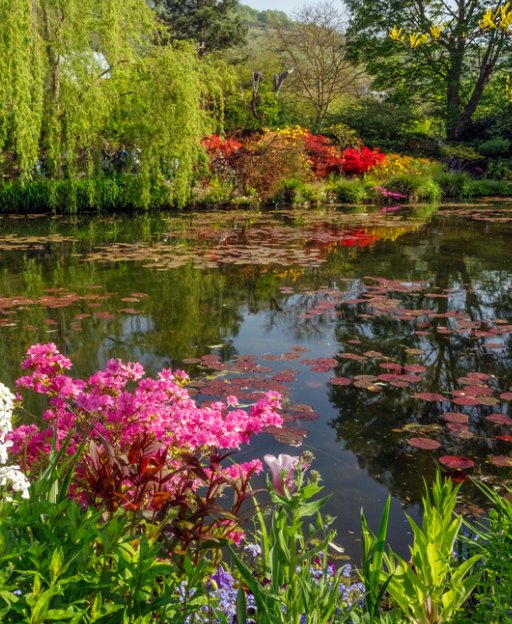
Visiting Giverny, France, means standing at the edge of a lily pond that helped change the history of art. Claude Monet created these gardens over 40 years. He built the Japanese bridge, planted the wisteria, and watched the light shift across the water until it became everything he wanted to paint. For anyone who has stood in front of a Water Lilies canvas and felt something move — this is where it started.
Love France? Join 7,000+ readers on our free newsletter → lovetovisitfrance.substack.com
What Makes Giverny Worth the Trip
Giverny sits in the Seine Valley in Normandy, about 80 kilometres from Paris. It is a small village — fewer than 500 residents — and it would be entirely unknown were it not for one thing: Monet chose to live there. He arrived in 1883 and stayed until his death in 1926. Over those four decades, he transformed the property around his house into the most famous private garden in France.
The gardens are split into two distinct areas. The Clos Normand is a formal flower garden in front of the house, with long beds of dahlias, roses, irises, and nasturtiums arranged to create a living tapestry of colour. The Water Garden sits across the road, connected by a small underpass. This is where the lily pond, the weeping willows, and the famous Japanese bridge are found. Every serious visitor comes for the Water Garden.
The Musée des Impressionnismes Giverny sits just a short walk away and puts the garden in its wider artistic context. It runs rotating exhibitions on Impressionism and Post-Impressionism, and the permanent collection explains how the landscape around Giverny attracted not just Monet but a generation of American painters who came to study under the Impressionist masters.
When to Visit Giverny
The gardens are open from April to the end of October. They close in winter. Within that window, timing matters.
May and June: Peak Bloom
Late May and June are the best weeks to visit Giverny. The wisteria hangs from the Japanese bridge, the irises and peonies are in full flower, and the lily pads cover the pond. This is when the gardens look exactly as they do in Monet’s most famous paintings. The trade-off is the crowd — Giverny receives around 600,000 visitors per year, and a significant proportion come in June. Arrive before 10am to beat the coaches.
April and July to October
April is quieter and the garden is beginning to wake up. You will see tulips and daffodils in the Clos Normand, but the Water Garden may not yet be at its most spectacular. July and August bring crowds similar to June, along with heat. September and October are excellent — the tourist numbers drop, the light turns softer, and the dahlias and late roses are still flowering. Many visitors find autumn at Giverny more moving than high summer.
What to See at Giverny
The Water Garden
This is the heart of the visit. The lily pond is smaller than most visitors expect — perhaps 50 metres at its longest. But the effect is exact. The weeping willows trail into the water. The Japanese bridge curves above the surface. On still mornings, the reflections are perfect. Monet built this garden specifically to paint it, which means it was designed to be seen from eye level, not mapped from above. Walk slowly around the whole perimeter before you photograph anything.
Monet’s House
The house itself is open to visitors. The exterior is pink with green shutters — vivid colours that Monet chose himself. Inside, the rooms are preserved much as Monet left them. The kitchen has its original blue-and-white tiles. The dining room walls are hung with Japanese woodblock prints that Monet collected throughout his life. His studio, where the large-scale Water Lilies panels were created, is now the gift shop — a compromise that bothers purists but at least puts you in the right space.
The Clos Normand
The formal garden in front of the house runs in long parallel beds towards the front gate. It is packed with flowers at any point in the season — dahlias, roses, sweet peas, nasturtiums. Monet planted it as a painter rather than a gardener, thinking in colour fields and contrast rather than botanical categories. It is best photographed from the top of the central path looking back towards the house.
Getting to Giverny from Paris
The train journey from Paris Saint-Lazare to Vernon takes around 1 hour 15 minutes. Trains run regularly throughout the day, and the tickets are inexpensive. Book in advance to guarantee a seat in summer.
From Vernon station to Giverny is 7 kilometres. A shuttle bus runs from outside the station to the garden entrance from April to October. It costs a few euros and runs frequently during the day. Taxis are also available at the station and cost more but take you directly. Alternatively, bicycle hire is available in Vernon — the route follows a flat riverside path and takes around 25 minutes each way. Many visitors prefer the bike: it lets you arrive before the coaches and leave at your own pace.
If you are planning a broader Normandy trip, Giverny can be combined with Rouen, the D-Day beaches, and Mont Saint-Michel across several days. Many US visitors pair Giverny with Rouen — the cathedral there was another of Monet’s obsessions, and he painted its facade more than 30 times.
Booking Tickets and Practical Tips
Book tickets online before you go. This is non-negotiable in summer. The Claude Monet Foundation website sells timed entry slots. Turning up without a booking in June or July risks being turned away or queuing for an hour. Tickets include both the gardens and the house.
Opening hours run from 9:30am to 6:00pm, April through October. The last entry is 5:30pm. The gardens close entirely from November to March.
Wear comfortable shoes. The paths are gravel and uneven in places. There is no seating in the Water Garden itself — the benches along the path fill quickly. Bring water in summer: there are food options nearby but nothing inside the garden.
Photography is permitted throughout the garden. Tripods are not allowed during busy periods. Drone flights are banned entirely. The light is best in the first hour after opening, when the garden is quieter and the sun is still low enough to catch the water’s surface.
Where to Eat Near Giverny
Le Jardin des Plumes is a Michelin-starred restaurant in Giverny that takes the local produce seriously. It is the most ambitious option in the village and requires advance booking. For something lighter, several small cafés and crêperies operate along the main road through Giverny, mainly catering to day-trippers. They are fine for lunch but not remarkable.
A better option for many visitors is to eat in Vernon, which has a wider selection of restaurants and brasseries. If you are returning to Paris for the evening, Vernon’s town centre is worth an hour — it has a medieval half-timbered house that locals call the “old mill” and a pleasant square for afternoon coffee.
Combining Giverny With a Wider France Trip
Giverny works well as a day trip from Paris, but it also sits logically within a wider France itinerary. If you have two weeks in France, positioning Giverny between Paris and Normandy makes geographic sense. Most visitors take the morning train from Paris, spend four to five hours at the gardens and museum, then continue to Rouen or Caen for the night.
If heritage and cultural history are the main draw of your trip, our French heritage trip planning guide covers how to build an itinerary around places like Giverny, the Loire Valley châteaux, and the great cathedrals. For everything else, our France trip planning hub is the best starting point.
Frequently Asked Questions
Do I need to book tickets for Giverny in advance?
Yes. In May, June, July, and August, advance booking is essential. The Claude Monet Foundation sells timed entry tickets online. Without a booking in peak season, you risk a very long queue or being turned away. Outside of summer, walk-up entry is usually possible but booking online still saves time.
How long does it take to visit Giverny?
Allow two to three hours for the gardens and house. If you also visit the Musée des Impressionnismes, add another hour. Most visitors who travel from Paris spend a full day in the area, combining Giverny with Vernon and the surrounding countryside.
Is Giverny worth visiting outside of June?
Yes. September and October are particularly beautiful — the crowds are smaller and the afternoon light is exceptional. April offers tulips and a quieter atmosphere. The only months to avoid are November through March, when the gardens are closed entirely.
Can I visit Giverny without a car?
Easily. The train from Paris Saint-Lazare reaches Vernon in about 75 minutes. Shuttle buses run from Vernon station to Giverny from April to October. Bicycle hire is also available in Vernon for the 7-kilometre riverside ride to the garden. A car is not necessary for a straightforward day trip from Paris.
You Might Also Enjoy
- Normandy Travel Guide: What to See, Do, and Where to Stay
- Two Weeks in France: A Complete Itinerary
- How to Plan a French Heritage Trip
Plan Your France Trip
Our complete France trip planning guide covers how to structure your itinerary, how to balance Paris with the regions, and how to get the most from your time in the country. It is the right place to start before anything else.
Join 7,000+ France Lovers
Three times a week, get France’s hidden gems, local recipes, and travel inspiration — the kind you won’t find in any guidebook.
Subscribe free — enter your email:
🇫🇷 Discover the France Most Tourists Never Find
Get our free guide to 25 hidden villages of France — then join 7,000+ readers for weekly stories about places most guidebooks never mention.
Get Your Free Village Guide →Love more?
Thinking about it seriously?
If you’ve started actually planning a move, our complete our complete Moving to France guide walks through every step, every cost, and the paperwork that catches most people out.
Free forever · Unsubscribe anytime
🇫🇷 You Might Also Love
Tours & experiences you might love


Powered by Viator. Some links are affiliate links — we may earn a small commission at no extra cost to you.

Leave a Reply