
Somewhere between 6pm and 8pm, France quietly changes. Offices empty. Kitchens stay cold for a little longer. And all across the country, people pour a glass of something cold and simply stop. Not to drink. Not exactly. To transition.
This is l’apéritif. And most visitors to France misunderstand it completely.
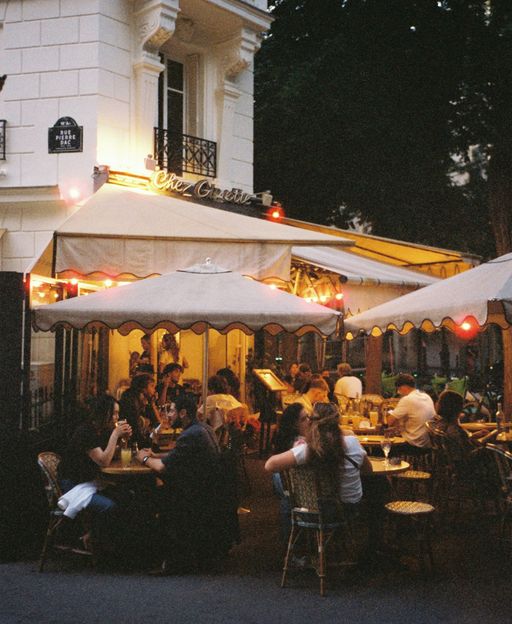
What You Think the Apéritif Is
Most visitors assume it is France’s version of happy hour — a quick drink before dinner, maybe some crisps on the side. It is not. Happy hour is about price. The apéritif is about time.
The word comes from the Latin aperire, meaning “to open.” And that is precisely what it does. Not a bottle. Not an appetite. It opens a gap between the working day and the evening. A deliberate pause that the French protect fiercely.
Restaurants can be half-empty at 7pm. By 9pm, they are full. The apéritif is where the evening begins.
The Drinks Are Almost Beside the Point
You might be served a glass of kir — white wine with a splash of blackcurrant liquèur. Or pastis, the anise-flavoured spirit of the south, turned pale and milky when cold water is added. In Bordeaux, it could be a crémant. In Alsace, a Riesling. In the Loire, a dry sparkling Vouvray.
But what you drink matters far less than the act itself. The apéritif signals that work is over and nothing urgent is expected of you for the next hour. The French are serious about this distinction.
Olives appear on the table. Perhaps a dish of peanuts, or a few thin slices of saucisson. Nothing designed to fill you — just enough to slow you down and settle you into the evening.
Enjoying this? 7,000 France lovers get stories like this every week. Subscribe free →
Why the French Cannot Eat Dinner Without It
There is a practical reason behind the ritual, too. Traditional French dinner does not begin before 7:30pm, and often not before 8. In a culture built around long, leisurely meals, arriving at the table already hungry and restless is considered mildly uncivilised.
The apéritif solves this elegantly. It takes the edge off hunger without spoiling it. It gives latecomers time to arrive. It lets the cook finish without pressure and lets the guests settle without rush.
In French households, skipping the apéritif feels like skipping the prologue of a book. The story works, technically. But something essential is missing.
What Nobody Tells You About Being Invited for Apéro
If a French person invites you for un apéro, do not assume dinner follows. An apéritif invitation is complete on its own terms. Dinner is a separate, more serious commitment — you will know if it is included, because they will say so.
The apéro runs on its own clock. It can stretch to two hours without anyone remarking on it. Conversation flows about nothing essential — a colleague’s difficult week, a neighbour’s renovation, a film someone saw last month. This is not wasted time. This, in fact, is the point.
If you are visiting France and a local says “come for apéro on Thursday,” say yes. What happens in those two hours is the France that no travel guide ever quite captures.
How to Do It Like the French
There is no performance required. You do not need to know the right wine or serve impressive food. You need only one thing: the willingness to stop.
Put the phone face-down. Do not check email. Do not discuss tomorrow’s meetings. If conversation drifts toward something useful, let it drift back toward something pleasantly useless. Refill the glasses. Move the olives closer. Stay a little longer than you planned.
The apéritif is not about what you drink. It is about the decision — deliberate, repeated, daily — to be present before the evening begins. The French would tell you this is not indulgence. It is simply how a day should end.
If you are curious about other rhythms that shape daily life in France, the Sunday ritual is worth understanding too — it works on the same principle: time protected, not squeezed. And if you are planning a trip, start here with our France planning guide.
Nobody explains this to you when you arrive. But once you have sat in the warm light of a French evening, glass in hand, with nowhere to be for the next hour, you start to understand why the French seem so deeply at ease with their own lives. It is not complicated. It happens every day at 6pm.
Join 7,000+ France Lovers
Three times a week, get France’s hidden gems, seasonal guides, local stories, and the art of la vie française — straight to your inbox.
Subscribe free — enter your email:
Free forever · Unsubscribe anytime
🇫🇷 You Might Also Love
Tours & experiences you might love


Powered by Viator. Some links are affiliate links — we may earn a small commission at no extra cost to you.

Leave a Reply