
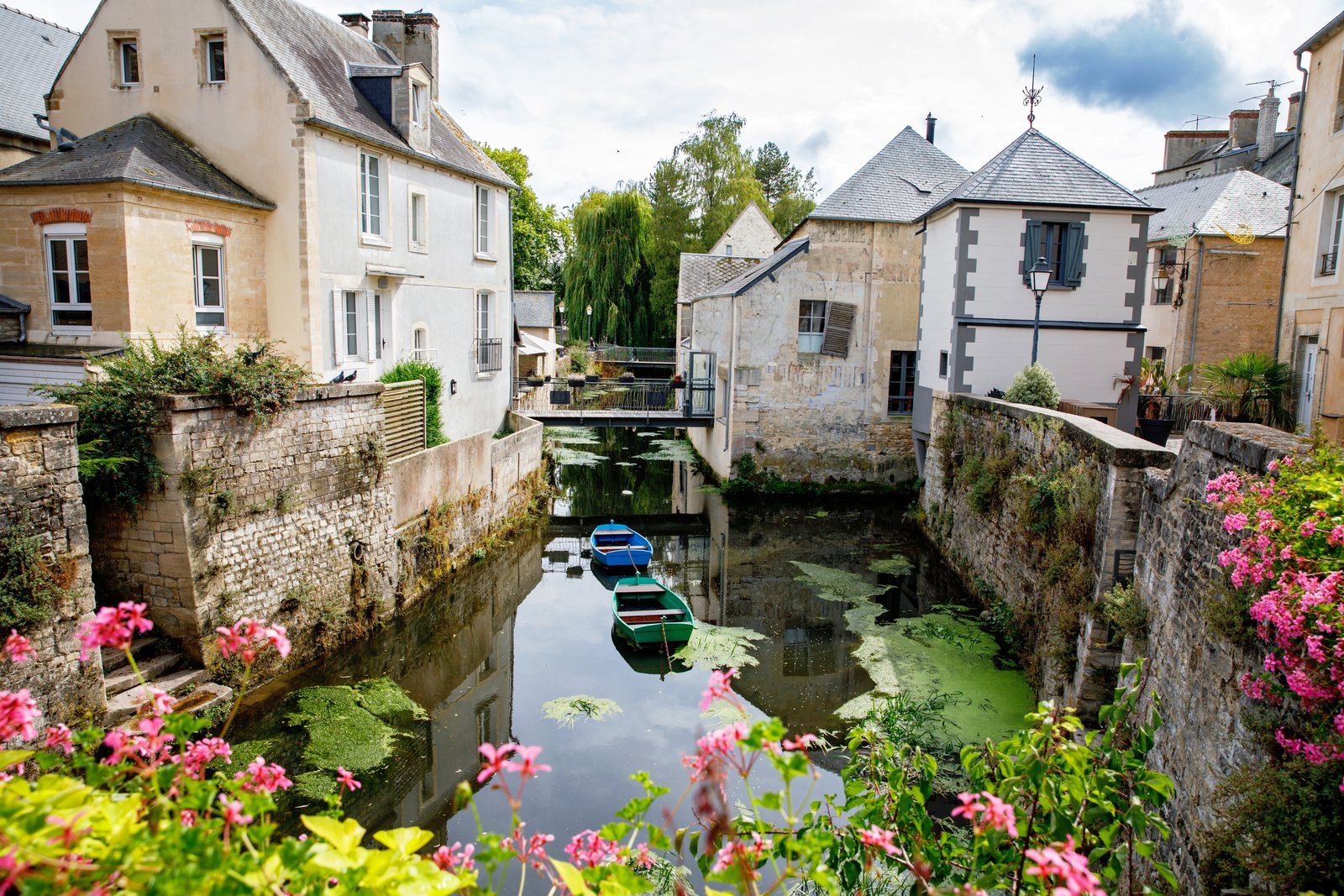
A French heritage trip is unlike any other journey you will take. You are not simply visiting a country. You are walking back through time, to the village where your family name was first spoken, where your ancestors were baptised, married, and buried. For millions of French Canadians, French Americans, and Francophiles around the world, that pull is real and powerful.
This guide will show you how to plan your French heritage trip step by step — from tracing records at home to standing in the churchyard where your great-great-grandmother is buried.
Why a French Heritage Trip Feels Different
Travel is about seeing new places. Heritage travel is about remembering who you are.
France was home to one of the largest diasporas in history. After the expulsion of the Huguenots in the 17th century, the colonisation of New France, and the Acadian deportations, hundreds of thousands of French families scattered across the world. Their descendants now live in Canada, Louisiana, New England, South Africa, and beyond.
For those people, France is not a foreign country. It is home — even if they have never been there. That feeling makes a heritage trip something entirely different from a holiday. When you find your ancestor’s village, something shifts inside you. Many people cry without expecting to. Others feel a calm they have never felt before.
This guide is for those people. Let us help you find your way back.
Step 1 — Do Your Research Before You Go
The most important work happens before you book a single flight. The more information you gather at home, the more productive your time in France will be.
Start with what your family already knows. Talk to elderly relatives. Look for old letters, birth certificates, and immigration documents. Even a single surname and approximate region can be enough to begin.
From there, use the online databases. FamilySearch holds millions of French parish and civil records, many of them fully digitised and searchable in English. The Archives Nationales portal gives access to notarial records and emigration documents.
If your family came from Normandy, check out our guide to French surnames of Normandy — it explains the origins and regional variants of the most common Norman names, which can help you identify the right branch of your family tree.
For a full step-by-step guide to the research process, read our complete guide to tracing your French ancestry before planning your trip.
Step 2 — Identify Your Ancestral Commune
France is divided into 101 départements, each with its own archives. Within those, there are roughly 35,000 communes — villages and towns. Knowing your ancestral commune is the key that unlocks everything.
Once you have a surname and a rough region, use the Géoportail mapping tool to identify historical place names. Many French villages use old names no longer on modern maps. A family named Leblanc from “La Forêt” in the 1780s may be from a hamlet that no longer exists as an administrative unit.
The website Geneanet is particularly useful for French genealogy. It is French in origin and contains millions of contributed trees and transcribed records.
When you have a commune, write it down. You will use that name at every step of your trip.
Step 3 — Book a Visit to the Archives Départementales
Every département in France has an Archives Départementales — a regional archive that holds civil records from 1792 onwards, and often digitised copies of parish records from before the Revolution. Many of these archives have put their records online, but the original documents are held in person.
A visit to the Archives Départementales is often the highlight of a French heritage trip. You sit at a reading table, request documents by reference number, and hold the actual paper that recorded your ancestor’s birth 200 years ago. The ink is faded. The handwriting is in old French. But the name is there.
Before your trip, contact the archive by email to book a researcher’s ticket (carte de lecteur). Bring your passport and explain what you are researching. Most archives have helpful staff who speak some English. Some have dedicated genealogy days with specialist staff on hand.
You can find the archive for each département through the France Archives portal. Search by region and you will find contact details and online access to digitised records.
🇫🇷 Enjoying this? 7,000 France lovers get stories like this every week. Subscribe free →
Step 4 — Visit the Mairie (Town Hall)
The mairie is the town hall of every French commune — and it holds the official state records of every birth, marriage, and death that occurred in that village from 1792 onwards. Before the Revolution, that role belonged to the Church.
Walk into the mairie and introduce yourself. Explain that you are tracing your family history. In small villages, this is often a remarkably warm experience. The staff will usually know exactly where the old registers are kept, and many will take genuine interest in your search.
You can request certified copies (extraits or copies intégrales) of civil records. These are legal documents. If your ancestor was born in that commune, you can request their birth certificate. If they were married there, you can get the marriage record. There is usually a small administrative fee.
Some mairies in rural areas have irregular opening hours. Always check before visiting, and if possible, telephone or email ahead. In French: “Bonjour, je cherche des informations sur mes ancêtres de cette commune.” (Hello, I am looking for information about my ancestors from this commune.)
Step 5 — Find the Parish Church and Its Records
Before 1792, all record-keeping in France was done by the Catholic Church. Baptisms, marriages, and burials were recorded in parish registers (registres paroissiaux) dating back to the 1500s in some areas.
Most of these registers are now held in the Archives Départementales, but the church itself is still worth visiting. Stand where your ancestors stood for baptisms, weddings, and funerals. Look at the stone walls, the old wooden pews, the names carved into memorial plaques.
In small communes, the priest or local volunteers sometimes maintain informal records and local histories. Do not be shy about asking inside the church whether anyone keeps a local heritage register. In villages where genealogy tourism is common — particularly in Normandy and Brittany — you will often find information boards with local family names and histories.
If your family came from Brittany, our guide to French surnames of Brittany will help you understand the Celtic and Breton roots of many family names in that region.
Step 6 — Walk the Cemetery
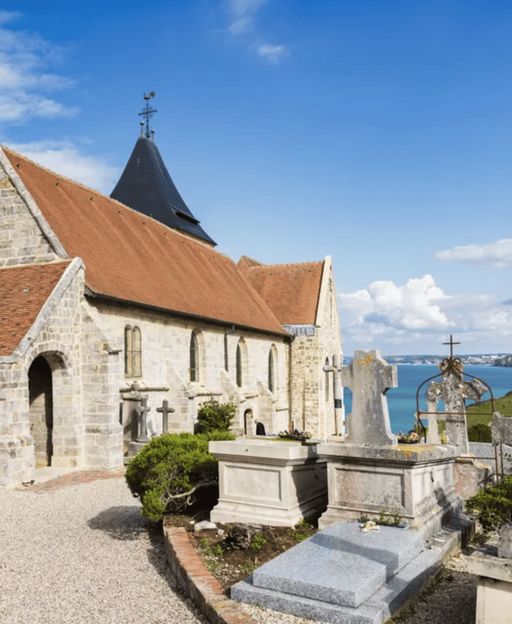
Every village in France has a cemetery attached to or near the church. This is often the most emotionally powerful part of a heritage trip.
Walk slowly. Look at the family names on the tombs. In a small commune, you may find dozens of graves bearing your family name — confirming that this is the right place, the right village, the right roots.
French graves often include full names, dates, and sometimes short inscriptions. They tend to be well maintained, with family plots grouped together across generations. Photograph everything you find relevant — dates, full names, inscriptions. These can help fill gaps in the documentary record.
Cemetery etiquette in France: be respectful and quiet. If there is an active funeral or family visit, wait or return later. Never move or touch grave markers. Photography for personal research is accepted practise, but be discreet.
Step 7 — Explore the Village Itself
After the archives and the cemetery, give yourself time to simply be in the place. Walk the streets. Find the old farmhouse districts. Look at the architecture — stone walls, wooden shutters, the style of the windows — it all reflects the region your ancestors called home.
Visit the local syndicat d’initiative (tourist office) if there is one. Many have local history pamphlets, maps of heritage sites, and staff who can point you towards local historians or volunteer genealogy groups.
Some regions have professional genealogists (généalogistes professionnels) who specialise in local records. The Chambre Syndicale des Généalogistes et Héraldistes de France holds a register of qualified practitioners. If your research hits a wall, hiring a local expert for a few hours can unlock records you would never find on your own.
Stay overnight in the commune if you can. Eat at the local restaurant. Have a glass of wine from the region. Meet the people. This is where heritage travel becomes something more than research — it becomes belonging.
A Sample 7-Day French Heritage Itinerary
Here is a practical outline you can adapt to your own ancestral region:
- Day 1 — Arrive and settle. Fly into Paris or the nearest regional airport. Check into accommodation near your ancestral commune. Rest.
- Day 2 — Archives Départementales. Visit the regional archive with your pre-booked researcher’s ticket. Spend the full day searching civil and parish records.
- Day 3 — The Commune. Visit the mairie, the church, and the cemetery. Walk the village. Photograph everything.
- Day 4 — Deeper research. Return to the archive or explore nearby communes if your family moved between villages. Meet a local genealogist if arranged.
- Day 5 — Regional exploration. Visit sites connected to your family’s history — a local château where your ancestors may have worked, the market town where they bought and sold goods, the nearest city.
- Day 6 — Cultural immersion. Spend a day doing nothing but being French. Visit a local market, eat well, walk, sit in a café, and absorb the place your family came from.
- Day 7 — Depart. Take the train or drive to your departure airport. Carry your photographs, your document copies, and something you will not be able to fully explain until you try to describe it to someone at home.
Practical Tips for Your French Heritage Trip
Best time to visit: Spring (April to June) and early autumn (September to October) are ideal. Archives are open, weather is pleasant, and the villages are less crowded than in high summer. Avoid August — many small mairies and local offices close for the French holiday month.
Language: In small rural communes, English is not always widely spoken. Learn a few key phrases before you go. “Je cherche mes ancêtres” (I am looking for my ancestors) and “Avez-vous des registres paroissiaux?” (Do you have parish registers?) will open doors. The effort of attempting French is always appreciated.
What to bring: A printed summary of your research (dates, names, communes), your passport, a notepad, a camera or phone with good storage, and a folder for any documents you are given or purchase copies of. An international power adapter for France (Type E sockets).
Hire a car: Most ancestral communes in rural France are not accessible by public transport. A hire car gives you the flexibility to reach villages, archives, and churches that cannot be reached by train.
Book archive appointments in advance: Many Archives Départementales require advance booking for their reading rooms. Contact them at least four to six weeks before your trip, especially if visiting during peak tourism season.
Frequently Asked Questions
Can I claim French citizenship through ancestry?
France does not offer citizenship jure sanguinis (by blood) to all descendants. French nationality law is primarily based on place of birth and residency, not ancestry. However, if one of your parents was a French citizen at the time of your birth, you may have a claim. Consult the French consulate in your country for current rules, as they are nuanced and occasionally updated.
How far back do French records go?
French civil registration begins in 1792. Parish records (registres paroissiaux) often go back to the 1500s or even earlier in some regions. Many of these older records are digitised and available through the Archives Départementales websites — often at no cost. Some records were lost during wars or fires, but the survival rate for French records is generally high.
What if my ancestral commune no longer exists?
Many small French hamlets and communes have been merged into larger administrative units over the centuries. If you cannot find your commune on a modern map, try searching on historical maps via the Géoportail service. The Archives Départementales will still hold records for extinct communes — they are filed under the original commune name. A local genealogist can help trace which archive holds the records.
Can I find living relatives in France?
Yes, and it happens more often than you might expect. The website Geneanet allows you to match your tree with other researchers who share the same surnames and communes. French Facebook groups dedicated to local genealogy are also active. Once you have documentary evidence of a shared ancestor, reaching out to potential cousins is entirely appropriate — most French people are curious and warm when approached respectfully about family history.
Do I need to speak French to use the archives?
Not necessarily. Many Archives Départementales have guides in English, and staff often speak basic English. However, the records themselves are in French, and older records are in a form of 18th or 19th century cursive that is challenging even for native French speakers. Consider downloading a guide to reading old French handwriting before your trip — several are available free online. For very old records (pre-1700), a professional genealogist or palaeographer may be needed.
You Might Also Enjoy
- How to Trace Your French Ancestry — A Step-by-Step Guide for Canadians and Americans
- The Huguenots: France’s Great Exodus and Its Global Legacy
- French Surnames of Normandy: Origins, Meanings and Family Heritage
Plan Your France Trip
Ready to start planning? Our France travel planning hub has everything you need — from region guides to practical itinerary advice.
Join 7,000+ France Lovers
Three times a week, get France’s hidden gems, seasonal guides, local stories, and the art of la vie française — straight to your inbox.
Subscribe free — enter your email:
Free forever · Unsubscribe anytime
🇫🇷 You Might Also Love
Tours & experiences you might love


Powered by Viator. Some links are affiliate links — we may earn a small commission at no extra cost to you.

Leave a Reply