

More than 200,000 people left France in a single generation. They were not criminals, not failures, not the poor. They were doctors, lawyers, silversmiths, weavers, soldiers, and scholars. They were the Huguenots — France’s Protestant minority — and the story of why they fled, and where they went, is one of the most consequential chapters in French history. If you have French ancestry, especially from Normandy, Languedoc, Poitou, or the Cape Colony of South Africa, there is a real chance that some of it traces back to the Huguenot exodus.
Who Were the Huguenots?
The Huguenots were French Protestants, mostly followers of John Calvin’s Reformed theology. The name itself is disputed — some historians believe it comes from the German Eidgenossen, meaning confederates, while others link it to a figure from Tours folklore. Whatever the origin, by the mid-1500s, the word carried enormous weight.
Protestantism spread rapidly through France in the 1540s and 1550s. It took root especially among the educated middle classes — lawyers, merchants, craftsmen — and among the lower nobility. Entire regions converted. In Normandy, Brittany, and the south of France, Protestant communities flourished. By 1560, some historians estimate that roughly two million French people were Protestant, in a country of perhaps eighteen million.
They were not a marginal group. They were woven into the fabric of French society. And that is what made the conflict so devastating when it came.
A Century of Conflict and Fragile Peace
France’s religious wars began in 1562 and would last, on and off, for thirty-six years. Eight distinct wars tore the country apart. Towns changed hands. Massacres were carried out on both sides. The country bled.
The worst single event came on the night of 23–24 August 1572: the St. Bartholomew’s Day Massacre. The king’s council, led by Catherine de Medici, ordered the assassination of Huguenot leaders gathered in Paris for a royal wedding. What began as a targeted killing became a city-wide slaughter. Then it spread to the provinces. Within weeks, between 5,000 and 30,000 Huguenots were killed across France. The exact numbers remain uncertain. The horror does not.
News of the massacre reached Protestant Europe and sent shockwaves from London to Geneva. Pope Gregory XIII had a Te Deum sung in celebration. Queen Elizabeth of England received the French ambassador in black mourning dress. The world was watching France tear itself apart.
Peace eventually came — of a sort — with the Edict of Nantes in 1598. Signed by Henri IV, himself a former Huguenot who had converted to Catholicism to secure the throne, it gave French Protestants the right to worship in designated areas, to hold public office, and to maintain certain fortified towns as places of safety. La Rochelle, on the Atlantic coast, became the most famous of these strongholds. The Huguenots called it their Jerusalem.
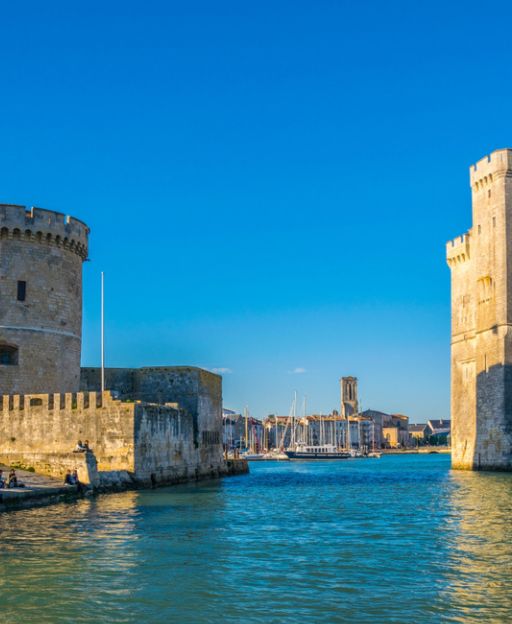
But the peace was uneasy. The crown never fully accepted the idea of two religions within one kingdom. Cardinal Richelieu, Louis XIII’s powerful chief minister, stripped the Huguenots of their military fortifications in the 1620s, besieging La Rochelle in 1627–28 in one of the most brutal sieges in French history. The city held out for fourteen months before starvation forced surrender. Around 15,000 of the 28,000 inhabitants died. You can still walk the quays where those towers once guarded a Protestant city.
🇫🇷 Enjoying this? 7,000 France lovers get stories like this every week. Subscribe free →
The Revocation That Changed Everything
For decades after La Rochelle, Huguenots lived under increasing pressure. Then, in October 1685, Louis XIV signed the Edict of Fontainebleau, revoking the Edict of Nantes entirely. It was one of the most consequential acts of his reign — and one of the most catastrophic errors a French king ever made.
The Edict of Fontainebleau banned Protestant worship, ordered Protestant churches demolished, required the baptism of Protestant children as Catholics, and expelled all Protestant pastors. Protestant laypeople were forbidden from leaving France on pain of the galleys or prison. Louis XIV believed he was completing the religious unification of his kingdom. Instead, he triggered an exodus that would drain France of some of its most skilled and productive citizens for generations.
The dragonnades made life unbearable before many could formally leave. Soldiers — dragoons — were billeted in Huguenot homes with instructions to make themselves unpleasant. They ate the household’s food, smashed furniture, refused to let the family sleep, and committed violence with effective impunity. The message was clear: convert or suffer. Many did convert, at least officially. But hundreds of thousands found ways to flee.
Leaving France was illegal. People were caught at borders, sent to the galleys, imprisoned. But the roads and mountain passes were long, and the determination of those who had seen their faith criminalised was stronger than any border guard. Between 1685 and 1700, an estimated 200,000 to 400,000 Huguenots left France. Some historians place the total higher.
Louis XIV, who spent vast sums building Versailles and maintaining a court of breathtaking extravagance, had just handed his rivals — England, the Dutch Republic, Brandenburg-Prussia — a gift of skilled Protestant workers, military engineers, financiers, and craftsmen. His enemies grew stronger. France grew poorer. The irony was not lost on contemporaries. If you are curious about the world Louis XIV inhabited, the story of his court is one of brilliance built on cruelty.
Where the Huguenots Went
The Huguenot diaspora — known in French as le Refuge — scattered across Protestant Europe and beyond. Each destination shaped how the refugees were received and what they built there.
England received perhaps 40,000 to 50,000 Huguenots, many settling in London’s East End, in Canterbury, in Southampton, and in Norwich. They brought silk weaving, goldsmithing, watch-making, and banking. The Spitalfields silk industry in east London was entirely Huguenot in origin. Huguenot churches — some still standing — dotted the landscape. Surnames like Bosanquet, Courtauld, Lacoste, Minet, and Perronet became English over time.
The Dutch Republic welcomed tens of thousands, particularly in Amsterdam, Leiden, and Middelburg. The Dutch already had Protestant sympathies and a tradition of religious tolerance. Many Huguenots went on from Holland to other Dutch territories — including the Cape of Good Hope.
Brandenburg-Prussia was transformed by Huguenot immigration. Frederick William, the Great Elector, issued the Edict of Potsdam in 1685 — within weeks of the Edict of Fontainebleau — offering Huguenots land, tax exemptions, and religious freedom. Around 20,000 came, many settling in Berlin, where they built churches, schools, and industries. The Huguenot community in Berlin remained culturally distinct for generations. The Prussian military benefited enormously from their engineering and military expertise.
North America also received thousands of Huguenots, particularly in the English colonies. They settled in Boston, New York, Charleston, and Virginia. Many anglicised their names quickly. The Revere family was originally Rivoire. The De Lancey family became a powerful New York dynasty. John Jay, one of the Founding Fathers and the first Chief Justice of the United States, was of Huguenot descent. Paul Revere’s grandfather was Apollos Rivoire, a Huguenot silversmith from the Bordeaux region of France.
If you are researching your French ancestry, and your family arrived in America before the mid-1700s, Huguenot heritage is worth investigating. Surnames like Dupré, Gaston, Marot, Prioleau, Ravenel, and Bonneau are strongly Huguenot in South Carolina’s Lowcountry.
The Huguenots in South Africa
Of all the places the Huguenots settled, none created a more lasting and visible legacy than the Cape Colony — what is now South Africa’s Western Cape.
In 1688 and 1689, around 200 Huguenot refugees arrived at the Cape under Dutch East India Company (VOC) sponsorship. They came primarily from the Charentes, Dauphiné, and Normandy regions of France. They were given farms in a mountain valley northeast of Cape Town that, in their honour, was named Franschhoek — Dutch for “French Corner.” It remains one of the most beautiful wine valleys in the world.
The Huguenots brought their knowledge of viticulture with them. They planted vines on the slopes of the Franschhoek mountains. Many surnames common in the Cape winelands today — De Villiers, Du Plessis, Du Toit, Joubert, Le Roux, Malherbe, Rousseau, and Cronjé — trace directly back to those Huguenot settlers of the 1680s and 1690s.
Within two generations, the French language was largely gone from Franschhoek. The VOC discouraged its use and the community merged with the broader Dutch-speaking population. But the surnames survived — as did the vineyards. The Huguenot Memorial Museum in Franschhoek tells their story in detail, and the annual Franschhoek Literary Festival draws visitors from across the world to a valley that exists, in part, because Louis XIV made religious tolerance impossible in France.
Those Who Stayed: The Desert Period
Not everyone could leave. Many Huguenots remained in France, worshipping in secret in forests, fields, and remote mountain valleys. This period, from 1685 to 1787, is called le Désert — the Desert — after the biblical image of the Israelites wandering without a home.
The resistance was most fierce in the Cévennes mountains of Languedoc. Here, in 1702, a Protestant uprising known as the Camisard War broke out. Poorly armed peasants held off the armies of Louis XIV for eight years in the mountains, using guerrilla tactics and intimate knowledge of the terrain. It was a remarkable act of defiance. The memory of the Camisards remains vivid in the Cévennes today.
Elsewhere, Protestant families gathered for assemblées du Désert — clandestine outdoor services, often before dawn, with lookouts posted on hilltops. Being caught meant prison, the galleys, or death. Pastors who returned to preach were executed. The last Protestant pastor to be executed in France for his faith was François Rochette, hanged in 1762 — a fact that shocked Voltaire into action and contributed to the philosophical pressure that eventually led to reform.
In 1787, Louis XVI’s Edict of Versailles finally restored civil rights to French Protestants — two years before the Revolution that would reshape the country entirely. It came too late for generations of French Protestants who had suffered through the Desert, but it ended more than a century of legal persecution.
Following the Huguenot Trail in France Today
The Huguenot story is written across the French landscape, if you know where to look. Here are the key places to visit if Huguenot heritage is part of your family journey — and a reason to plan your trip to France around ancestral sites rather than just famous attractions.
La Rochelle (Charente-Maritime) is the most important Huguenot city in France. The towers of its old harbour — Tour de la Chaîne and Tour Saint-Nicolas — are the same walls behind which 28,000 Protestant citizens held out against Richelieu for fourteen months. The old town’s Protestant church and the city’s maritime museum tell the story. Walk the quays in the early morning and you feel the weight of history.
The Cévennes National Park (Gard / Lozère) is where the Camisard resistance took place. The region has a strong Protestant identity to this day. The Musée du Désert at Mialet is the dedicated museum of the Desert period — an extraordinary testament to religious endurance.
Nîmes (Gard) was one of the great Huguenot cities of southern France. The city’s Roman heritage and its Protestant history sit side by side in a fascinating mix.
Normandy had significant Huguenot communities, particularly in Rouen, Caen, and Dieppe. Many Norman Huguenots emigrated to England and to New France. If you have Norman heritage, Norman French surnames and Huguenot records from the archives départementales can be a powerful combination for tracing ancestry.
Paris (Île-de-France) has several Huguenot-connected sites, including the Musée National du Protestantisme Français in the Marais neighbourhood — one of the most beautiful districts in the city.
Frequently Asked Questions About the Huguenots
What does Huguenot mean?
The exact origin of the word is uncertain. The most widely accepted theory links it to the German Eidgenossen (confederates), filtered through the Swiss Protestant context of the 1520s. Another theory connects it to a folk figure called Hugon, a ghost said to haunt Tours at night — a name applied mockingly to Protestants who met secretly after dark.
How many Huguenots left France after 1685?
Estimates vary between 200,000 and 400,000 over the period from 1685 to roughly 1720. Hundreds were sent to the galleys when caught attempting to flee. Many who converted under duress — known as Nouveaux Convertis — returned to Protestantism when they could.
Are there still Protestants in France today?
Yes. France has roughly one million Protestants today, representing about 1.5% of the population. They are concentrated in Alsace-Lorraine, the Cévennes, and a number of urban centres. Their presence is a direct continuity from the communities who survived the Desert period.
How can I tell if I have Huguenot ancestry?
Look for surnames of French origin in your family tree, particularly if your family was in England, South Africa, the Netherlands, Germany, or the American colonies before 1750. Surnames like De Villiers, Du Plessis, Joubert, Le Roux, Prioleau, Ravenel, Rivoire, and Fontaine are often Huguenot in origin. The Huguenot Society of Great Britain and Ireland maintains a searchable archive of documented Huguenot refugees and their descendants.
Why did the Huguenots matter economically?
The Huguenots were disproportionately skilled. They dominated key industries: silk weaving, watch-making, banking, arms manufacturing, and silversmithing. When they left, those industries migrated with them. England, Prussia, and the Dutch Republic all made direct economic gains from France’s loss.
You Might Also Enjoy
- How to Trace Your French Ancestry — Step-by-Step Guide for Canadians and Americans
- French Surnames of Normandy: Origins, Meanings and Family Heritage
- The Region of France That Has Never Quite Decided Whether It’s French
Plan Your France Trip
Ready to walk in the footsteps of the Huguenots? La Rochelle, the Cévennes, Nîmes, and Normandy all reward the heritage traveller. Start with our complete France travel planning guide to map your route, choose your regions, and make the most of every day.
Join 7,000+ France Lovers
Three times a week, get France’s hidden gems, seasonal guides, local stories, and the art of la vie française — straight to your inbox.
Subscribe free — enter your email:
Free forever · Unsubscribe anytime
🇫🇷 You Might Also Love
Tours & experiences you might love


Powered by Viator. Some links are affiliate links — we may earn a small commission at no extra cost to you.

Leave a Reply