
Montmartre sits on a hill in northern Paris, 130 metres above the rest of the city. For over a century, it was where artists, writers, and free thinkers came to live cheaply and work seriously. Picasso had his studio here. Toulouse-Lautrec painted its cabarets. Monet, Van Gogh, and Degas walked its lanes. Today, Montmartre is one of the most visited places in France — and still one of the most rewarding, if you know where to look and when to arrive.
Love France? Join 7,000+ readers on our free newsletter → lovetovisitfrance.substack.com
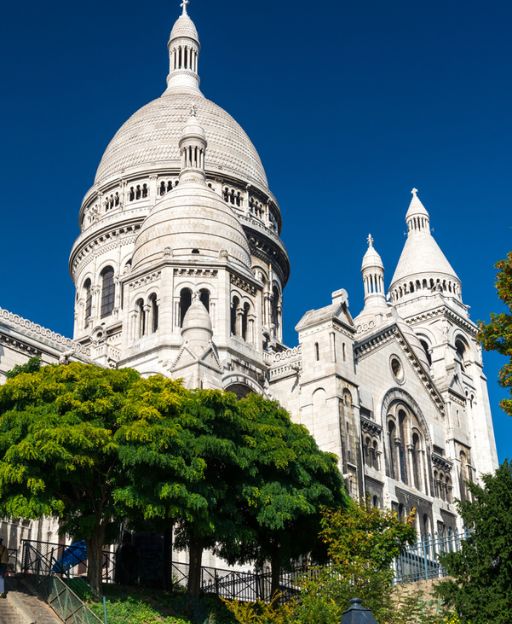
This Montmartre Paris guide covers the essentials: what to see, how to avoid the worst of the crowds, where to eat, and what the neighbourhood actually looks and feels like once you are there.
What Is Montmartre?
Montmartre was a separate village — outside the walls of Paris — until 1860, when it became the 18th arrondissement. That independent spirit never quite left. The streets are steeper and narrower than the rest of Paris. There are still vineyards, a working windmill, and small squares where neighbourhood life continues at its own pace.
The artistic history is real. In the early 20th century, rents on the Butte Montmartre (as the hill is known) were cheap enough that painters and writers from across Europe could afford to live there. Picasso worked at the Bateau-Lavoir studio on Place Émile-Goudeau from 1904. Amedeo Modigliani lived a few streets away. Henri de Toulouse-Lautrec documented the cabarets, dance halls, and cafés that filled the neighbourhood’s nights.
That era ended with the First World War, when artists moved south to Montparnasse. But the physical landscape survived: the lanes, the staircases, the small squares, and the white Sacré-Cœur Basilica that crowns the hill are all still there.
If you are building a wider Paris itinerary, our France by train guide covers connections from Paris to the rest of the country — useful for planning onward journeys after the city.
What to See in Montmartre
Montmartre is small enough to cover on foot in a day, but dense enough that the best visits take longer. Here are the places worth your time.
Sacré-Cœur Basilica
The Sacré-Cœur Basilica stands at the top of the Butte Montmartre and has defined the Paris skyline since it opened for worship in 1919. The building is made from travertine stone that whitens over time, which explains why it appears to glow even on overcast days.
Entry to the basilica is free. The interior is dark and solemn — a contrast to the tourist energy outside. Above the main altar, the mosaic of Christ in Glory is one of the largest in the world, covering 475 square metres. Take a moment to walk to the side chapels, which are quieter and easier to appreciate.
The steps below the basilica provide one of the best viewpoints in Paris. From here, you look south over the rooftops toward the Île de la Cité, the Eiffel Tower, and on clear days, the La Défense towers to the west. The view is free and worth arriving early to enjoy before the crowds gather.
Place du Tertre
Place du Tertre is the main tourist square, a short walk from Sacré-Cœur. Artists work at easels around the square, offering portraits and paintings for sale. The square is historic — it has been an artists’ meeting point since the 19th century — but today it functions primarily as a commercial space for tourist-facing art.
If you want to buy something, negotiate. Prices are rarely fixed. If you want to experience the square rather than shop it, visit early in the morning before the painters set up, when the cafés are quiet and the square looks as it must have a century ago.
The Montmartre Vineyard
One of the strangest facts about Montmartre is that it still has a vineyard. The Clos Montmartre sits on the northern slope of the hill, planted with Pinot Noir and Gamay vines. The vineyard produces around 1,500 bottles per year, auctioned each October during the Fête des Vendanges de Montmartre — a four-day harvest festival that fills the streets with music and food stalls.
The vineyard itself is visible from the street. On the last Saturday of September each year, the harvest takes place publicly and visitors can watch. Outside the festival, the iron gates remain closed but the vines are visible through the railings from Rue des Saules.
The Moulin Rouge
The Moulin Rouge opened in 1889 at the foot of the hill, on Boulevard de Clichy. Toulouse-Lautrec made it famous with his series of posters, and it has been running shows continuously since then. The red windmill on the roof is one of the most recognisable structures in Paris.
The cabaret shows run nightly at 9pm and 11pm. Tickets start at around €90 for the dinner show and €75 for the show only. It is a polished, expensive, and thoroughly touristic experience — which is exactly what it was always meant to be. If you have any interest in seeing it, book several months in advance; it sells out routinely.
The exterior and the surrounding streets of Pigalle — the red-light district that Toulouse-Lautrec painted — are free to walk through at any hour.
The Bateau-Lavoir
Place Émile-Goudeau is a quiet square halfway up the hill. At its eastern edge stands the Bateau-Lavoir, a ramshackle studio building where Picasso lived and worked from 1904 to 1909. It was here that he painted Les Demoiselles d’Avignon in 1907, a work widely considered the starting point of Cubism. The original building burned down in 1970; the current structure is a reconstruction. A small plaque on the exterior marks the site.
Rue Lepic
Rue Lepic is the main market street of Montmartre, running from the base of the hill up through the neighbourhood. Van Gogh lived at number 54 with his brother Theo from 1886 to 1888. The street still has a working-neighbourhood feel: a cheese shop, a butcher, a few cafés that serve the local population as much as visitors. It is a better representation of how Montmartre actually functions day-to-day than the tourist core around Place du Tertre.
Love France? Get the weekly newsletter — free.
Every week: hidden gems, local stories, and travel inspiration from across France.
Subscribe Free →When to Visit Montmartre
Montmartre is busiest between 11am and 5pm, when the tour groups arrive from central Paris. The steps below Sacré-Cœur can hold thousands of people during peak hours in summer.
The most rewarding time to visit is early morning — between 7am and 10am. The streets are quiet, the cafés are opening, and the light on the white stone of the basilica is at its best. If you stay in Montmartre, this is easy to achieve. If you are coming from elsewhere in Paris, take the first metro to Abbesses and walk up from there.
Another option is late afternoon, arriving around 4pm and staying into the evening. The tourist crowds thin from around 5pm, and the neighbourhood takes on a different character as the local restaurants fill up and the streets quiet down.
In late September and early October, the Fête des Vendanges de Montmartre is worth visiting if you can time your trip around it. In February, the neighbourhood is at its quietest and most local.
How to Get to Montmartre
Metro line 12 to Abbesses is the most useful stop — it sits at the foot of the hill, a short walk from the main streets of the neighbourhood. The station has an Art Nouveau entrance designed by Hector Guimard and contains one of the two original Guimard-designed dome canopies still in place in the Paris metro system.
Metro line 2 to Blanche or Pigalle puts you near the Moulin Rouge and the lower edge of the neighbourhood, useful if you are starting from the boulevard rather than the hill.
The funicular runs from the square at the foot of the Sacré-Cœur steps to the top of the hill and accepts standard metro tickets. It saves the climb and is faster than the stairs when carrying bags. Queues can be long in summer — if the wait is more than a few minutes, the stairs alongside it are usually faster.
Where to Eat in Montmartre
The restaurants directly around Sacré-Cœur and Place du Tertre are, with a few exceptions, overpriced and mediocre. The better eating is a few streets away from the tourist core.
Rue Lepic has several good cafés and bakeries. Rue Lamarck, running along the northern side of the hill, has a quieter set of neighbourhood restaurants. Rue Caulaincourt, further north toward the Lamarck-Caulaincourt metro, has good options used mainly by locals.
For a croissant in the morning, walk down from the basilica to any bakery on Rue Lepic — the quality is high and the prices are significantly lower than anything on the tourist-facing squares. For lunch, look for restaurants with handwritten daily menus on a chalkboard outside — the classic sign of a kitchen cooking what arrived that morning.
The Paris vs Provence guide covers the broader question of where to focus a France trip, which is worth reading if you are still deciding how much of your time to spend in the capital versus heading south.
Montmartre for Amélie Fans
Jean-Pierre Jeunet shot Amélie (2001) almost entirely in Montmartre, and the film turned several of its locations into places of quiet pilgrimage. The café where Amélie works — the Café des 2 Moulins — is real, at 15 Rue Lepic, and still operates. It has embraced its connection to the film and the walls inside carry stills and posters. The food is decent; the coffee is ordinary but fine.
The grocery shop where the film was partly set no longer exists in its original form, but the surrounding streets look much as they do in the film. A walking map of filming locations is available free from the Montmartre tourist office on Place du Tertre.
Practical Tips
Wear comfortable shoes. Montmartre is built on a hill with steep streets and staircases. Flat shoes or trainers are strongly recommended. The steps up to Sacré-Cœur alone involve several hundred stairs.
Watch your pockets. The area around Sacré-Cœur and the steps below it is well known as a location for pickpockets and petition scams. Keep your phone and wallet secure, and be politely firm if approached by anyone with a clipboard or petition.
Book Moulin Rouge in advance. If you plan to attend a show, book weeks or months ahead — particularly for weekend evenings. The queue for last-minute tickets is long and the show frequently sells out.
Visit the Musée de Montmartre. The neighbourhood museum occupies a building where Renoir once had a studio. It covers the artistic and social history of the area from the 19th century to the present. Entry costs €15. It is smaller and quieter than the major Paris museums and gives good context for the streets around it.
For day trips outside Paris, our best day trips from Paris guide covers Versailles, Chartres, Giverny, and the Loire Valley châteaux — all reachable in under two hours by train.
Ready to explore Paris?
Join 7,000+ France lovers and get weekly travel inspiration, local tips, and hidden gems — completely free.
Join Free →You Might Also Enjoy
- 5 Days in Paris: A Complete Itinerary
- The Best Day Trips from Paris
- Paris vs Provence: Which Part of France to Visit First?
Plan Your France Trip
Looking for help building a full France itinerary? Our France trip planning hub covers everything from choosing regions to booking trains and accommodation.
Frequently Asked Questions
Is Montmartre worth visiting in Paris?
Yes — Montmartre is one of the most distinctive areas of Paris, with genuine artistic history, a village-like atmosphere, and some of the best views in the city. The key is arriving early (before 10am) to avoid peak tourist crowds around Sacré-Cœur.
How long should you spend in Montmartre?
Half a day is enough to cover the main sights: Sacré-Cœur, Place du Tertre, the vineyard, and Rue Lepic. A full day allows you to explore more slowly, have lunch in the neighbourhood, and visit the Musée de Montmartre.
What is the best way to get to Montmartre from central Paris?
Take Metro line 12 to Abbesses, which puts you at the foot of the hill near the main streets of the neighbourhood. The funicular from the base of the Sacré-Cœur steps takes a standard metro ticket and saves the climb to the top.
Is the Moulin Rouge in Montmartre?
The Moulin Rouge is at the foot of Montmartre hill on Boulevard de Clichy, at the edge of the Pigalle district. It is a short walk from the Blanche or Pigalle metro stations. It is geographically part of the wider Montmartre area but sits below the residential hill rather than on it.
Join 7,000+ France Lovers
Every week, get France’s hidden gems, local recipes, and travel inspiration — the kind you won’t find in any guidebook.
Subscribe free — enter your email:
Free forever · One email per week · Unsubscribe anytime
Tours & experiences you might love


Powered by Viator. Some links are affiliate links — we may earn a small commission at no extra cost to you.

Leave a Reply