
Ask a room full of travellers which French city they would live in for a year and you will hear the same name shouted back almost every time: Paris. It is the safe answer, the glamorous answer, the one you see on every travel list. But push a little further and the conversation gets interesting. Lyon devotees will tell you it has better food and a calmer pace. Bordeaux fans point to the architecture, the wine and the affordability. Nice adherents simply step outside into the sunshine and feel their point has been made without words.
This is not a ranking. Every city on this list has genuine qualities that make it worth a year of your life. What follows is a practical look at six French cities — what daily life actually looks like, what you gain and what you trade away.
Love France? Join thousands of fellow France lovers and get stories, guides and hidden gems straight to your inbox. Subscribe to our free newsletter here.
Paris: The World City
Paris is not a city you live in so much as a city you are absorbed by. The arrondissements each have their own character — the busy commerce of the 1st, the quiet residential streets of the 14th, the multicultural energy of the 18th. A year in Paris means genuinely different experiences depending on which neighbourhood you land in.
The practical realities are worth knowing. Rent in Paris is the highest in France, with a one-bedroom flat in a central arrondissement costing between €1,400 and €2,200 per month. Move to the 19th or 20th and you drop that noticeably, but you also add commute time. The Metro is excellent and covers nearly everywhere you will want to go, which means you can survive without a car entirely.
What Paris offers that no other French city can match is access. The Louvre, the Musée d’Orsay, the Centre Pompidou, the Paléologue archive collections — these are all on your doorstep. The restaurant scene covers every cuisine at every price point. The city has more parks than most people expect, and the green corridors along the Seine give you space to breathe even in summer.
The drawbacks are real: the cost of living, the tourist crowds in the centre, the competitive nature of flat hunting, and winters that are grey and damp for longer than Paris’s reputation suggests. For many people, though, one year in Paris would be enough to form a relationship with the city that lasts the rest of their life.
Lyon: France’s Best-Kept Secret
Lyon is consistently ranked among the best cities in Europe for quality of life, and anyone who has spent time there understands why. It sits at the confluence of the Rhône and Saône rivers, flanked by hills, with a Renaissance old town — the Vieux-Lyon — that is a UNESCO World Heritage Site. The old town alone could occupy you for months of Sunday afternoons.
The food reputation is not hype. Lyon is considered by many chefs and food writers to be the gastronomy capital of France, which is saying something. The city has more restaurants per capita than almost anywhere in Europe, and the bouchon tradition — small family-run restaurants serving Lyonnais classics like quenelles, andouillette and tarte praline — makes eating well an affordable daily habit rather than a special occasion.
Rent is significantly lower than Paris. A one-bedroom flat in the Presqu’île or the 1st arrondissement runs around €800 to €1,100 per month. The transport network is clean and reliable. The city has a functioning tech and business sector, which matters if you are thinking about working remotely or freelancing while you are there.
Lyon lacks Paris’s international cachet, and if the energy of a world-stage city is what you need, Lyon will feel quieter than you want. But for most people asking this question honestly, Lyon would give them more of what they actually want from a year in France.
Bordeaux: Wine, Architecture and an Easy Pace
Bordeaux was comprehensively rebuilt in the 18th century, which gives it a visual consistency that few French cities have. The limestone facades, the grand boulevards and the open riverside esplanade create a city that feels designed rather than accumulated. Walking around the city centre genuinely feels like walking through an architectural showpiece.
The wine connection is not just marketing. Living in Bordeaux puts you within easy reach of Saint-Émilion, Pauillac and Médoc. Wine education, cellar visits and the annual En Primeur tastings in spring are all accessible in a way that is simply not possible from anywhere else. The La Cité du Vin museum provides one of the best introductions to wine culture available anywhere in the world.
The city is smaller than Paris or Lyon, with around 250,000 people in the urban core. That means you will start to recognise faces on your regular routes within a few weeks, which suits some people and constrains others. Rent sits around €700 to €1,000 for a one-bedroom flat in the central districts. Summers are warm and dry, which makes the outdoor lifestyle genuinely pleasant rather than aspirational.
The one caveat: Bordeaux is not the most connected city in France. Getting to other major French cities requires a TGV to Paris first, which adds time to most journeys. If you want to spend weekends exploring the rest of France, the logistics are slightly more involved than from Lyon or Paris.
Love France? Join thousands of fellow France lovers and get stories, guides and hidden gems straight to your inbox. Subscribe to our free newsletter here.
Nice and the Côte d’Azur
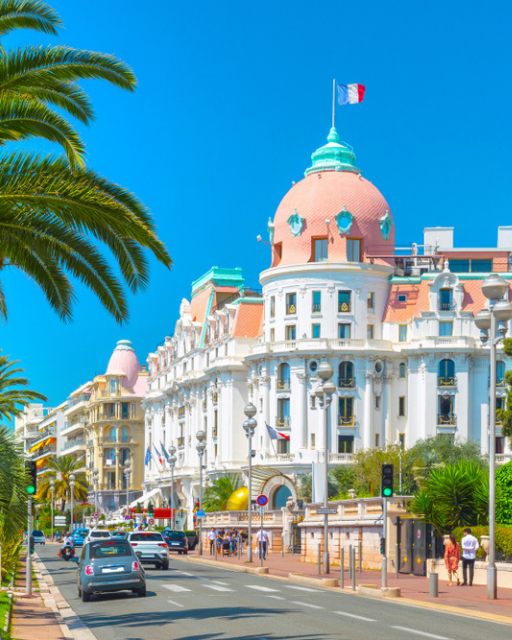
Nice is the most climatically rewarding city on this list. The city averages around 300 days of sunshine per year, and the Promenade des Anglais — the wide seafront boulevard running along the Baie des Anges — becomes part of your daily rhythm in a way that no landlocked French city can replicate. You can walk or cycle along the sea before work every morning if you choose to.
The Vieux-Nice quarter is one of the most atmospheric old towns in France: narrow ochre and terracotta buildings, markets with fruit, cheese and socca (the local chickpea flatbread), and a distinctly Italian influence in both the architecture and the cuisine. Nice was part of the Kingdom of Sardinia until 1860 and that history shows.
The practical side is more complicated. Nice is expensive — comparable to Paris in some neighbourhoods, particularly anything close to the seafront or in the hills. Traffic can be severe in summer when the tourist population expands dramatically. The city’s nightlife and social scene are lively but skew towards short-term visitors rather than a settled community of residents.
For a year of genuine quality of life, the climate and the sea give Nice a strong case. The key question is whether the cost and the seasonal crowds are a price you are willing to pay for winter sunshine and a swim in the Mediterranean.
Marseille: Raw, Real and Underrated
Marseille has a reputation that puts people off, and that reputation is only partly deserved. Yes, it is a working port city with rough edges. Yes, the traffic is chaotic and the streets in parts of the city feel nothing like the idealised Provence of travel writing. But it is also genuinely alive in a way that more polished French cities sometimes are not.
The food alone makes Marseille worth considering. Bouillabaisse, the original and still the definitive version, is available here in ways that bear no relation to the restaurant imitations sold elsewhere in France. The markets in the Noailles district, sometimes called the belly of Marseille, sell produce from North Africa, the Middle East and the Maghreb alongside local fish and vegetables. Eating in Marseille is an education.
The Calanques National Park begins almost immediately at the southern edge of the city: white limestone cliffs, turquoise inlets and hiking trails that make you forget you are twenty minutes from a city of 900,000 people. If you want to combine urban living with serious access to nature, nowhere else on this list matches Marseille.
Rent is the lowest of any city here — a comfortable one-bedroom flat in the 6th or 8th arrondissement, the better residential areas, runs around €650 to €900. The city has invested heavily in regeneration around the Vieux-Port and the Euroméditerranée development zone, and parts of Marseille that were run-down a decade ago now have genuine character. If you want an honest, unvarnished year in France, Marseille is worth serious consideration.
Montpellier: The Younger Alternative
Montpellier does not have the historic weight of the other cities on this list, but it offers something distinct: a genuinely young, international energy. The city has one of the largest student populations in France relative to its size, with around 70,000 students out of a total population of 290,000. That ratio shapes the city’s restaurants, bars, cycling infrastructure and general pace of life in ways that older residents and younger visitors both tend to appreciate.
The location is excellent. Montpellier sits close to both mountains and sea — the Méditerranée is about 12 kilometres away, and the Cévennes and the Pyrénées are accessible for weekend trips. The climate is similar to Nice: warm, dry and sunny for most of the year. Transport links to Barcelona, Paris and Marseille are all solid.
The city centre, the Ecusson, is a medieval web of streets that rewards slow exploration. The Place de la Comédie and the surrounding area are lively without being overwhelming. Rent is lower than Nice or Paris, running around €650 to €950 for a central one-bedroom.
Montpellier is not the answer for everyone. If you want grandeur, history and a serious cultural calendar, you will find it limited. But if you want an affordable, sunny, socially active year in the south of France without the tourist weight of Nice, it deserves a place on your shortlist.
What to Consider Before You Choose
A few practical questions will quickly narrow the list.
Budget: Paris and Nice are significantly more expensive than Lyon, Bordeaux, Marseille and Montpellier. If cost matters, the south and the inland cities give you more for the same money.
Climate: If winter sunshine is important to you, the choice is essentially Nice, Marseille or Montpellier. Paris and Lyon have real winters. Bordeaux sits in between.
Language: All six cities have English spoken in tourist and business areas, but the further from Paris you go, the more French you will need for daily life. This is not a drawback — it is an opportunity — but it is worth being honest about your current level.
Work and connectivity: Paris has the most complete infrastructure for remote working and co-working. Lyon is catching up fast. The southern cities are improving but vary significantly by neighbourhood and building age in terms of reliable internet connections.
What you actually want from a year: A year is long enough to build real habits and routines, not just visit. Think about whether you want museums and concerts, or markets and hiking. City buzz or neighbourhood quiet. It makes more difference than which city tops a livability index.
Love France? Join thousands of fellow France lovers and get stories, guides and hidden gems straight to your inbox. Subscribe to our free newsletter here.
There is no wrong answer. Each of these cities has given people some of the best years of their lives. The question is only which one gives you yours.
Tours & experiences you might love


Powered by Viator. Some links are affiliate links — we may earn a small commission at no extra cost to you.

Leave a Reply