
The French art of doing nothing is not laziness. It is a deliberate, culturally embedded practice — one that visitors to France encounter almost immediately, often with a mix of envy and confusion. Sitting at a café table for two hours over a single espresso. Taking a full ninety-minute lunch in the middle of a working day. Closing an entire village for the month of August. These are not accidents of geography or history. They are choices, encoded in law, culture, and centuries of habit.
Love France? Join 7,000+ readers on our free newsletter → lovetovisitfrance.substack.com
What “Doing Nothing” Actually Means in France
Ask a French person what they did on Sunday and they will often say, rien de spécial — nothing in particular. Yet that “nothing” might include a two-hour lunch with family, a walk through the market, a slow coffee in the afternoon sun, and a long evening conversation on the terrace. France does not confuse activity with productivity.
In much of the English-speaking world, rest carries a faint sense of guilt. Workers feel they must earn leisure. Travellers book holidays apologetically, still answering emails from the airport lounge. France inverts this logic entirely. Rest is not a reward for work. It is a right, a rhythm, and a form of living well.
This distinction shapes everything from how the French eat to how they spend their summers, and it is one of the first things visitors sense when they cross the border.
The Philosophy Behind the Pause
The French concept of savoir-vivre — literally, “knowing how to live” — encompasses far more than politeness or table manners. It includes knowing when to stop. Knowing how to sit with a friend without reaching for a phone. Knowing that a good meal taken slowly is worth more than three meals eaten at a desk.
This is not a new idea. French philosophers from Montaigne to Voltaire wrote about the value of leisure, of friendship, of conversation conducted at a proper pace. What distinguishes France is that these ideas never remained purely philosophical. They filtered into everyday life and, eventually, into law.
The Sacred Long Lunch
The French lunch is not a meal. It is an institution. For most of the working population, lunch remains a proper midday pause — typically ninety minutes to two hours, eaten sitting down, often with colleagues, and rarely consumed in front of a computer screen.
French law protects the lunch break. Employers cannot compel their staff to eat at a desk as standard practice, and workplace canteens — known as cantines — are common in large organisations, often heavily subsidised. The French government spends real money ensuring its workers sit down to eat properly at noon.
What a Real French Lunch Looks Like
Walk past any brasserie at 12:30 on a Tuesday in Lyon, Bordeaux, or Nantes and you will see tables of two, four, or six people eating a full three-course menu du jour. An entrée — perhaps a salad or some charcuterie. A main — steak haché or a gratin dauphinois. A dessert, or at least a coffee. A glass of wine, sometimes. The meal takes ninety minutes. The conversation takes precedence over the clock.
Executives hold no special claim on this tradition. Builders, teachers, civil servants, and shop assistants observe the same rhythm. The long lunch is democratic in France. It is also considered non-negotiable — a marker of civilisation rather than self-indulgence.
In smaller towns and villages, this tradition extends to the shops themselves. Many still close between noon and two, sometimes noon and three. Tourists who turn up expecting to buy cheese at 1pm often find the fromagerie shuttered and wonder what they have missed. The French have simply gone to eat.
Café Culture: The Art of the Lingering Espresso
There is an unspoken contract at a French café table. When you sit down and order, the table is yours for as long as you like. No waiter will hint that you should leave. No bill will arrive uninvited. The waiter will not turn you over — the establishment treats you as a guest, not a transaction. Understanding this changes how you experience French café etiquette entirely.
This is not merely custom. It is a form of respect — for your time, for your thoughts, and for the idea that sitting quietly with a coffee is a perfectly valid way to spend an afternoon. Many French people do exactly this, alone, watching the street, thinking, or simply being present.
The Ritual of the Terrace
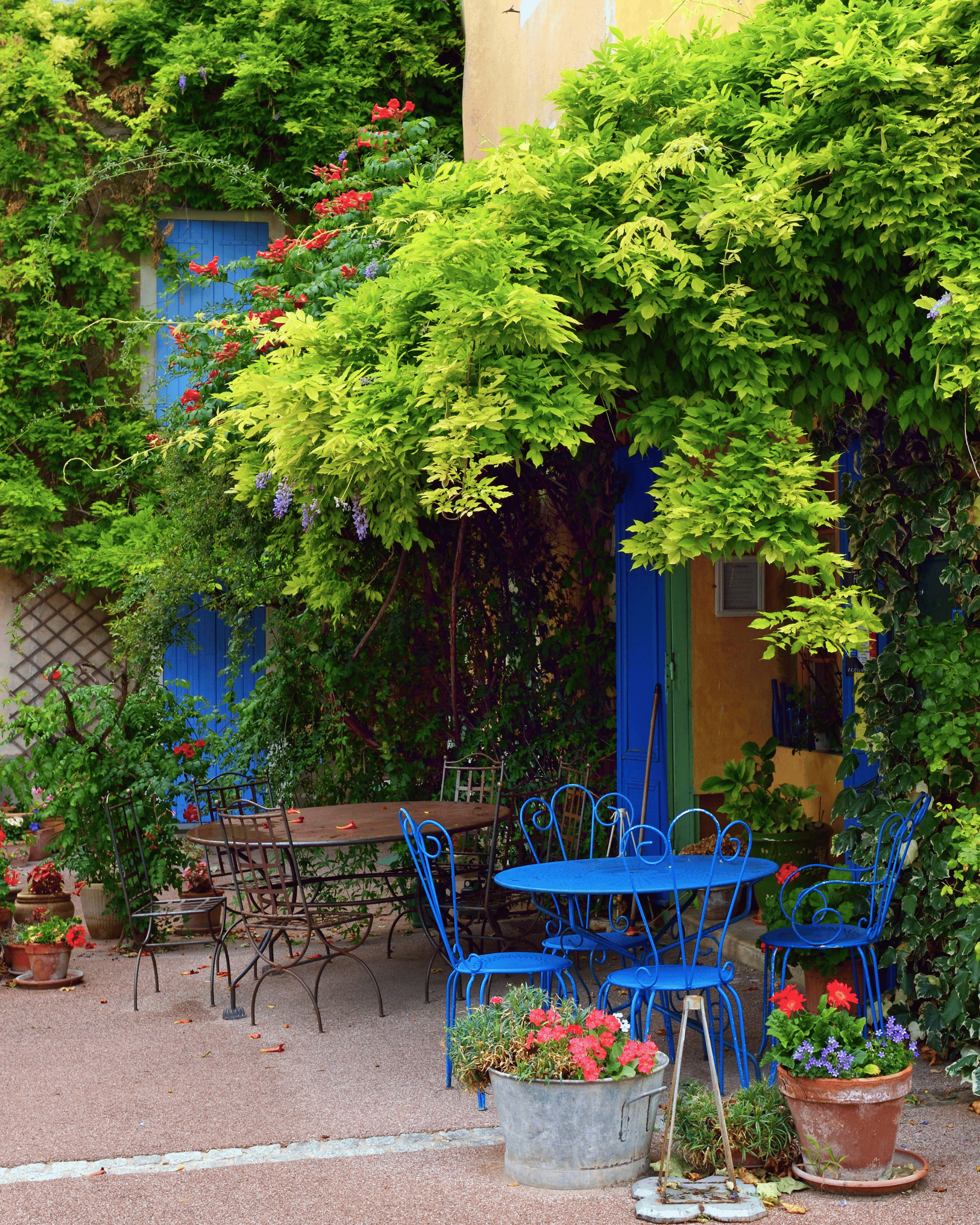
The French café terrace is perhaps the most iconic setting for this particular art. Spring comes and Parisians, Lyonnais, and Bordelais alike migrate outdoors. Small metal chairs face outward — not to watch television, but to watch the street. People-watching is not a guilty pleasure in France. It is a recognised form of leisure, a social practice with deep cultural roots.
The café itself is understood as an extension of the home — a place to receive friends, to have a quiet hour before work, to sit with a book on a rainy afternoon. The French writer Simone de Beauvoir worked every morning at Les Deux Magots in Paris. Her contemporaries did not see her as eccentric. They considered her sensible.
For visitors, learning to settle into a terrace chair without an agenda is one of the great pleasures France offers. Order a noisette, let the morning take its time, and resist the urge to check your phone every four minutes. The French will approve.
Love France? Get Weekly Inspiration Free
Join 7,000+ readers discovering hidden France every week.
Les Grandes Vacances: The Month France Disappears
Every August, France does something remarkable by the standards of most industrialised nations. It stops. Not metaphorically — quite literally. The grandes vacances, the great holidays, see approximately 40% of the French workforce take their holidays simultaneously, most of them in August. Village bakeries close for three or four weeks. Dentists pin hand-written notes to their doors. Parisian restaurants shut up entirely.
Far from chaos, the August shutdown follows an established choreography. The French have organised society around the assumption that people need time off — real time off, not the kind interrupted by emails or “just one quick call.” French law guarantees every full-time worker a minimum of five weeks of paid holiday per year. Most people take the bulk of it in August.
A Legal Right, Not a Perk
The legal architecture underpinning French leisure is substantial. The five-week holiday entitlement has been law since 1982 under the Mitterrand government. The 35-hour working week — established in 2000 under Prime Minister Lionel Jospin’s government — remains one of the most debated labour laws in Europe, but it reflects a consistent French conviction: that time belongs to the person, not the employer.
Critics argue that these protections harm productivity. The French response, broadly, is that productivity is not the point. The point is to live well. GDP per hour worked in France is among the highest in the world — the French are not unproductive during their working hours. They are simply not prepared to give those hours more generously than necessary.
For visitors, August in France presents a double-edged experience. Tourist hotspots become crowded with French families as well as foreigners. But head into the deeper countryside — the Dordogne, the Lot, the Aveyron — and you encounter something rare: a France at leisure in its own landscape, unperformed and unhurried.
Sunday: The Last Sacred Day
In most European countries, Sunday trading has largely normalised. In France, it remains contested terrain — and the French like it that way. Many shops still close on Sunday, and in rural areas, Sunday closures are near-total. The French built this intention deliberately into their week.
The French Sunday follows a recognisable structure. The morning market, if there is one, draws the village together. The boulangerie opens early, but closes by noon. By one o’clock, the streets of small towns across France are quiet. Everyone is at the table.
The Sunday Lunch as Cultural Anchor
The Sunday family lunch is one of the most durable rituals in French life. Three generations around a long table. A roast, perhaps, or a slow-cooked pot-au-feu. Wine. Cheese. A tart from the patisserie. The meal begins at midday and the table is rarely cleared before three or four in the afternoon.
This is not nostalgia for a vanished France. Walk through any medium-sized French town on a Sunday afternoon and the evidence is current: supermarket car parks empty by midday, restaurant terraces full, the particular quiet of a society that has, by mutual agreement, chosen to stop.
For those who grew up in cultures where Sunday is simply another Saturday, this can feel almost theatrical at first. It is worth resisting that reaction. The French Sunday makes an argument — consistently renewed — that not every hour deserves filling.
Slow Living in Provence: Where Doing Nothing Becomes an Art Form
Provence tops any honest list of regions that embody the French art of slow living, and the reputation holds up. The light here seems to slow time itself — that particular flat, golden quality that painters from Cézanne to Van Gogh spent their careers pursuing. The lavender fields of the Valensole plateau, the terraced hillsides of the Luberon, the market squares of Isle-sur-la-Sorgue: these are places that actively resist urgency.
The weekly market in Provence is a masterclass in unhurried commerce. Vendors set up at dawn and will still be in conversation at noon. Customers — locals, not tourists — treat the market as a social occasion, not an errand. A visit to the cheese stall easily absorbs twenty minutes of discussion about the relative merits of a particular chèvre. Nobody is impatient. Nobody has somewhere better to be.
Isle-sur-la-Sorgue and the Rhythm of Water
Isle-sur-la-Sorgue sits an hour east of Avignon, threaded through with clear-running channels of the Sorgue river. Silk and paper mills once lined these channels; the mills have long since gone, but the water remains, and the town has absorbed its cadence. People linger on bridges watching the current. Café chairs face the water. On Sunday mornings, the antiques market draws browsers who are clearly in no hurry to buy anything.
This is the genius of Provençal towns. Their builders never included a fast setting. The narrow streets, shaded squares, and mid-afternoon heat push visitors towards the kind of horizontal rest that northern Europeans regard with helpless envy.
Lavender Season and the Permission to Pause
Lavender season in Provence — roughly mid-June to mid-July on the Valensole plateau — draws visitors who often describe the experience in unexpectedly emotional terms. The landscape and the scent seem to grant permission. Permission to stand still. Permission to take a photograph slowly, to put the camera away and simply look. Permission to spend an afternoon doing nothing that will appear in a report or a to-do list.
The French have not invented this permission for tourists. They live it themselves. Families from Marseille and Lyon make the same pilgrimage. Provençal grandmothers walk the field edges in the early morning. The lavender season is, for the French, one more occasion to be properly present.
The Dordogne: Slow Living Taken Seriously
The Dordogne operates at a different frequency to the rest of France. Villages here — Domme, Beynac, Saint-Cirq-Lapopie just over the border in the Lot — have the quality of places that have decided, collectively and definitively, not to hurry. The medieval architecture is part of it, certainly. So too does the agricultural rhythm play its part: walnut orchards, duck farms, foie gras producers working in seasonal cycles that no amount of urgency can speed up.
Visitors who come to the Dordogne for a week often extend their stay. Something in the valley’s tempo recalibrates the internal clock. By the third day, the instinct to fill every hour begins to loosen. By the end of the week, the idea of watching a river from a terrace for an entire afternoon no longer seems like a waste of time. It seems like the point.
La Rentrée and the Return to Rhythm
The counterpart to the grandes vacances is la rentrée — the great return in September, when France comes back from its summer rest. Schools reopen. Offices refill. The markets replenish with autumn produce. There is something almost ceremonial about it: a society that left together now returning together, refreshed by proper rest and ready to work again.
La rentrée is not the end of leisure — it is its completion. The French model of rest and work is cyclical, not competitive. The French do not squeeze leisure between productive moments. Work and rest form equal parts of a well-organised life.
What Visitors Learn from France
Most people who spend real time in France — not a long weekend in Paris, but a fortnight in a rented farmhouse, or a slow month in the southwest — report a version of the same experience. They arrived hurried and they left changed.
Not transformed. Not converted. But changed: a little more willing to eat slowly, to drink unhurriedly, to sit outside without a purpose. A little better at the French art of doing nothing, which is really the art of doing something — just not the kind that shows up in productivity metrics.
France does not offer itself as a template. The French are not, in the main, evangelical about their way of life. They simply live it, consistently, across generations, and trust that visitors will notice.
They do.
Frequently Asked Questions
What is the French concept of “doing nothing”?
The French art of doing nothing — sometimes described through the concept of l’art de vivre — is the cultural practice of structured, guilt-free leisure. It includes long lunches, extended café visits, slow Sunday rituals, and taking full holiday entitlements without apology. It is not idleness. It is a considered approach to the balance between work and rest.
How long is the French lunch break?
In most workplaces, the French lunch break runs between one and two hours. Some white-collar professionals take 90 minutes as standard. In smaller towns and villages, the midday pause can stretch to three hours, with shops closing from noon until 14:00 or 15:00. This pattern is legally protected — French law discourages employees from eating at their desks as a routine practice.
How much holiday are French workers entitled to by law?
French employment law guarantees a minimum of five weeks of paid annual leave for all full-time workers. This has been the legal minimum since 1982. Many collective agreements negotiate additional days beyond this floor. The legal minimum in the United Kingdom is 5.6 weeks (including bank holidays); in the United States, there is no federal minimum holiday entitlement at all.
What is the 35-hour working week in France?
Prime Minister Lionel Jospin’s government introduced the 35-hour working week in France in 2000, primarily as a job-sharing measure during a period of high unemployment. The legislation set the standard working week at 35 hours, classifying anything beyond that as overtime. Successive governments have modified and partially relaxed the rules, particularly in sectors with special agreements, but the 35-hour reference remains a significant cultural and legal marker in French attitudes to work and time.
Where in France is slow living most pronounced?
Visitors most commonly point to Provence, the Dordogne, the Lot valley, and the Aveyron when describing slow French living. Larger cities — Paris included — have accelerated somewhat in recent decades, though the café culture, long lunch, and Sunday rhythms persist even there. For the most unhurried experience of French life, smaller market towns in the southwest and southeast offer the deepest immersion.
Is France genuinely less busy than other European countries?
By several measures, yes. French workers log fewer hours annually than their German, British, or American counterparts, yet France’s GDP per hour worked remains among the highest in Europe, reflecting high productivity during working time. France also has among the highest rates of holiday uptake in the developed world. The cultural resistance to the “always on” work ethic is real, and backed by law.
You Might Also Enjoy
- Why France Still Stops for Lunch Every Day
- French Etiquette: The Unwritten Rules Every Visitor to France Must Know
- Provence Travel Guide: What to See, Do and Eat in France’s Sunniest Region
Plan Your France Trip
Ready to experience the French art of slow living for yourself? Our France planning hub has everything you need — from when to visit and where to stay to how to get around and what to eat. Start planning your trip to France here.
Join 7,000+ France Lovers
Every week, get France’s hidden gems, local recipes, and travel inspiration — the kind you won’t find in any guidebook.
Subscribe free — enter your email:
Love more? Join 64,000 Ireland lovers → · Join 43,000 Scotland lovers → · Join 30,000 Italy lovers →
Free forever · One email per week · Unsubscribe anytime
Tours & experiences you might love


Powered by Viator. Some links are affiliate links — we may earn a small commission at no extra cost to you.

Leave a Reply