
Two weeks in France gives you enough time to move well beyond Paris and discover what the rest of the country looks like. You can stand in front of a Loire Valley château at dawn, eat your way through a Bordeaux market, watch the light change over the lavender fields of Provence, and still have two full days on the French Riviera — all in a single trip. This guide shows you exactly how to structure those 14 days without rushing.
Love France? Join 7,000+ readers on our free newsletter → lovetovisitfrance.substack.com
Is Two Weeks in France Enough?
Two weeks is the sweet spot for France. It gives you time to do Paris properly, explore two or three regions, and still slow down long enough to feel like you are actually somewhere — rather than just moving between sights.
A one-week trip forces hard choices. A month is a luxury. Two weeks in France gives you genuine flexibility: time for an unplanned afternoon in a market town, a long lunch that stretches into the evening, or a spontaneous detour to a village you spotted from a train window.
How to Divide Your Two Weeks in France
The most natural way to structure two weeks in France is to start and end in Paris, with a regional loop in between. You arrive jet-lagged, spend two or three days in the capital getting your bearings, then head south or west before returning to Paris for your flight home.
A framework that works well for most first-time visitors:
- Days 1–3: Paris
- Days 4–6: Loire Valley
- Days 7–9: Bordeaux and the Dordogne
- Days 10–12: Provence
- Days 13–14: The French Riviera
This route moves roughly south and west from Paris before looping to the Mediterranean coast. You can adapt it depending on your priorities — swap Bordeaux for Brittany, or the Riviera for Alsace, and the structure still holds.
Days 1–3: Paris
Start in Paris. Even if you have visited before, the city earns two full days at a minimum. Three is better.
Day 1: Arrive and Orient
On your first day, walk the Seine. Cross the bridges, find your bearings, and end up somewhere near the Eiffel Tower at dusk. Keep it simple. Save the museums for day two when your body clock has had time to settle.
Day 2: The Louvre and the Marais
Spend your morning at the Louvre or the Musée d’Orsay — pick one, not both. In the afternoon, walk the Marais district. The streets around Place des Vosges are some of the finest in Paris, and the neighbourhood has excellent food markets and independent cafés.
Day 3: A Day Trip Out of the City
On day three, take a half-day excursion outside Paris. Versailles is the obvious choice and genuinely extraordinary. Giverny — Monet’s garden in Normandy — is wonderful in spring and early summer. Both are under two hours by public transport from central Paris.
Days 4–6: The Loire Valley
The Loire Valley sits about 90 minutes south of Paris by TGV. It is the heart of château country — the region where French royalty chose to spend their summers for two centuries, leaving behind more than 300 castles along the river and its tributaries.
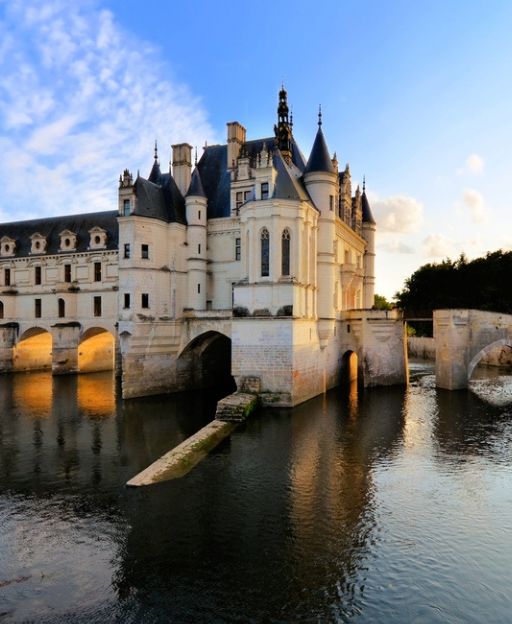
You do not need to visit every château. Pick three or four and take your time at each one. Chambord is unmissable — its rooftop terrace and extraordinary double-helix staircase (attributed to Leonardo da Vinci) reward every minute you spend there. Chenonceau, which spans the River Cher on graceful stone arches, is arguably the most beautiful building in France.
A hire car works best in the Loire Valley. The châteaux spread over a wide area, and the villages and wine towns between them are very much part of the experience.
See our Loire Valley travel guide for recommended bases, wine villages, and a full châteaux route.
Planning your trip? Get weekly France inspiration free — delivered straight to your inbox. → Join the newsletter
Days 7–9: Bordeaux and the Dordogne
Bordeaux is three hours from Paris by TGV — one of the great train journeys in France. The city has transformed over the past two decades. The old port district is now beautifully restored, lined with grand 18th-century stone buildings. The wine bars near the Marché des Capucins are excellent, and the city is thoroughly walkable.
Spend one full day in Bordeaux, then hire a car and head east into the Dordogne Valley. The Dordogne is medieval France at its most photogenic — cliff-top castles, river bends, golden stone villages, and markets that have run the same way for centuries.
The village of Rocamadour clings to a limestone cliff above the Alzou valley. The market town of Sarlat-la-Canéda has barely changed since the 15th century. Both are worth the detour from Bordeaux.
Our Bordeaux travel guide covers the best neighbourhoods, wine excursions, and day trips from the city.
Days 10–12: Provence
From Bordeaux, take the train east to Avignon or Marseille and make your base somewhere in Provence. Avignon works well as a hub — it has the remarkable Palais des Papes, connects easily by train to the rest of France, and sits within reach of the Luberon villages that appear on most France bucket lists.
If you travel in June or July, the lavender fields around Valensole and in the Luberon are in full bloom. Outside those months, Provence still delivers. The light, the markets, the rosé, the food — this is a place that rewards travellers who stay long enough to slow down.
Gordes, Roussillon, and Bonnieux are the three Luberon villages most worth visiting. None of them takes more than two hours to explore, but each one rewards a full afternoon if you stop for lunch and take the back roads between them.
See our Provence travel guide for a full breakdown of where to stay, what to see, and how to time your visit around the lavender season.
Days 13–14: The French Riviera
From Provence, head south to the coast. Nice is the natural base on the French Riviera — it has an international airport (useful for flying home), a lively old town with excellent restaurants, a proper beach, and easy access to the villages along the coast.
Day trips to Antibes, Villefranche-sur-Mer, or the hilltop village of Èze make strong additions to these final two days. Èze sits 400 metres above the sea with views over Monaco and the entire coastline below. The Promenade des Anglais is best walked early in the morning before the heat and the crowds arrive.
An Alternative: The Northern Route
If you prefer history and cooler temperatures over sunshine and rosé, consider a northern loop instead of heading south:
- Days 4–6: Normandy — the D-Day beaches, Mont Saint-Michel, and the Étretat cliffs
- Days 7–9: Champagne — Reims cathedral, the great underground cellars, the vineyard villages
- Days 10–12: Burgundy — wine villages, Beaune, and the Côte d’Or vineyards
- Days 13–14: Lyon — France’s food capital and a city worth at least two full days
This route stays closer to Paris and works particularly well in spring and autumn when the southern regions can still feel busy. Our Normandy travel guide covers all the D-Day sites, coastal towns, and inland highlights.
The Best Time to Go
May, June, September, and early October are the best months for a two-week France trip. The weather is warm and reliable, the crowds are manageable, and prices are noticeably lower than peak summer.
July and August are peak season. The French Riviera and Provence get very busy, prices rise across the country, and some smaller towns feel overwhelmed with visitors. If you travel in high summer, book accommodation at least three to four months ahead across all your stops.
For a full month-by-month breakdown, see our best time to visit France guide.
Getting Around France in Two Weeks
By TGV Train
France’s high-speed rail network is one of the best in the world. Paris to Bordeaux takes around two hours. Paris to Marseille takes three hours and 20 minutes. Book through the SNCF website or the Rail Europe platform. Booking four to six weeks ahead gives significantly lower fares than buying closer to travel.
By Hire Car
Outside Paris, a hire car opens routes that trains simply cannot reach — the Dordogne villages, the Luberon back roads, the scattered Loire châteaux. Most American and British driving licences are valid in France. You drive on the right.
Avoid driving into central Paris. The city has a complicated one-way system, and city-centre parking is expensive. Take the train to Paris and hire a car at your regional departure point instead.
Frequently Asked Questions
Is two weeks enough to see France properly?
Two weeks is enough to experience France properly if you plan your route in advance. You can see Paris, two major regions, and the Mediterranean coast comfortably in 14 days. The key is staying at least two nights in each place rather than moving every day — you need time to absorb where you are.
How much does two weeks in France cost?
Costs vary depending on your travel style. Budget travellers can manage on around £100–150 per day, covering accommodation, food, and transport. Mid-range travellers typically spend £200–250 per day. Paris and the French Riviera are the most expensive parts of any France trip. The Dordogne and rural Provence offer genuinely excellent value.
Do I need to speak French for two weeks in France?
No. In Paris and major tourist areas, English is widely spoken in hotels, restaurants, and tourist sites. In smaller villages and rural areas, knowing a few basic French phrases — bonjour, merci, s’il vous plaît — is appreciated and often opens doors. The French respond warmly to visitors who make even a small effort with the language.
Can I do this itinerary without a car?
Yes, mostly. The main TGV network links Paris, Tours (the Loire Valley gateway), Bordeaux, Avignon, and Nice efficiently. You will need a hire car — or organised day tours — to explore the Dordogne villages and the quieter parts of the Luberon. Plan which sections need a car and book accordingly rather than trying to avoid driving altogether.
You Might Also Enjoy
- Loire Valley Travel Guide: Châteaux and Wine
- Provence Travel Guide: Everything You Need to Plan Your Visit
- Normandy Travel Guide: D-Day Sites + Beyond
Plan Your France Trip
Ready to start planning? Our France trip planning hub pulls together the essential guides — where to stay, how to get around, what to budget, and when to go — all in one place.
Join 7,000+ France Lovers
Three times a week, get France’s hidden gems, local recipes, and travel inspiration — the kind you won’t find in any guidebook.
Subscribe free — enter your email:
Free forever · Unsubscribe anytime
🇫🇷 You Might Also Love
Tours & experiences you might love


Powered by Viator. Some links are affiliate links — we may earn a small commission at no extra cost to you.

Leave a Reply