In most offices around the world, eating at your desk is normal. In France, it is against the law.
Not a quirky company policy. Not a guideline from HR. An actual provision of the French Labour Code — one that has been on the books since 1976. Article R4228-20 states that workers may not take their meals in the spaces where they carry out their work.
France is one of very few countries on earth where this is not a suggestion. It is the law.
The Law Behind the Lunch Break
Article R4228-20 of the French Labour Code is straightforward. Employees cannot eat where they work. Employers must provide a separate space — and a break long enough to use it.
The legal minimum lunch break in France is 20 minutes per working day. But in practise, most French workers take between 45 minutes and an hour. This is not generosity from their employer. It is culture.
In fact, France introduced the mandatory lunch break law as part of a broader set of worker protections designed around one core idea: the working day must contain a genuine pause. Not a brief stop. A real break, away from the workspace, long enough to eat a proper meal.
What a French Lunch Actually Looks Like
At midday, something happens to French towns and cities. The pace changes. Streets fill with people walking — not rushing — to a restaurant, a canteen, or a nearby café.
The cantine, or company canteen, is a French institution. Any employer with more than 25 workers who request one must provide a dedicated eating space. Many smaller companies offer tickets restaurant instead — meal vouchers worth around €12 to €13 each, co-funded by the employer and tax-exempt.
Workers use these vouchers at restaurants, boulangeries, and supermarkets every working day. They are not a bonus. They are expected.
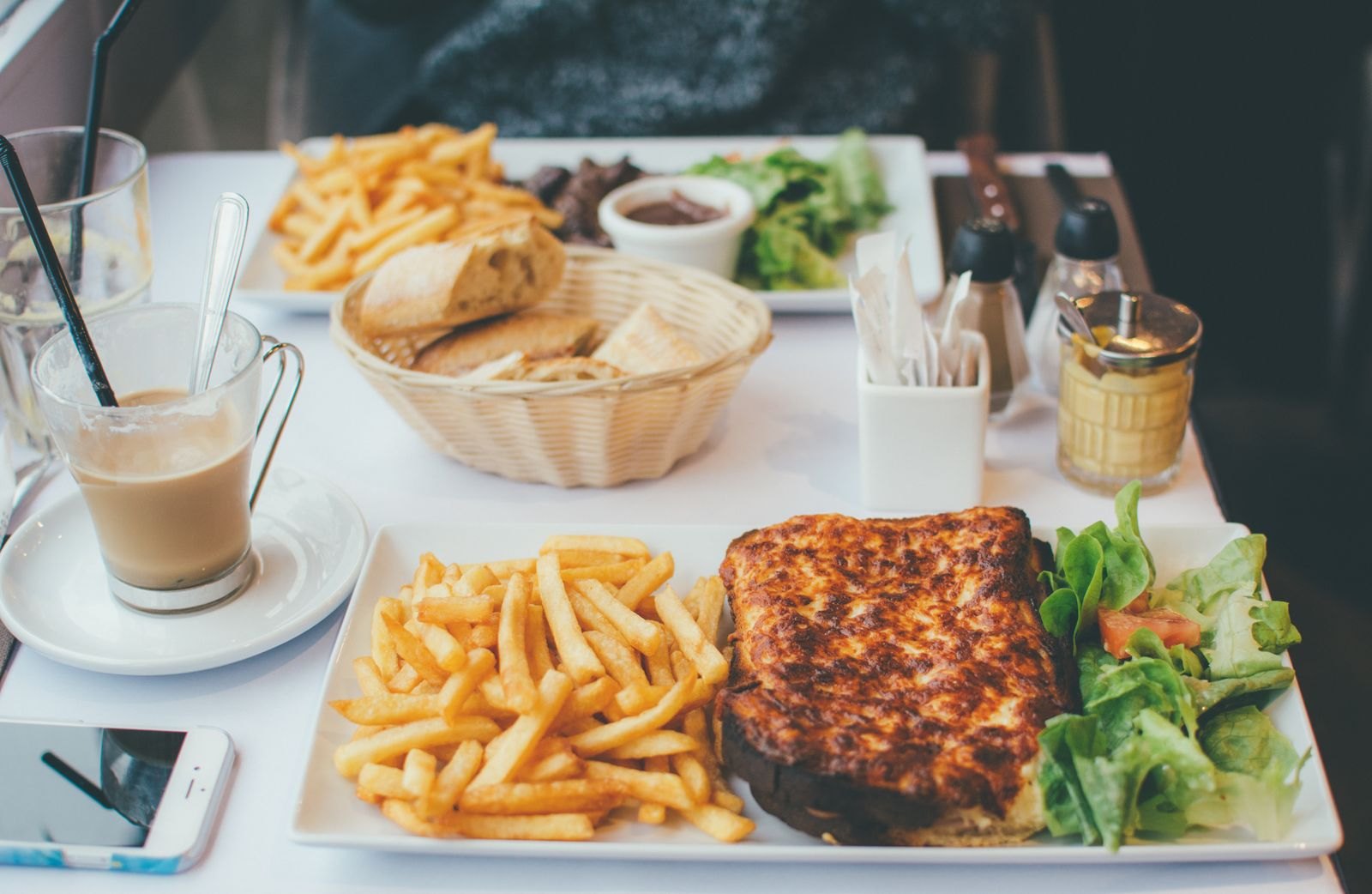
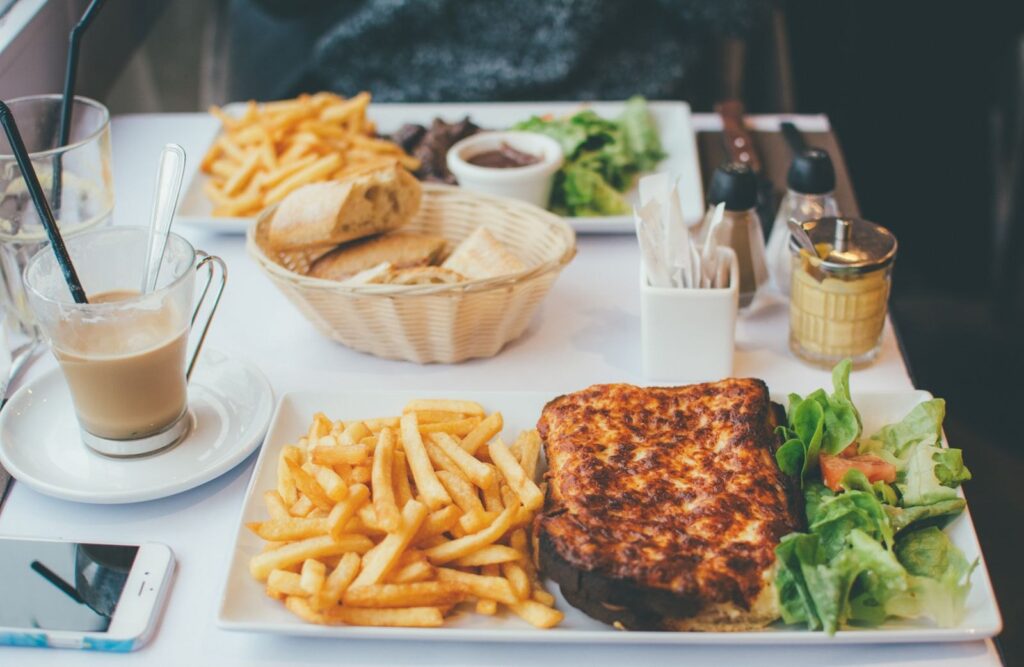
The meal itself often has two or three courses. A starter. A main. Sometimes cheese or a small dessert. Not because the French are indulgent, but because that is what lunch is — a structured meal, not a fuel stop.
This is a sharp contrast to countries where a sandwich eaten at a keyboard counts as a lunch break. In France, that is not a lunch break. It is a missed opportunity — and, depending on your workplace, a legal grey area.
Why the French Take This Seriously
French food culture is built on a simple principle: eating deserves your full attention. A meal is not something you do while also doing something else.
This shows up at every stage of life. French schoolchildren receive a four-course lunch every day, served at a table, eaten without rushing. They learn early that a meal is a pause from the day — not an interruption of it.
That same instinct carries into adult life. The French do not eat because they are hungry and it is noon. They eat because lunch is one of the fixed points of the day — a ritual with a clear start and a clear end.
Enjoying this? 7,000 France lovers get stories like this every week. Subscribe free →
The Canteen as a Social Space
The French company canteen does more than feed people. It mixes them. A junior employee sits beside a department head. Teams that never share a meeting room share a table. Conversations happen that do not happen in offices.
Research consistently shows that workers who eat lunch with colleagues report higher satisfaction and stronger workplace relationships than those who do not. France has built this into the working day by design.
Eating alone at your desk, in France, is not a sign of dedication. It is a sign that something has gone wrong — either with your workload or with your workplace culture.
What Tourists Notice — But Rarely Understand
Visitors to France often notice that restaurants fill sharply at noon and empty by 2pm. They see shuttered shops and full café terraces and assume this is a slower, more relaxed way of doing things.
What they rarely see is the structure behind it. The lunch break in France is not casual — it is deliberate. Protected by law. Built into contracts. Backed by voucher systems that subsidise the cost of eating away from the office.
The French do not take long lunches because they are lazy. They take long lunches because they decided, decades ago, that productivity does not require you to skip lunch. It requires you to eat it properly.
If you want to understand France — really understand it — start with the lunch break. Read about how the French approach the Sunday table, and you will start to see how this same philosophy runs through the whole week. Then use our France planning guide to build a trip that lets you experience it first-hand.
Because the best way to see France is not to rush through it. It is to stop at noon, sit down, and eat.
Join 7,000+ France Lovers
Three times a week, get France’s hidden gems, seasonal guides, local stories, and the art of la vie française — straight to your inbox.
Subscribe free — enter your email:
Free forever · Unsubscribe anytime
🇫🇷 You Might Also Love
Tours & experiences you might love


Powered by Viator. Some links are affiliate links — we may earn a small commission at no extra cost to you.

Leave a Reply