
Mont Saint-Michel is one of those places that stops you in your tracks the moment it appears on the horizon. This medieval island abbey rising from the tidal flats of Normandy is one of France’s most visited landmarks — and for good reason. This Mont Saint-Michel travel guide covers everything you need to plan a visit, from tides and timing to what to see inside the abbey walls.
Love France? Join 7,000+ readers on our free newsletter → lovetovisitfrance.substack.com
What Is Mont Saint-Michel?
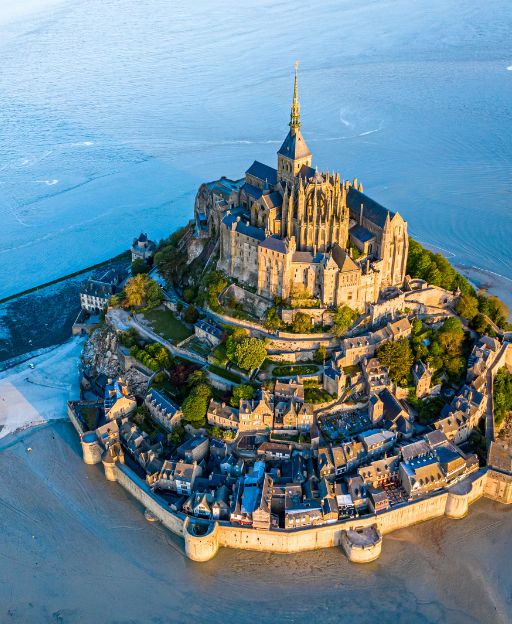
Mont Saint-Michel is a small island commune in Normandy, north-west France. A granite rock rises roughly 92 metres from the tidal bay, and on top of it sits a medieval Benedictine abbey that dates from the 8th century. The island is less than a kilometre from the mainland at its closest point, connected by a bridge that opened in 2014, replacing an older causeway that was slowly silting up the bay. The bay itself is famous for having one of the largest tidal ranges in Europe — at spring tides, the water can move in and out by more than 14 metres.
Mont Saint-Michel and its bay have been on the UNESCO World Heritage List since 1979. Around three million people visit every year, making it one of the most frequented sites in France.
A Brief History of the Abbey
The story of Mont Saint-Michel begins in 708 AD. Bishop Aubert of Avranches received a vision from the Archangel Michael, instructing him to build an oratory on the rock. Benedictine monks began constructing the abbey in earnest in the 10th century, and building continued for several centuries. The result is a remarkable vertical structure — church, monastery, and fortifications stacking on top of one another as the rock demanded.
During the Hundred Years War, Mont Saint-Michel held out against English control when much of Normandy fell. Its fortifications proved formidable, and the island became a symbol of French resistance. After the Revolution, the authorities used the abbey as a prison until 1863. Benedictine monks returned in 1966 and a small monastic community still lives there today.
The Abbey Church at the Summit
The abbey church sits at the very top of the rock, a mix of Romanesque and Gothic styles. The nave dates from the 11th century. Builders reconstructed the Gothic choir in the late 15th century after an earlier structure collapsed. Craftsmen added the spire in 1897, crowning it with a gilded statue of Saint Michael. Inside, the proportions feel immense — buttresses, soaring arches, and a view from the top terrace that stretches across the bay on a clear day.
La Merveille — The Marvel
On the north side of the abbey stands La Merveille (The Marvel), a three-storey Gothic structure that monks completed in the early 13th century. It holds the monks’ refectory, cloisters, and the scriptorium where scribes copied manuscripts. The cloister is particularly striking — a double row of slender columns supporting arched walkways around a central garden. Architects designed it to filter light and create a contemplative space, and it still does exactly that.
For more on how to plan a Normandy itinerary that includes Mont Saint-Michel alongside the D-Day beaches and Étretat, our full Normandy guide covers the region in detail.
When to Visit Mont Saint-Michel
The Best Time of Year
Spring and autumn are the best times to visit Mont Saint-Michel. April to June and September to October offer milder weather, shorter queues at the abbey entrance, and better light for photographs. July and August bring peak crowds — the narrow streets of the village fill up quickly, and the climb to the abbey can involve significant waiting times. If you visit in summer, arrive early in the morning or late in the afternoon.
Winter visits have their own appeal. The island is quieter, the light is dramatic, and on misty mornings the abbey seems to float above the bay. Many restaurants and shops inside the village walls close from November to February, so check ahead before planning meals there.
See our full guide on the best time to visit France for a broader view of seasonal conditions across the country.
Tides: The Critical Factor
Mont Saint-Michel’s tides are dramatic. At low tide, the bay is a vast expanse of wet sand. At high tide, the water surrounds the island and the bridge causeway. The speed of the incoming tide is often described as fast as a horse at a gallop — this is an exaggeration, but the bay does flood quickly and you should never walk on the tidal flats without a qualified guide.
The official Mont Saint-Michel tourist office publishes a tidal calendar. Check it before your visit. The highest tides (grandes marées) occur around the spring and autumn equinoxes, when water completely encircles the island. These are spectacular to witness from the bridge or the ramparts.
The tide times change daily. Plan to arrive at low tide if you want the classic photographs of the island reflected in wet sand, or time your visit to coincide with high tide if you want to see the island surrounded by water.
How to Get to Mont Saint-Michel
From Paris
Mont Saint-Michel sits about 370 kilometres from Paris. By car, the drive takes roughly four hours via the A11 motorway towards Le Mans, then the N175 westward into Normandy. By train, the nearest station is Pontorson, about 9 kilometres from Mont Saint-Michel, with a connecting shuttle bus. There is no direct TGV service — you typically travel via Rennes or Caen and change. The total journey by rail is around three to four hours including connections.
Many visitors take an organised day trip from Paris by coach. This is a long day — ten to eleven hours — but it removes the logistical complexity and works well if you only have one day to spare.
If you are planning to travel widely across France by rail, our guide on how to travel France by train covers booking tips, passes, and the best rail routes.
From Rennes or Saint-Malo
Rennes is the nearest major city to Mont Saint-Michel, roughly 70 kilometres away by road. From Rennes station there are direct bus services that take around an hour and a half. Saint-Malo is about 55 kilometres away — a good combination for a two-day trip that takes in both the walled city of Saint-Malo and Mont Saint-Michel.
The Free Shuttle from the Car Park
Private vehicles cannot drive to the island. The main car parks are on the mainland, about 2.5 kilometres from the island. From the car park, you can walk along the bridge causeway (roughly 30 minutes), take the free shuttle bus (les navettes), or hire a horse-drawn carriage. The shuttle buses run frequently and drop you at the base of the island’s main gate.
What to See and Do
Visit the Abbey
The Abbey of Mont Saint-Michel is the main draw. You need a ticket to enter — book in advance during summer months to avoid long queues. The self-guided audio tour takes around an hour. Guided tours run regularly and are worth taking if you want to understand the medieval layers of construction in detail. The climb from the village to the abbey entrance involves many steps, so wear comfortable shoes.
Allow at least two hours inside the abbey. The cloister, the refectory, the crypts below the church, and the terrace at the top are all worth your time.
Walk the Ramparts
The ramparts encircling the lower part of the island are free to walk and offer excellent views across the bay. Early morning or late afternoon light is best for photographs from the walls. The views east toward the mainland show the vast scale of the bay, and on a clear day you can see for many kilometres.
The Village
The village inside the walls is a single main street — the Grande Rue — lined with restaurants, shops, and small museums. It is very tourist-focused and crowded in season. The souvenir shops can feel relentless, but the medieval buildings behind them are genuine. The village has existed since the 11th century. Push past the main street when you can: side lanes, staircases, and small squares give you a quieter experience of the medieval layout.
Walk the Bay (With a Guide)
Walking across the tidal flats to the island, or through the bay with a guided group, is a different experience altogether. Several companies offer guided bay walks, crossing the sand and shallow channels at low tide with the abbey looming ahead. It takes around two to three hours. You will get wet feet, and in some places you will sink into the sand — this is expected and part of the experience. Always go with a qualified guide. The bay is dangerous for anyone unfamiliar with the tides and quicksand patches.
The Chemins de la Baie is one of the most established guided walk operators in the bay.
Where to Eat Near Mont Saint-Michel
The restaurant most closely associated with Mont Saint-Michel is La Mère Poulard, famous since 1888 for its omelettes that chefs beat in long-handled copper pans over an open fire. It is a tourist institution and the prices are high, but the omelettes are genuinely good and watching the chefs work at the entrance is worth a brief stop.
For a quieter meal, there are restaurants in the village of La Caserne on the mainland side of the bridge, and in the towns of Pontorson and Avranches nearby. Pre-Salé lamb — lamb raised on the salt marshes of the bay — is the local speciality. Look for it on menus throughout the area.
Understanding your France travel budget before you arrive at Mont Saint-Michel will help — food inside the island walls is priced at a premium, while the mainland towns offer much better value.
Practical Tips for Visiting Mont Saint-Michel
- Book abbey tickets in advance. In July and August, queues at the entrance can be long. Timed entry tickets help you avoid waiting.
- Wear comfortable shoes. The climb from the island gate to the abbey involves uneven medieval steps. Cobblestones throughout the village are slippery when wet.
- Check the tide times before you arrive. The experience of Mont Saint-Michel changes completely between low and high tide. Decide which you want to see and plan accordingly.
- Stay overnight if you can. The island at night, after most day visitors leave, has a completely different atmosphere. The abbey lights up after dark and the village becomes quiet and genuinely medieval-feeling.
- Start early or arrive late. Day-trippers tend to arrive between 10am and 3pm. The island is much calmer outside these hours.
What Is the best time to visit Mont Saint-Michel?
Spring (April to June) and early autumn (September to October) offer the best combination of pleasant weather and manageable crowds. July and August are the busiest months, with significantly longer queues at the abbey entrance.
How much time do you need at Mont Saint-Michel?
Allow a minimum of half a day to visit the island and the abbey. A full day gives you time to walk the ramparts, explore the village at your own pace, and take a guided bay walk. Staying overnight means you can experience the island both in the early morning and after the day-trippers leave.
Is Mont Saint-Michel worth visiting from Paris?
Yes — but consider combining it with a wider Normandy trip rather than a single long day from Paris. The drive or rail journey takes around four hours each way. Two nights in the area, covering the D-Day beaches and Mont Saint-Michel, makes much better use of the travel time than a rushed day trip.
Can you walk to Mont Saint-Michel from the car park?
Yes — the walk from the main car park to the island gate takes approximately 30 minutes along the bridge causeway. Free shuttle buses cover the same route in around 10 minutes and run regularly throughout the day.
You Might Also Enjoy
Planning more of your France trip? These guides will help:
- Normandy France Travel Guide: D-Day Beaches, Mont Saint-Michel and Beyond
- France Travel Budget: How Much Does a Trip to France Actually Cost?
- How to Travel France by Train
Plan Your France Trip
Ready to plan your full French adventure? Our France trip planning hub brings together everything you need — regions, seasons, budgets, and day-by-day itinerary ideas — all in one place.
Join 7,000+ France Lovers
Every week, get France’s hidden gems, local recipes, and travel inspiration — the kind you won’t find in any guidebook.
Subscribe free — enter your email:
Love more? Join 64,000 Ireland lovers → · Join 43,000 Scotland lovers → · Join 30,000 Italy lovers →
Free forever · One email per week · Unsubscribe anytime
Tours & experiences you might love


Powered by Viator. Some links are affiliate links — we may earn a small commission at no extra cost to you.

Leave a Reply