
At the Normandy American Cemetery, when a family comes to lay flowers at a grave, a staff member may press sand into the letters carved on the marble headstone. The American Battle Monuments Commission explains that it is only ever done with staff present, and the sand is brushed away again by the next day. It is a small, quiet thing, and it tells you a lot about Normandy: a place where people still take care of a story that is more than 80 years old.
Normandy holds two of the stories Americans love most. One is June 6, 1944, on five beaches with code names we all grew up hearing. The other is much older: William the Conqueror, the abbey on its rock in the bay, Joan of Arc in Rouen, and the painters who came for the light at Étretat, Honfleur and Giverny. In this guide we take you through the places that matter, in a sensible order, and finish with how to get there from Paris, how many days to give it, and a simple three-day route.
1. The Normandy American Cemetery, Colleville-sur-Mer
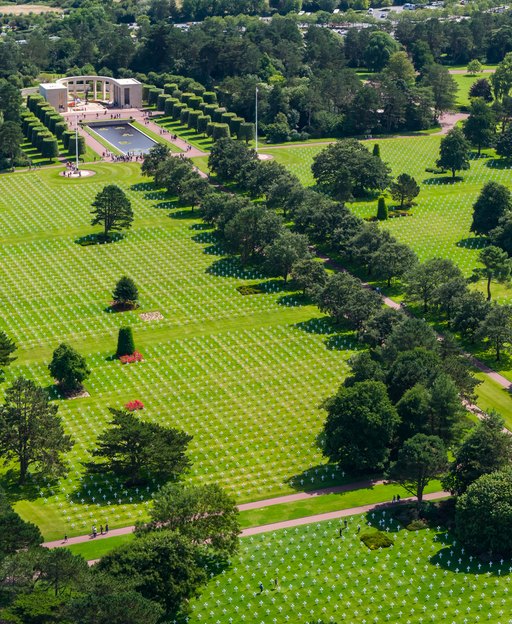
If you only see one place in Normandy, make it this one. The cemetery stands on the bluff above Omaha Beach, on the site of the temporary St. Laurent Cemetery that the U.S. First Army set up on June 8, 1944, the first American cemetery on European soil in World War II. Today it covers 172.5 acres and holds the graves of almost 9,400 of our military dead, most of whom died in the landings and the fighting that followed. Almost 1,600 more names are carved on the Walls of the Missing, and a small rosette marks each man who has since been found and identified.
Walk from the memorial, with its bronze statue “Spirit of American Youth Rising from the Waves”, along the reflecting pool and out among the crosses and Stars of David. Stay, if you can, for the flag lowering ceremony, held one hour before the cemetery closes. Looking for a relative? The ABMC burial search on its website covers the more than 200,000 fallen service members honored at its sites. Official page: Normandy American Cemetery (ABMC). For more on the whole coast, read our guide to visiting the D-Day beaches.
One planning note: ABMC’s page says (checked November 2026) that a free, seasonal reservation system for the cemetery is slated to open online in late 2026 for visits in 2027. Look at the ABMC site before you fix your dates.
2. Pointe du Hoc
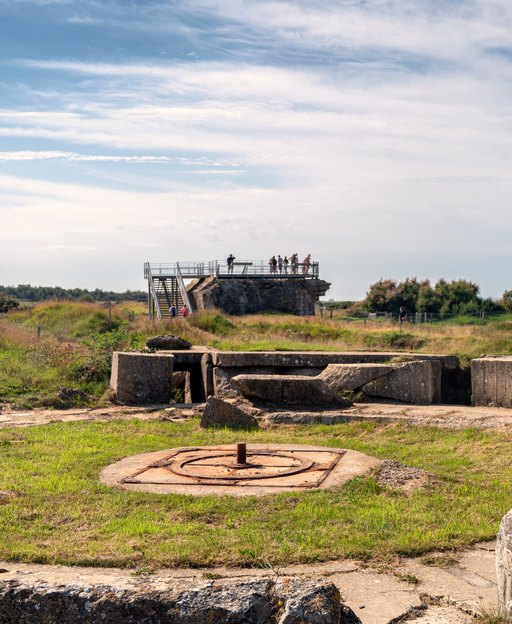
Eight miles west of the cemetery, the ground at Pointe du Hoc is still scarred by battle. On June 6, 1944, men of the 2nd Ranger Battalion under Lt. Col. James E. Rudder climbed the 100-foot cliffs here and seized the German guns that could have fired on the troops landing at Omaha and Utah. The French raised a simple granite pylon on top of a German bunker in their honor, and in 1979 the site passed to the ABMC. As the commission puts it, the area “remains much as the Rangers left it”.
ABMC also says (checked November 2026) that the monument is going through a major restoration project that will last until mid-2027, so read its page before you go: Pointe du Hoc Ranger Monument (ABMC).
3. Omaha Beach and Utah Beach
Normandy Tourism lists the five landing beaches: Utah, Omaha, Gold, Juno and Sword. Utah and Omaha were the American beaches, and each has its own museum right on the sand.
Omaha Beach Memorial Museum
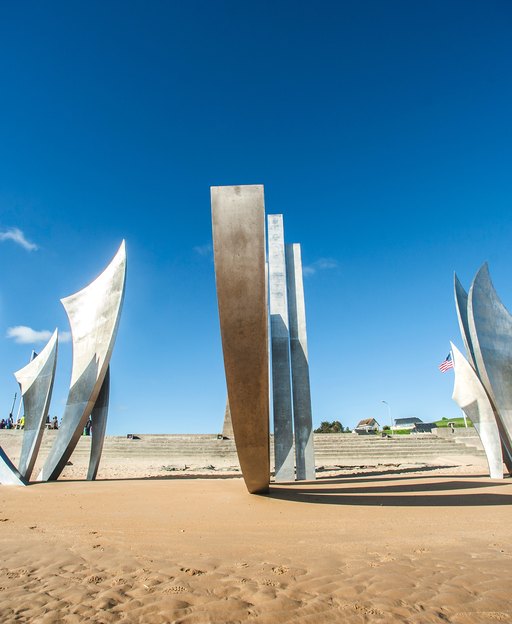
The Musée Mémorial d’Omaha Beach stands on the beach where the American landing took place on June 6, the one remembered as Bloody Omaha. The museum says it was founded in memory of the young men who died in 1944, so that future generations never forget what our freedom cost. On the sand nearby you will find the steel Les Braves memorial in our photo. Official site: Omaha Beach Memorial Museum.
Utah Beach D-Day Museum
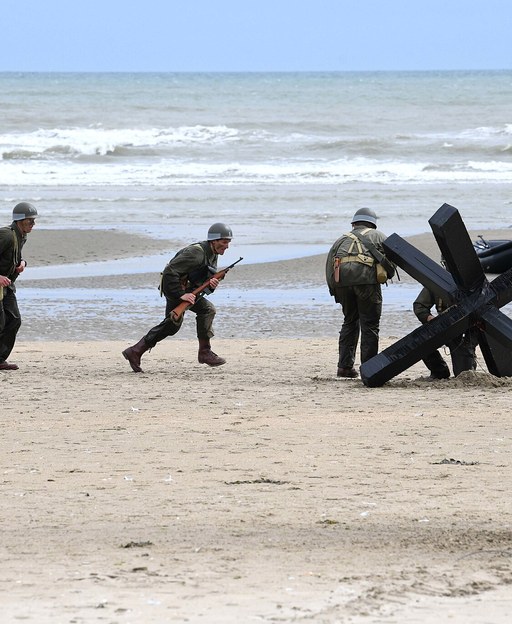
Utah was the first beach the Allies stormed on the morning of June 6, 1944, chosen so the troops could push up the Cotentin peninsula to the port of Cherbourg. By the end of that day, the museum tells us, more than 23,000 American soldiers had come ashore. The Utah Beach D-Day Museum is built on the very spot where they landed and tells the story of the day in ten parts, from planning to success. It closes for a few weeks each winter, so check its dates: Utah Beach D-Day Museum.
4. Arromanches and the Mulberry Harbour
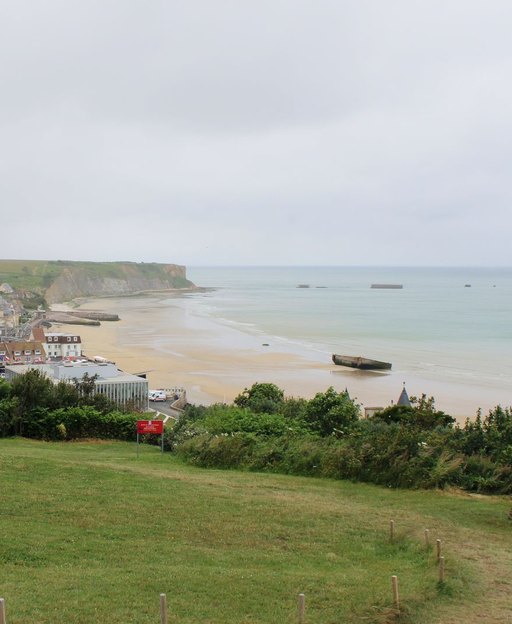
Look out to sea at Arromanches and you will see big concrete blocks sitting in a long curve offshore. They are what is left of Mulberry B, one of the prefabricated harbours of D-Day. The D-Day Museum here explains why they were needed: the success of Operation Overlord depended on getting men, supplies and equipment ashore quickly, at least 2,500 vehicles and 12,000 tons of supplies a day. To make that possible, Winston Churchill revived an idea he had first put forward in World War One, an artificial harbour.
The Musée du Débarquement calls itself the first museum built to commemorate June 6, 1944, and its models of the port make sense of what you see from the window. It opened a new building in 2023. Official site: D-Day Museum Arromanches.
5. Bayeux and the Bayeux Tapestry
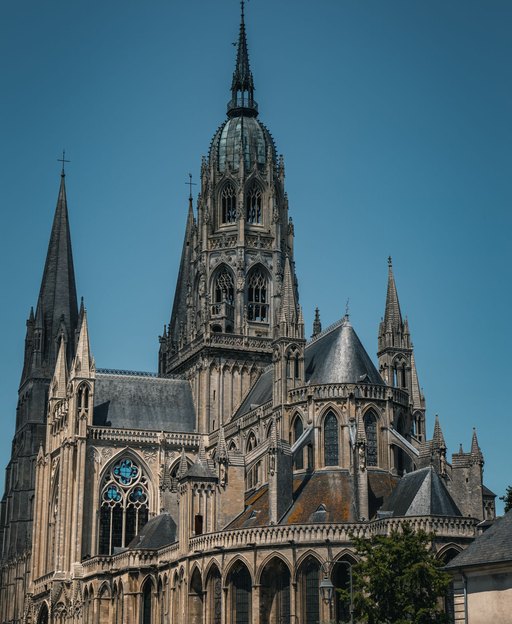
Bayeux is the easiest base for the beaches, with its own train station a short walk from the town’s museums, and a Gothic cathedral that rises over the old streets. Its great treasure is the Bayeux Tapestry, the embroidered story of William the Conqueror’s invasion of England in 1066. Read the whole story in our guide to the Bayeux Tapestry.
Before you plan around it, here is what the official Bayeux Museum site says (checked November 2026): “The Bayeux Tapestry Museum is closed for renovation work until Autumn 2027.” In a news post dated August 1, 2025, the British Museum’s own exhibition page (checked 21 November 2026) gives the London display as 10 September 2026 to 11 July 2027. In the meantime you can explore the whole Tapestry online, scene by scene, on the museum’s website, and the town’s other two museums, the Memorial Museum of the Battle of Normandy and the Baron Gérard Museum of Art and History, are listed on the same site. Official site: Bayeux Museum.
6. Mont-Saint-Michel
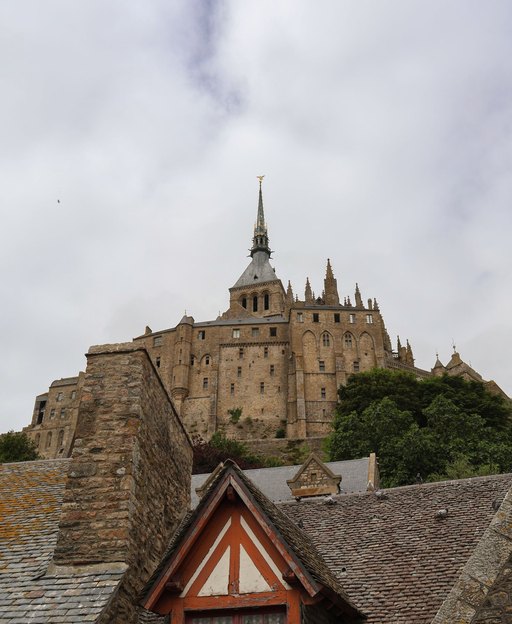
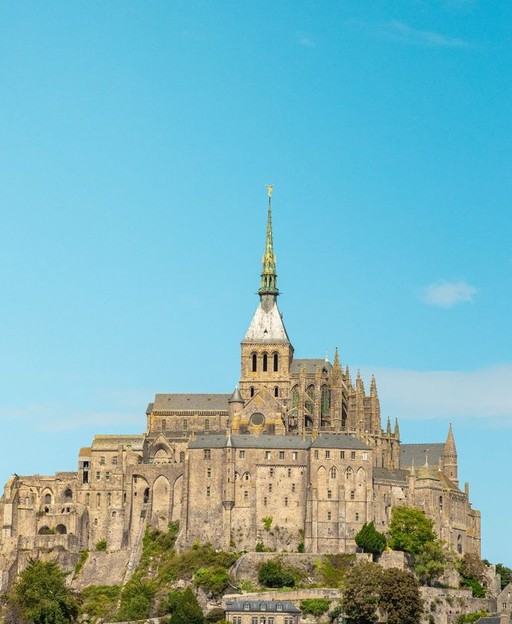
Here is a thread that ties Normandy together: in scenes 16 and 17 of the Bayeux Tapestry, knights struggle in the quicksand in front of Mont-Saint-Michel. The story of the rock goes back to 708, when, the tourist office tells us, the Archangel Michael appeared in a dream to Saint Aubert, bishop of Avranches, and asked him to build a sanctuary. Benedictine monks settled here in 966. In the 13th century a gift from King Philippe Auguste paid for the Gothic Merveille, crowned by the cloister. During the Hundred Years’ War the Mount held out through a siege of almost 30 years, and after the Revolution the abbey became a state prison, the “Bastille of the Seas”, until 1863.
Climb to the West Terrace of the abbey for the view over the bay. The Centre des monuments nationaux, which runs the abbey, says this is the place to watch the highest tides in Europe, which come only a few times a year. If you would like to walk across the sands, go only with one of the certified guides listed by the tourist office; the bay’s tides and quicksand are no place to wander alone. Official sites: Abbey of Mont-Saint-Michel and the Mont-Saint-Michel tourist office. Our Mont-Saint-Michel travel guide has more.
7. The Cliffs of Étretat
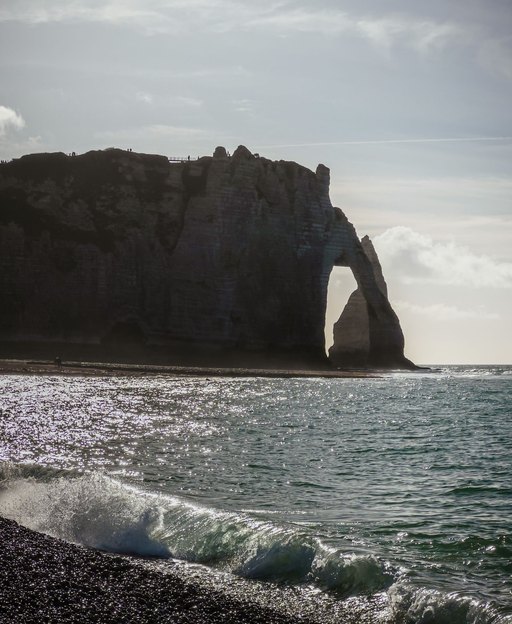
The Alabaster Coast takes its name from 140 km of white chalk cliffs between the mouths of the Seine and the Somme, and Étretat is where they put on their best show. On the left as you face the sea is the Porte d’Aval, a huge arch carved by the waves, with a 51-meter needle standing beside it. Writers loved it. Maurice Leblanc made the needle the hiding place of the French kings’ treasure in his Arsène Lupin novel L’Aiguille creuse, and Guy de Maupassant claimed a ship could sail through the even bigger Manneporte arch with all its sails up. He also compared the arch on the other cliff, the Falaise d’Amont, to an elephant dipping its trunk in the sea. Look at it and you will see it too.
Walk the cliff-top paths, not the foot of the cliffs: the tourist office points out that walking under the cliffs is forbidden by local by-law. Official page: The cliffs of Etretat (Le Havre Etretat Tourism). More in our Étretat visitor guide.
8. Honfleur
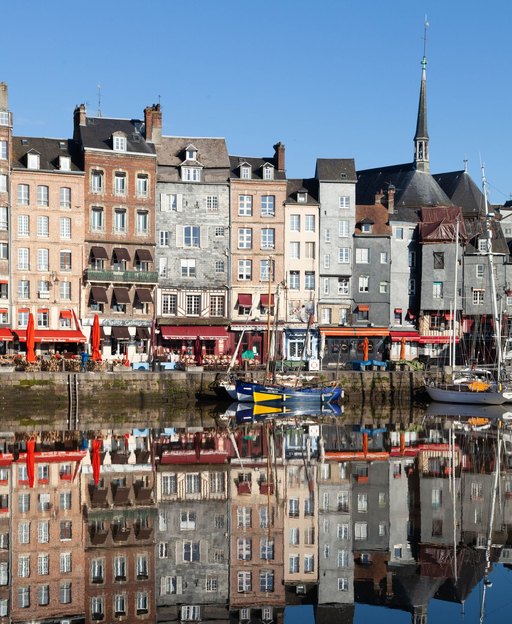
Honfleur’s old harbour, lined with tall slate-fronted houses, is the scene painters came back to again and again; Normandy Tourism names Eugène Boudin as the precursor of Impressionism. Walk a few streets up to Saint Catherine’s Church, which the tourist office calls one of the largest wooden churches in France. It dates from the second half of the 15th century, when the townspeople rebuilt after the Hundred Years’ War. With little money, they used wood from the Touques forest and what they knew best: building ships. The bell tower stands apart from the church, built by shipwrights using the techniques of an upturned hull, and set at a distance so lightning fires would not reach the church.
Official page: Saint Catherine’s Church (Honfleur Tourist Office). For the painters’ side of town, read why the Impressionists never left Honfleur harbour.
9. Rouen: The Cathedral and Joan of Arc
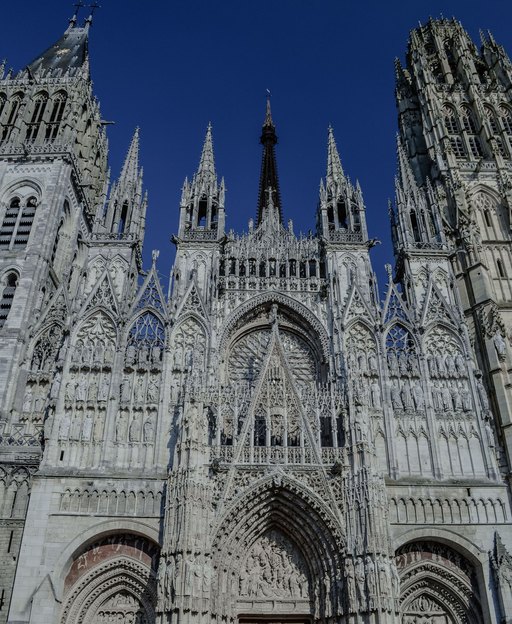
Rouen, Normandy’s capital, is an easy stop on the train line from Paris. Normandy Tourism calls Notre-Dame Cathedral the tallest in France, and Claude Monet painted its façade more than thirty times, in different light. Inside lies the heart of Richard the Lionheart. The cathedral came through the Wars of Religion, the Revolution and World War II, and on summer evenings a light show plays across its front. Our story on Monet and Rouen Cathedral tells how he painted it.
At the foot of the cathedral, the Historial Jeanne d’Arc fills the old Archbishop’s Palace, the very building where Joan of Arc’s conviction was pronounced in 1431 and where her rehabilitation trial took place in 1456. Then walk to the Place du Vieux-Marché, where she was burned at the stake; the modern Sainte-Jeanne-d’Arc church, completed in 1979, rises over the square with 16th-century stained glass saved from other Rouen churches. Official sites: Historial Jeanne d’Arc and Rouen (Normandy Tourism). Our story of Joan of Arc gives the whole life.
10. Giverny: Monet’s House and Gardens
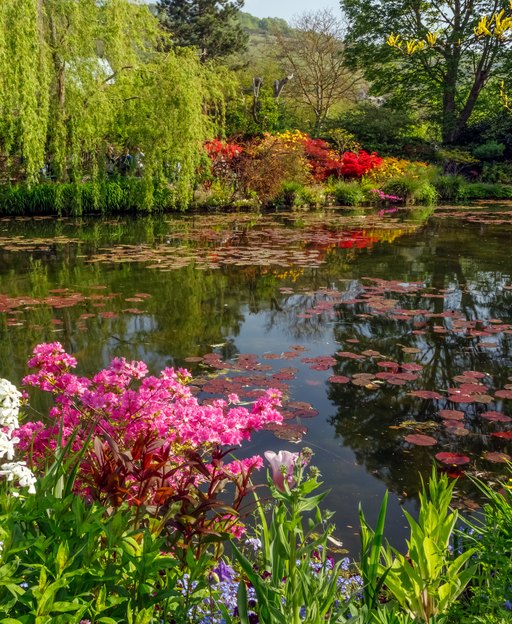
The pink house at Giverny was Claude Monet’s refuge from 1883 to 1926, and the official site calls him the painter-gardener: his flower garden and water lily pond have been recreated as they were. The house and gardens were restored at the end of the 1970s and belong to the Académie des beaux-arts; the official site calls them the second most visited tourist site in Normandy. Giverny is seasonal and closed in winter, so check the opening dates on the official site before you plan your day: Maison et jardins de Claude Monet, Giverny. Our Giverny guide covers the visit in detail.
Getting to Normandy from Paris
You do not need a car to start. Normandy Tourism’s travel page lists trains from Paris Saint-Lazare to Rouen, Caen, Bayeux, Vernon-Giverny and more, and trains toward Mont-Saint-Michel from Paris-Montparnasse. For the Mount, the tourist office explains that the nearest station is Pontorson, 9 km away, with a bus link to the Mount itself; the route changes with the season, so read its page. Book tickets on SNCF Connect, the French railways’ official site, and see Normandy Tourism: how to get to Normandy.
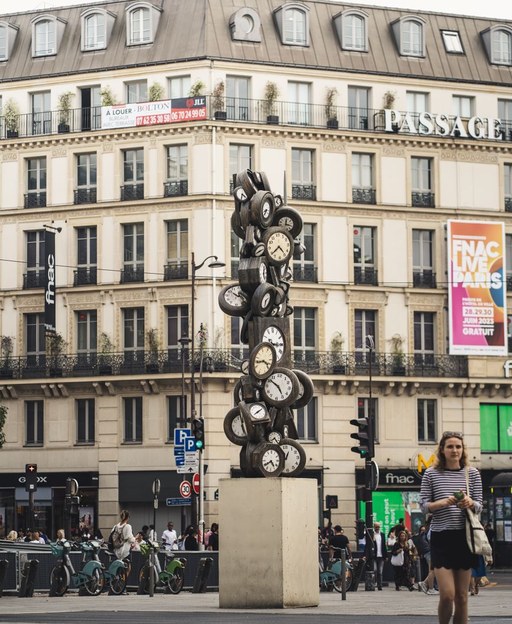
For the beaches themselves, the sites are spread along the coast, so most couples either rent a car in Bayeux or Caen or book a guided tour from Bayeux. A guide brings the landings to life, and you never have to worry about parking or signs in French.
How Many Days Do You Need?
Give Normandy three days at the least. One day for the D-Day sites is the bare minimum; if you are looking for a relative’s grave, give them two. Add a day for Mont-Saint-Michel, and another for Honfleur, Étretat or Rouen if you can. Giverny fits best as a stop on the way in from Paris or on the way back.
A Simple 3-Day Normandy Route
- Day 1: Paris to Rouen and Bayeux. Take the train from Saint-Lazare, stop in Rouen for the cathedral and the Historial Jeanne d’Arc, then carry on to Bayeux for the night.
- Day 2: The D-Day coast. Arromanches in the morning, then the Normandy American Cemetery, Omaha Beach and Pointe du Hoc, with Utah Beach if time allows. Stay for the flag lowering at the cemetery.
- Day 3: Mont-Saint-Michel. Drive or take a tour southwest to the Mount, climb to the abbey and the West Terrace, and watch the bay. From here, head back to Paris or on to Brittany.
With a fourth day, follow the coast east to Honfleur and Étretat, and in spring or summer save Giverny for the journey back to Paris.
Visiting the Cemeteries with Respect
The ABMC asks every visitor to remember that its cemeteries are sacred burial grounds. A few things it asks of us:
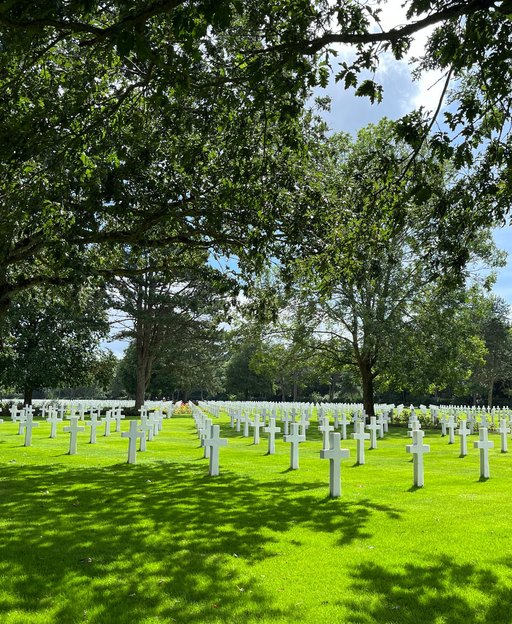
- Behave and dress with respect. The ABMC asks visitors to respect the reflective and peaceful intent of its sites.
- Take personal photos, by all means, but keep them respectful. The ABMC says non-commemorative photos such as TikTok videos, wedding photos or influencer promotion are not acceptable.
- Bring natural flowers if you wish, and tell the staff before you place anything at a grave. Please do not leave artificial flowers, printed photos, candles or coins.
- Do not bring your own sand for a headstone. Staff place sand only with permission and in their presence, because outside sand can stain the marble.
Read the ABMC’s own visitor page and FAQs before you go.
Frequently Asked Questions
Can we see the Bayeux Tapestry in Bayeux in 2027?
The official Bayeux Museum site says (checked November 2026) that the Bayeux Tapestry Museum is closed for renovation work until autumn 2027, and the British Museum’s own exhibition page (checked 21 November 2026) gives the London display as 10 September 2026 to 11 July 2027. Check bayeuxmuseum.com before you travel.
Do we need to book to visit the Normandy American Cemetery?
The American Battle Monuments Commission says (checked November 2026) that a free, seasonal reservation system for the cemetery is slated to open online in late 2026 for visits in 2027. Check abmc.gov before you fix your dates.
Can we get to Normandy from Paris without a car?
Yes. Trains from Paris Saint-Lazare serve Rouen, Caen, Bayeux and Vernon-Giverny, and trains from Paris-Montparnasse go toward Mont-Saint-Michel with a bus for the last stretch. For the D-Day beaches, most visitors rent a car or join a guided tour from Bayeux.
When is Monet’s garden at Giverny open?
The house and gardens of Claude Monet at Giverny are open only part of the year and close in winter. The official site, claudemonetgiverny.fr, gives each season’s opening dates.
Sources
- ABMC: About Normandy American Cemetery
- ABMC: Plan your visit to Normandy American Cemetery
- ABMC: FAQs
- ABMC: About Pointe du Hoc Ranger Monument
- Normandy Tourism: The D-Day Landing Beaches
- Omaha Beach Memorial Museum
- Utah Beach D-Day Museum
- D-Day Museum Arromanches: History
- Bayeux Museum: The Bayeux Tapestry
- Bayeux Museum: An historic loan (1 August 2025)
- Mont-Saint-Michel Tourist Office: History
- Mont-Saint-Michel Tourist Office: By train, plane and ferry
- Mont-Saint-Michel Tourist Office: Certified bay-crossing guides
- Abbey of Mont-Saint-Michel: The high tides
- Le Havre Etretat Tourism: The cliffs of Etretat
- Honfleur Tourist Office: Saint Catherine’s Church
- Normandy Tourism: Impressionism
- Normandy Tourism: Things to see and do in Rouen
- Historial Jeanne d’Arc
- Maison et jardins de Claude Monet, Giverny
- Normandy Tourism: How to get to Normandy
Checked November 2026.
Tours & experiences you might love


Powered by Viator. Some links are affiliate links — we may earn a small commission at no extra cost to you.

Leave a Reply