Sailors have known this for centuries. Long before Corsica appears on the horizon, the scent finds you. Rosemary, myrtle, wild lavender, and heather drift across the Mediterranean on the breeze. Napoleon — born in Ajaccio — claimed he could identify his island blindfolded. The smell, he said, was enough.
That scent has a name: the maquis. And it tells you something no travel brochure quite manages to say. Corsica is unlike anywhere else in France — and Corsicans are the first to point that out.
The Maquis: More Than a Smell
The maquis covers more than half the island. Dense, thorny, and aromatic, it grows on every hillside from the mountain peaks to the cliff edges. Cistus, arbutus, rosemary, heather, and wild thyme press in from every direction.
In spring, the hillsides burst with white and pink flowers. In summer, the heat draws the oils from every leaf. The air becomes thick with it.
The maquis returned after Corsica’s old forests went to Genoese shipbuilders. What grew back was wilder, tougher, and more fragrant than what came before.
An Island France Bought — and Never Quite Owned
France purchased Corsica from the Republic of Genoa in May 1768. The following year, Napoleon entered the world in Ajaccio. He grew up speaking Corsu — the island’s own language — not French.
Before France arrived, Corsicans had already declared independence. Pasquale Paoli led a short-lived republic, built roads, founded a university, and wrote one of Europe’s first democratic constitutions. French forces ended it within a year.
Corsicans still remember.
Street signs across the island appear in both French and Corsu. In some villages, locals scratch out the French names entirely. The Corsican language sits closer to Latin and Italian than to anything spoken in Paris.
Locals call the island U Paese — “The Country.” Not a region. Not a territory. The Country.
What the Landscape Actually Looks Like
Enjoying this? 7,000 France lovers get stories like this every week. Subscribe free →
Corsica packs remarkable variety into a small space. The island stretches roughly 183 kilometres from north to south, yet it holds mountains over 2,700 metres high, glacial lakes, granite gorges, and beaches of white sand — all within a few hours of each other.
The Restonica Gorge, east of the mountain town of Corte, runs between walls of granite. Hikers follow the river upstream past boulders the size of houses to two glacial lakes at 1,700 metres. On a clear summer morning, the water is turquoise and cold.
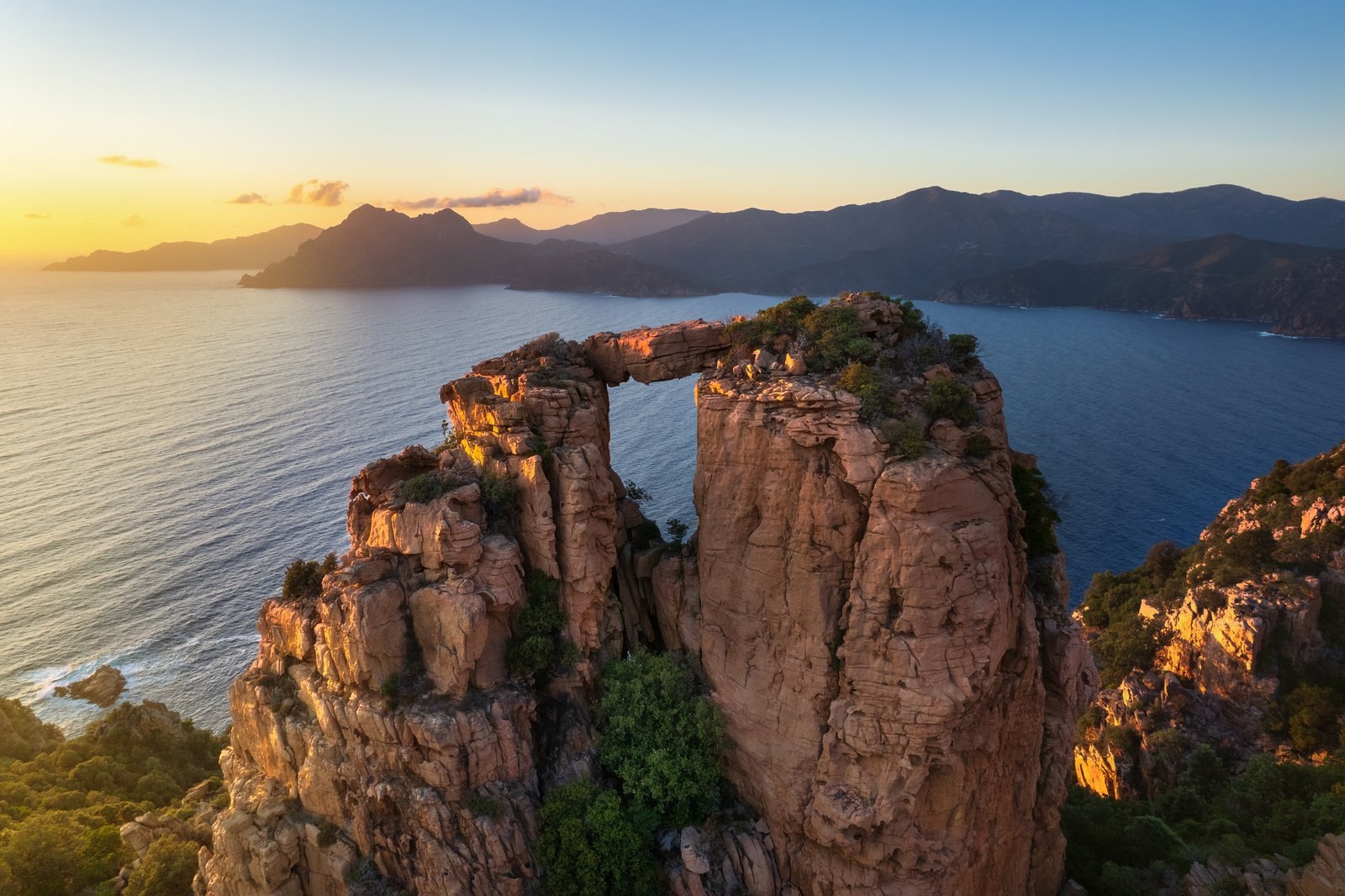
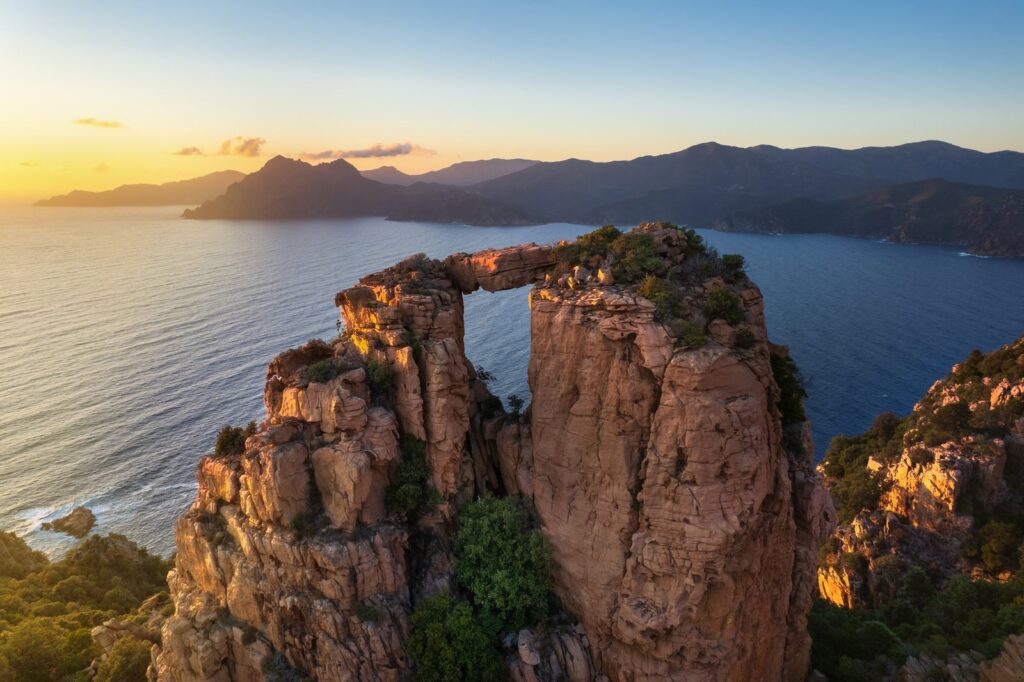
The Calanques de Piana, on the west coast, offer something different entirely. Wind and water spent millennia carving orange granite columns into shapes that look almost architectural. They rise straight from the sea, and nothing prepares you for the scale of them.
If you want the full spine of the island, the GR20 trail runs 180 kilometres along the mountain ridge. Most walkers need 15 days to finish it. Mountain guides call it one of Europe’s most demanding long-distance walks. Short day sections from the village of Vizzavona let you sample the terrain without committing to the full route. If you want help planning this kind of trip, our France travel planning guide covers ferry routes, seasonal timing, and how to combine Corsica with mainland France.
The Towns Worth Your Time
Bonifacio stands on white limestone cliffs above the Strait of Bonifacio. The old town clings to the cliff top, its houses hanging over the edge. Below, boats thread through a narrow channel cut into the rock to reach the harbour. The whole place feels ancient and improbable.
Calvi holds the northwest. A Genoese citadel guards a crescent beach and a bay that turns deep blue in the afternoon light.
Corte occupies the island’s heart — inland, elevated, and distinctly Corsican in mood. The citadel museum documents the island’s history of resistance and identity. This is where Corsican nationalism has its roots.
Ajaccio, the capital, spreads along the bay. Napoleon’s birthplace still stands in the old town, and cafés fill the streets around it by mid-morning. Corsica’s Mediterranean pace becomes most obvious here.
For travellers who enjoy dramatic southern coastlines, the Calanques near Marseille pair well with a Corsican ferry crossing from the same city. The contrast between the two — mainland cliffs and island maquis — makes the journey feel deliberate rather than rushed.
What is the best time to visit Corsica?
Late May to early July and the whole of September offer the best combination of warm weather and manageable crowds. The maquis flowers in spring, the sea reaches swimming temperature by June, and September brings harvest festivals and quieter beaches.
How do you get from mainland France to Corsica?
Ferries depart from Marseille, Nice, and Toulon to the main ports of Ajaccio, Bastia, Calvi, and Porto-Vecchio. The overnight crossing takes six to ten hours. Airlines also fly from Paris, Lyon, and Nice year-round, with flight times under two hours.
Do you need to speak French to get around Corsica?
French works everywhere for everyday travel. Corsu is widely spoken between locals, and you will see it on signs and menus. A few words in the local language — bonghjornu for good morning, ringraziavvi for thank you — earn real warmth from people who hear them.
Is Corsica suitable for families with young children?
Yes. The beaches in the south and around the Gulf of Porto offer calm, shallow water. Ajaccio and Porto-Vecchio both have good infrastructure, restaurants, and activities for all ages. The ferry crossing itself is often a highlight for children.
The boat from Nice arrives at dawn. The mountains appear first — dark shapes rising above the sea. Then, slowly, the smell. Rosemary and myrtle on the morning air. That scent has greeted arrivals for centuries. Corsica makes its first impression before it even comes into view.
Join 7,000+ France Lovers
Three times a week, get France’s hidden gems, seasonal guides, local stories, and the art of la vie française — straight to your inbox.
Subscribe free — enter your email:
Free forever · Unsubscribe anytime
🇫🇷 You Might Also Love
Tours & experiences you might love


Powered by Viator. Some links are affiliate links — we may earn a small commission at no extra cost to you.

Leave a Reply