
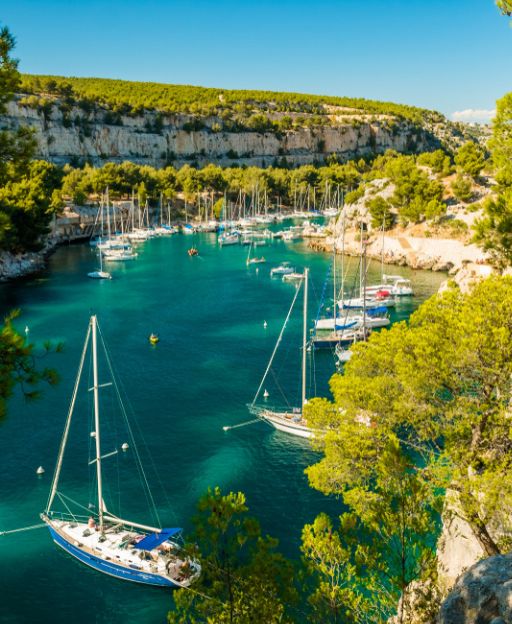
Between Marseille and Cassis, the land breaks apart. White limestone cliffs plunge straight into water so blue it looks painted. Small boats rock in silence. Pines grip the rock above. This is the Calanques — and almost nobody outside France talks about them.
What Is a Calanque?
A calanque is a narrow inlet carved into limestone cliffs by the sea and ancient rivers. Think Norwegian fjord, but sun-bleached white and ringed by Mediterranean scrubland.
The Calanques National Park stretches 20 kilometres along the coast between Marseille and Cassis. It protects some of the most dramatic scenery in all of France. The rock is chalky-white limestone. The water shifts through every shade from jade green to deep sapphire. On windless days, the surface is flat as glass.
Most visitors come to France and go straight to the Côte d’Azur. They queue for beaches in Saint-Tropez and photograph Nice’s seafront. The Calanques are quieter, wilder, and in many ways far more beautiful. If you are planning a trip to Provence, this is the coastal stop that most itineraries miss.
The Best Calanques to Visit
There are more than 20 calanques in the park. A few are essential.
Calanque de Port Miou sits closest to Cassis. A flat ten-minute walk from the harbour leads you here. A long, sheltered channel holds dozens of sailboats at anchor. The turquoise water is shallow at the edges and cool even in summer. Children snorkel from the rocky banks while adults sit on warm stone in the sun.
Calanque de Port Pin is the next inlet along. A short coastal path links the two. At Port Pin, the beach opens out a little. Pine trees offer shade overhead. Swimming here feels private, even when the place is busy.
Calanque d’En Vau is the one that stops people in their tracks. The path drops steeply between walls of white rock, 100 metres high on either side. At the bottom, a pebble beach meets water of an almost impossible turquoise. Allow around 90 minutes to walk from Cassis. It is worth every step.
Enjoying this? 7,000 France lovers get stories like this every week. Subscribe free →
Getting to the Calanques
Cassis is the best base. A 30-minute train from Marseille Saint-Charles station drops you two kilometres from the harbour. Walk to the port, follow the coastal path east, and you reach the first calanque in under 20 minutes.
Cassis itself is worth an hour before you set off. A small harbour, outdoor restaurants serving grilled sea bass and chilled rosé, a sandy square where old men play pétanque. It is exactly what people imagine the south of France to be.
Coming from Marseille? Bus 21 from the city centre reaches the Callelongue trailhead. A one-hour walk from there brings you to the first calanques. The route is steeper and more rugged — but also far less crowded. You can also add the Calanques to a longer France itinerary as a day trip from Marseille or a stopover on the way to the Riviera.
The Rules You Need to Know
The Calanques are a protected national park. Between July and early September, access to many trails closes to prevent wildfires. The restrictions change each year based on daily fire risk.
In high season, some calanques are only reachable by boat. Boats from Cassis harbour run regular departures to En Vau and the inner inlets. A return trip takes two to three hours and costs around €25. Booking ahead on busy summer weekends is wise.
Outside the summer restriction period, you can walk freely. Spring and early autumn are perfect. The paths are open, the water is warm, and the crowds have not arrived. For help planning your trip to France, our full guide covers timing, transport, and accommodation across the country.
What to Bring
The limestone reflects sun hard. Bring more water than you expect to need. A hat is essential, not optional. Wear shoes with grip — the rock gets slippery near the waterline.
There are no shops or cafés inside the park. Pack a picnic. Sitting on warm flat rock above turquoise water, eating bread and cheese with a view that stretches to the horizon — that is one of the better meals you will have in France.
Frequently Asked Questions
When is the best time to visit the Calanques in France?
April to June and September to October offer the best conditions. The hiking trails are open, the water is warm enough to swim, and the summer crowds have not arrived. Avoid August if you want solitude.
Do I need to book in advance to visit the Calanques?
No booking is needed to hike in spring or autumn. In summer, some trails close due to fire risk. Boat trips from Cassis run during closure periods and are worth booking ahead on weekends in July and August.
How hard is the hiking to reach the Calanques near Cassis?
Port Miou is an easy flat walk from Cassis — around ten minutes. Port Pin is moderate, with some rocky terrain. En Vau involves steep descents and loose rock — good walking shoes are essential. Allow two hours for the return trip.
Can you swim in the Calanques?
Yes. Swimming is one of the main reasons to go. The water at Port Miou and Port Pin is calm and sheltered. En Vau has a small pebble beach at the base of the cliffs. The water is clear enough to see the bottom at several metres deep.
Once you have sat on warm limestone at En Vau and watched the light change over that water, the Riviera will feel like a very different kind of place. The Calanques do not perform. They simply are.
Join 7,000+ France Lovers
Three times a week, get France’s hidden gems, seasonal guides, local stories, and the art of la vie française — straight to your inbox.
Subscribe free — enter your email:
Free forever · Unsubscribe anytime
🇫🇷 You Might Also Love
Tours & experiences you might love


Powered by Viator. Some links are affiliate links — we may earn a small commission at no extra cost to you.

Leave a Reply