Ingredients
Equipment
Method
- One or two days ahead, put the truffle and the eggs, still in their shells, in an airtight glass jar or box lined with a sheet of paper towel. Keep it in the fridge. The shells are porous, so the eggs take on the truffle’s scent.
- Brush any soil off the truffle. Chop or grate about two-thirds of it finely. Cut the rest into very thin slices with a truffle slicer, mandoline or vegetable peeler.
- Crack the eggs into a bowl, add a little salt and mix gently with a fork, without beating hard. Stir in the chopped truffle and leave in the fridge for 10 minutes.
- Melt the butter in a heavy saucepan over very low heat, or in a heatproof bowl set over a pan of barely simmering water. Pour in the eggs and stir slowly and constantly with a spatula, scraping the bottom and sides, for 8 to 15 minutes, until thick, creamy and in small soft curds.
- Take the pan off the heat while the eggs are still a little runny. Stir in the cream, if using, which stops the cooking. Season with pepper.
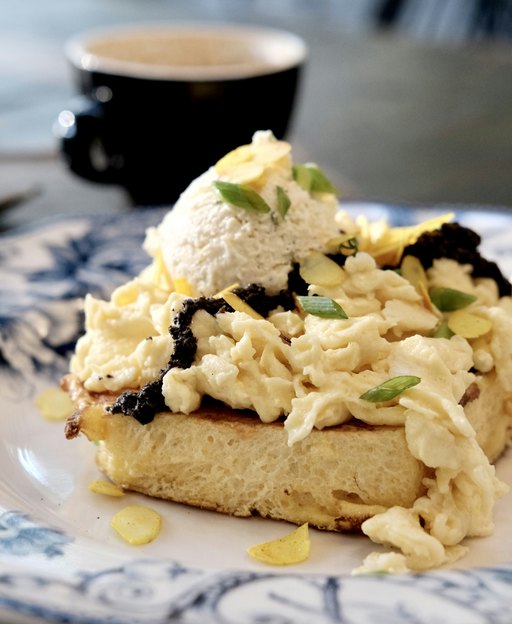
- Serve at once on warm plates, topped with the truffle slices, with toasted bread alongside.
Notes
Buying a truffle: Périgord black truffles are in season from December to March. In the US, look for fresh black truffles from specialty importers in winter. Out of season, jarred black truffle shavings can stand in.
Storing a fresh truffle: the Écomusée de la Truffe in Sorges says it keeps about 8 days in the fridge, airtight in a glass jar with absorbent paper.
Soft eggs: these eggs are only lightly cooked. If you are serving anyone pregnant, elderly or very young, use pasteurized eggs, as the CDC advises.
Don’t make it ahead: it loses its creaminess when reheated.
To serve: a glass of brut Champagne or dry white wine, or do as the Périgord does and pour a Bergerac.
Free from Love France: France's Best Market Mornings, six market mornings worth planning a trip around, from Nice to Colmar (free PDF)