
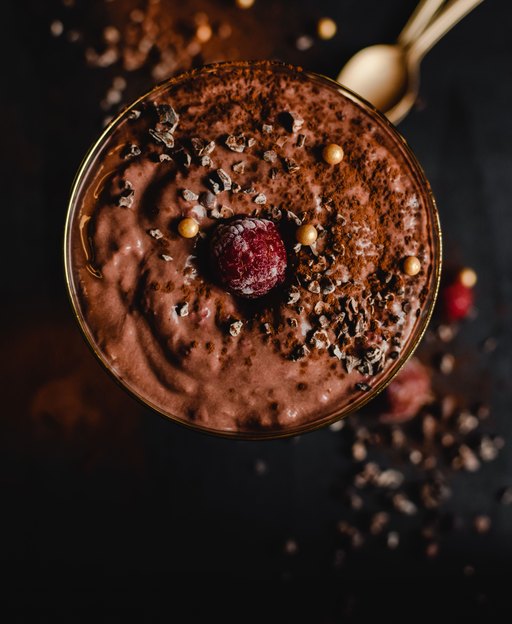
Dark, light and gone in four spoonfuls, mousse au chocolat is the French dessert that needs no oven and only a handful of things you already have: chocolate, eggs, a little sugar. For a while it even went by a stranger name, chocolate mayonnaise. Here is its story, from Louis XV’s chocolate pot at Versailles to a painter’s dinner parties and Julia Child’s television kitchen, and how to make it at home.
A King Who Made His Own Chocolate
Chocolate reached France in 1615, for the wedding of Louis XIII and Anne of Austria, says the Palace of Versailles. Louis XIV made it fashionable at court, but the king who loved it most was Louis XV, who sometimes made his hot chocolate himself in the kitchens of his private apartments. The palace still shares his recipe, printed in 1755 by the cookery writer Menon in Les Soupers de la Cour: equal numbers of chocolate bars and cups of water, and, Menon advises, it is better made a day ahead.
From a Drink to a Mousse
When did someone first whip that chocolate into a mousse? Food writers give different answers. Food Republic points to printed recipes for chocolate mousse in 1768, 1814 and 1827, and the South African food writer Tony Jackman, in Daily Maverick, notes that Menon is credited with an early version in 1755. Either way, the mousse was in French cookbooks long before the legend that made it famous.
Toulouse-Lautrec’s “Chocolate Mayonnaise”: A Legend
Henri de Toulouse-Lautrec, the painter of the Moulin Rouge, born in Albi in the south of France, was as serious about his kitchen as his canvases. Time magazine reported in 1966 that his closest friend and dealer, Maurice Joyant, had jotted down 197 of his recipes, later published with the menus Lautrec drew for his own dinners. He rarely invited more than ten guests, and he put goldfish in the water jugs to put off anyone who planned to drink water.
The story goes that he invented chocolate mousse and called it mayonnaise de chocolat. Enjoy it as a legend: the recipes above are older, and The Takeout concludes that he adapted a French recipe that already existed. Nobody has found a record of why it was called mayonnaise, but anyone who has made one will see the likeness: in Julia Child’s recipe, the beaten egg yolks and sugar should reach “the consistency of thick, creamy mayonnaise”. If you would like to see his paintings, our Albi travel guide covers the museum in his home town.
Julia Child Brings It to America
Americans learned to make it from Julia Child. PBS lists a 1963 episode of The French Chef, Chocolate Mousse and Caramel Custard, in which she shows “two famous French desserts”. Her recipe from The French Chef Cookbook (1968), still shared by the Julia Child Foundation and GBH in Boston, melts the chocolate with strong coffee, adds orange liqueur and butter, and folds in beaten egg whites, which she says makes it lighter than mousses made with whipped cream. Ours follows the same idea in a simpler form. For another French classic with a long story, try our crème brûlée.
How to Make Chocolate Mousse at Home
No oven, no fancy equipment: a bowl over a pan of hot water, a whisk and a good bar of dark chocolate. Make it in the morning or the day before, and it waits in the fridge until dessert.
Chocolate Mousse (Mousse au Chocolat)
Ingredients
Equipment
Method
- Put the chocolate, butter and coffee in the heatproof bowl and set it over a pan of barely simmering water, without the bowl touching the water. Stir now and then until melted and smooth, then take the bowl off the heat and let it cool for 5 minutes.
- Beat the egg yolks into the chocolate one at a time. The mixture will thicken and turn glossy.
- In a very clean bowl, whisk the egg whites with the salt until they hold soft peaks. Add the sugar a spoonful at a time and keep whisking until the whites are glossy and hold firm peaks.
- Stir a quarter of the whites into the chocolate to loosen it. Then add the rest and fold them in gently with a spatula, lifting from the bottom, just until no white streaks remain.
- Spoon into the glasses, cover and chill for at least 3 hours, or overnight.
- Serve cold, with a spoonful of whipped cream or crème fraîche if you like.
Notes
Sources
- Château de Versailles: Hot chocolate at Versailles (Menon, Les Soupers de la Cour, 1755)
- Food Republic: Why chocolate mousse was once called mayonnaise
- Daily Maverick (Tony Jackman): Throwback Thursday, chocolate mousse
- Time (1966): Dining with Toulouse-Lautrec
- The Takeout: Chocolate mayonnaise, the mousse that time forgot
- PBS: The French Chef, Chocolate Mousse and Caramel Custard (1963)
- Julia Child Foundation: Mousseline au chocolat (The French Chef Cookbook, 1968)
- GBH: Julia Child’s chocolate mousse
- BBC Good Food: Chocolate mousse
- U.S. Food and Drug Administration: Dairy and eggs, food safety (raw and lightly cooked eggs)
Frequently Asked Questions
Is it safe to eat mousse made with raw eggs?
The eggs in a classic mousse are not cooked, and the U.S. Food and Drug Administration lists mousse among the foods that may contain raw or lightly cooked eggs. Its advice is to buy pasteurized eggs, which “can be found in some supermarkets and are labeled ‘pasteurized’”. We use them, and the FDA gives this advice in its food safety pages for moms-to-be, so take extra care if anyone at your table is pregnant. Checked November 2026.
Which chocolate should I use?
A good dark chocolate with 60 to 70% cocoa, the kind you would enjoy eating. Bittersweet or semisweet baking bars from an American grocery store work well; Julia Child used semisweet.
Can I make it ahead?
Yes. Julia Child chilled hers for several hours or overnight, so it is a perfect make-the-day-before dessert for a dinner party. Keep it covered in the fridge until you serve it.
Tours & experiences you might love


Powered by Viator. Some links are affiliate links — we may earn a small commission at no extra cost to you.

Leave a Reply