
Seven hundred years ago, two towers stood at the entrance to La Rochelle’s harbour, chained together each night with an iron chain to keep enemy ships out. The chain is long gone. The towers still stand — exactly where they always stood, guarding one of the most dramatic ports on France’s Atlantic coast.
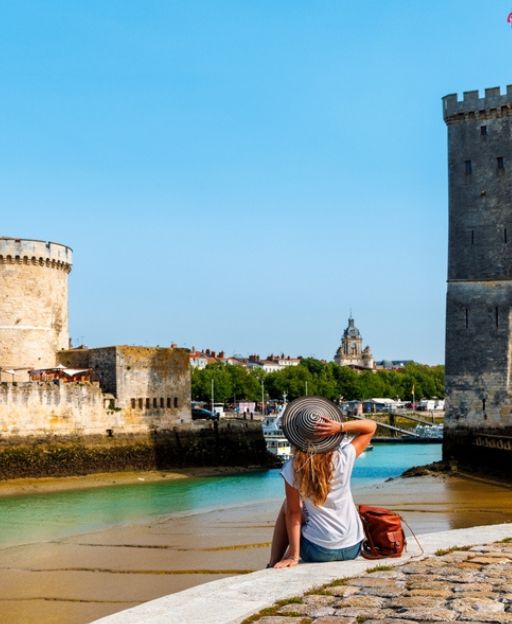
Most visitors walk past the towers without knowing what they witnessed. That is a shame, because the story of La Rochelle is one of the most extraordinary in French history — and the evidence sits right there at the water’s edge.
A City Built on Defiance
La Rochelle has always done things differently.
From the 12th century onwards, the port grew rich on salt, wine, and Atlantic cod. It established its own civic identity — independent merchants, elected mayors, self-governed streets — long before France formalised any of it.
In the 16th century, La Rochelle became a stronghold of French Protestantism. The Huguenots filled the churches, controlled the docks, and built a city that answered to its own conscience. Kings tolerated it. Then they did not.
The city’s wealth funded its independence, and its independence made it dangerous. By the 1620s, La Rochelle stood as the last great Huguenot stronghold in France. The crown decided to end it.
The Siege That Shook France
In 1627, Cardinal Richelieu — the most powerful man in France after the king — ordered the city taken.
He could not take it by storm. La Rochelle’s walls held firm, and its harbour gave the city access to English allies by sea. So Richelieu built a dam instead — a 1,500-metre dike of stone, wood, and rubble — across the harbour entrance, cutting the city off from the Atlantic.
The English sent three naval expeditions to break the siege. All three failed. The city starved slowly through the winter of 1627 and into 1628.
When La Rochelle surrendered in October 1628, fewer than five thousand of the original twenty-two thousand inhabitants had survived. Richelieu demolished the city walls. He spared the towers.
The Three Towers
All three towers still stand at the edge of the old harbour, open to visitors on a combined ticket. Each one tells a different part of the city’s story.
Tour Saint-Nicolas
The largest tower guards the southern entrance to the harbour. Builders completed it between 1384 and 1390. Inside, the staircase spirals through seven floors of thick limestone. Climb to the top and look directly across the water to the chain tower — exactly where the great iron chain once stretched each night to seal the port.
Tour de la Chaîne
The northern tower held one end of the harbour chain each night. Workers lowered it each morning to let fishing boats out and raised it at dusk. Today the tower houses an exhibition on La Rochelle’s Atlantic history — including its role in the slave trade and the Acadian deportations. The city does not hide from its past.
Tour de la Lanterne
Five minutes inland stands the tallest tower. Builders added it in the 15th century as a lighthouse. Later, the French crown used it as a prison. Prisoners — English, Dutch, French — carved graffiti into the upper room walls: ships, prayers, their names. You can still read them today.
Enjoying this? 7,000 France lovers get stories like this every week.
Thinking about it seriously? If you’ve started actually planning a move, our complete our complete Moving to France guide walks through every step, every cost, and the paperwork that catches most people out.
La Rochelle Today
The siege belongs to history, but the city it left behind has become one of France’s most vibrant port towns.
The old harbour fills with sailing boats every summer. The fish market runs along the quays each morning, and restaurants around the port serve Atlantic oysters from the Marennes-Oléron beds a few kilometres down the coast.
La Rochelle also has one of France’s oldest covered arcade systems. Builders constructed them in the medieval period, and you can walk from the harbour to the market square without stepping into the rain. In winter, this matters more than it sounds.
For visitors tracing French, Acadian, or Québécois ancestry, La Rochelle is where the ships departed. The Musée du Nouveau Monde in the old town tracks those Atlantic crossings in detail — from the first French settlements in Canada through to the Acadian expulsion.
Planning Your Visit
La Rochelle has a TGV station with direct trains from Paris Gare Montparnasse, taking approximately three hours. The old port and towers sit a 20-minute walk from the station.
Buy a combined ticket covering all three towers at the entrance to Tour Saint-Nicolas or Tour de la Chaîne. The towers open year-round, though hours vary by season — check current times before arriving.
For the wider Protestant history that shaped the city, The Huguenots: France’s Great Exodus and Its Global Legacy provides essential context. For those with Acadian ancestry, The Acadians: Expelled from Nova Scotia, Forever French traces what happened to the communities who departed from this harbour. Start your broader France planning with our France planning hub.
What are the three towers of La Rochelle?
La Rochelle’s three medieval towers are the Tour Saint-Nicolas, the Tour de la Chaîne, and the Tour de la Lanterne. Builders completed each at different points between the 14th and 15th centuries. Each served a distinct purpose — harbour defence, chain anchor point, and lighthouse-turned-prison. A single combined ticket covers entry to all three.
What happened during the Siege of La Rochelle?
Cardinal Richelieu besieged La Rochelle from 1627 to 1628 to crush the last major Huguenot stronghold in France. He built a 1,500-metre dam across the harbour to block English relief ships. When the city surrendered in October 1628, fewer than five thousand of the original twenty-two thousand residents had survived.
What is the best time to visit La Rochelle?
May, June, and September offer warm weather with fewer crowds than peak summer. The towers and fish market operate year-round, and the covered arcades make the old town pleasant in all seasons. July and August bring the most harbour activity, with sailing boats and outdoor restaurants fully open.
How do you get to La Rochelle from Paris?
Direct TGV trains run from Paris Gare Montparnasse to La Rochelle in approximately three hours. The old port and towers sit a 20-minute walk from the station.
The towers stood through the siege, through the revolution, through two world wars, and through every ordinary summer since. Stand at the harbour mouth on a clear evening, with the sun on the stone and the sailboats coming in, and you understand why La Rochelle refused to surrender — and why it rebuilt itself so completely when it did.
Join 7,000+ France Lovers
Three times a week, get France’s hidden gems, seasonal guides, local stories, and the art of la vie française — straight to your inbox.
Subscribe free — enter your email:
🇫🇷 Tracing Your French Ancestry?
Get our free step-by-step guide to French genealogy research — from departmental archives to parish records. Plus join 7,000+ France lovers for weekly stories.
Get the Free Ancestry Guide →📲 Know someone who’d love this? Share on WhatsApp →
Love more? Join 65,000 Ireland lovers → · Join 43,000 Scotland lovers → · Join 29,000+ Italy lovers →
Free forever · Unsubscribe anytime
🇫🇷 You Might Also Love
Tours & experiences you might love


Powered by Viator. Some links are affiliate links — we may earn a small commission at no extra cost to you.

Leave a Reply