Somewhere in France right now, a baker is pulling baguettes from a hot oven. The street outside is still dark. The bread is still warm.
By 7am, there will be a queue.
It doesn’t matter whether it’s Paris or a Pyrenean village with four hundred people. The morning bread run happens everywhere, every day, without question.
The Alarm That Goes Off Before Sunrise
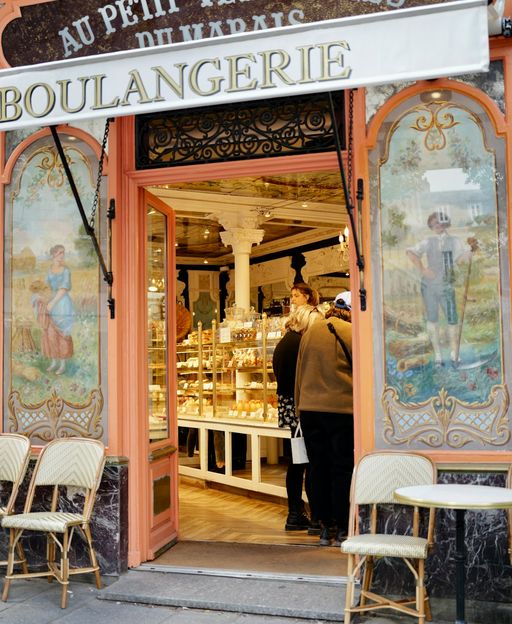
Most French boulangers start work between 3am and 5am. The first batch must be ready when the doors open — and the doors open early.
French law requires that a baguette de tradition française be made on the premises where it is sold. No factory loaves. No overnight deliveries.
The bread you carry home at 7am was shaped by hand less than three hours ago. That is not nostalgia. That is the law.
A Decree That Governs the Perfect Loaf
In 1993, France introduced the Décret Pain — the Bread Decree. It defined exactly what a baguette de tradition must contain: water, salt, flour, and yeast. Nothing else. No additives. No preservatives.
A baker who breaks this rule cannot call their loaf a tradition.
The crust should shatter when you break it. The inside should be open and slightly chewy. The colour should be a deep autumn brown, not the pale gold of supermarket bread.
French children learn to tell the difference before they can read. It is considered a basic life skill.
More Than Just Bread
The morning bread run is never only about the bread.
It is the first conversation of the day. The baker knows whether the grandmother at the end of the road prefers her baguette bien cuite — well-baked, darker, crunchier — or pas trop cuite, lighter and softer. They know which families take two and which families take four.
In villages across France, the boulangerie is often the last shop standing. When the post office closes and the café shuts, the boulangerie stays. Local mayors have subsidised them. The bread shop is not a luxury. It is civic infrastructure.
There is a French word — convivialité — that roughly means shared warmth, the pleasure of being present with others. The morning bread queue is one of its most reliable expressions.
Enjoying this? 7,000 France lovers get stories like this every week. Subscribe free →
The Rules Nobody Writes Down
The French boulangerie queue has unwritten rules that every local knows.
You do not look at your phone while waiting. You acknowledge the person ahead with a small nod. You say bonjour to the baker — not salut, not a wave, bonjour. It is a small ceremony, and it matters.
If you ask for your baguette bien cuite and it comes out pale, you are allowed to say so. This is not rudeness. It is respect. The baker would rather you speak than leave quietly unhappy.
You also carry it correctly. Upright under the arm, wrapped in its thin paper sleeve. Never lying sideways in a bag. Tourists nibble the end on the walk home. The French do too. Nobody minds.
France’s other morning rhythms follow the same quiet logic — the Sunday ritual, for instance, has its own unwritten rules that most visitors never notice.
What the Bread Tells You About the Town
When you walk into a French boulangerie for the first time, look at what’s on the shelf.
A basic shop offers the standard baguette and perhaps a ficelle or a flûte. A serious shop has a miche — a round country loaf — and regional breads. Some bakers hold the title of Meilleur Ouvrier de France, France’s most prestigious craftsman award. Their windows display a small red, white, and blue collar. People drive twenty minutes for their bread.
The variety on the shelf is not accidental. It reflects how seriously that town takes the morning.
Why It Still Matters
There is a version of modern life where you order bread online and it arrives in a box. France has mostly refused this.
Not out of stubbornness. Out of something harder to name — a sense that some rituals are worth keeping because of what they do to you, not just for you.
The morning bread run slows you down. It puts you on a street. It makes you say bonjour to someone you might not otherwise speak to.
That is a small thing. Over a lifetime, it adds up to something large.
Before your trip, the France travel planning guide will help you understand the rhythms that shape daily life here. And if the morning bread ritual leaves you curious about how the French end their day, the apéritif hour is the perfect companion piece.
The baguette under your arm. The paper sleeve. The walk back through a quiet street.
France has been doing this every morning for generations. Once you’ve done it yourself, you’ll understand why they never stopped.
Join 7,000+ France Lovers
Three times a week, get France’s hidden gems, seasonal guides, local stories, and the art of la vie française — straight to your inbox.
Subscribe free — enter your email:
Free forever · Unsubscribe anytime
🇫🇷 You Might Also Love
Tours & experiences you might love


Powered by Viator. Some links are affiliate links — we may earn a small commission at no extra cost to you.

Leave a Reply