
There are nine villages in northeast France where nobody lives. Not abandoned — officially still villages, with mayors and councils and postal codes. But no houses. No people. Just forest, silence, and the uneven ground where homes once stood.
These are France’s villages morts pour la France — villages that died for France. A century on, they remain memorials to the worst battle in human history.
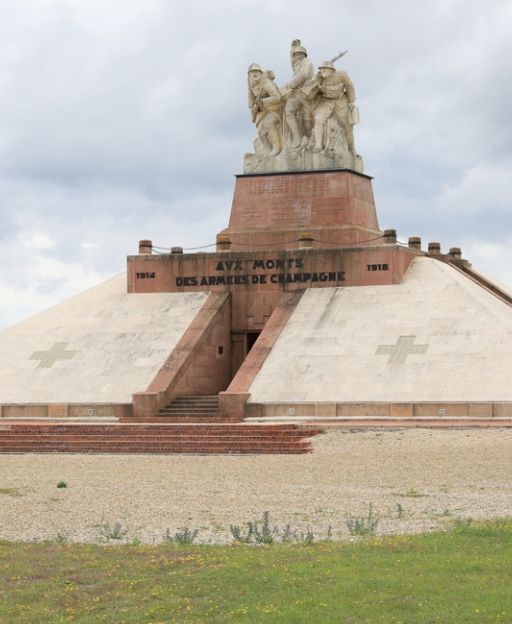
The Ground Where Verdun Happened
In 1916, the German and French armies fought for ten months over a stretch of hills near the town of Verdun. The Battle of Verdun lasted from February to December. By the end, roughly 300,000 men had died and 400,000 more were wounded — in an area not much bigger than a small city.
Artillery shells fell at a rate that is almost impossible to imagine. In some places, more than a million shells landed per square kilometre. The landscape was turned into something that looked like the surface of the moon.
The villages on those hills were hit first and hardest. They were shelled, fought over, shelled again, captured, lost, recaptured. By the time the battle ended, most had been erased completely.
Nine Villages That Never Came Back
Of the villages destroyed at Verdun, nine were never rebuilt. The French government gave them a special status: communes that died for France. They remain on the map. They have elected representatives. But they have no residents.
Fleury-devant-Douaumont is the most famous. It changed hands sixteen times during the battle. It was hit by so many shells that when the shooting stopped, the village was simply gone. No walls. No foundations visible. Just churned earth.
Today, Fleury is a forest. But walk through it and the ground tells you something happened here. There are dips and hollows everywhere — the sunken outlines of cellars and basements, slowly filling with leaves. Signs mark where the church stood. Where the school was. Where families lived.
Enjoying this? 7,000 France lovers get stories like this every week. Subscribe free →
The Red Zone
After the war, the French government drew a boundary around the most damaged land. They called it the Zone Rouge — the Red Zone.
The soil was too contaminated to farm. Unexploded shells, poison gas residue, and human remains made it unsafe. In some areas near Verdun, the arsenic and lead levels in the soil are still fifty times higher than normal.
More than a hundred years later, parts of that Zone Rouge still exist. Around 100 square kilometres of northern France cannot be legally farmed, built on, or lived in. Not because of bureaucracy — because the ground is still genuinely dangerous.
About 700 tonnes of unexploded shells and bombs are discovered in France every year. They are found during road construction, farm ploughing, and storms. The teams that collect them call their work dépollution — decontamination. It will not be finished in any of our lifetimes.
The Bones the Earth Keeps Returning
The Ossuaire de Douaumont stands on a hill above Fleury. It is a long, low building — part bone vault, part lighthouse — that holds the remains of roughly 130,000 unidentified soldiers. French. German. Unknown.
Small windows at the base let you look in. You can see the bones.
They were collected from the battlefields and placed here because there was no other way to honour them. No names. No graves. Just the scale of what was lost.
The ossuary is still receiving remains. Every few years, bones are uncovered during forest work or road maintenance nearby. They are added quietly, without ceremony, to what is already there.
Why It Matters When You Visit France
Most visitors to France never get near Verdun. It is not the France of markets and lavender and river châteaux. It is not postcard material.
But if you travel through Lorraine or drive north through the Meuse, you are never far from it. The landscape is marked in ways that don’t shout at you — a long, flat road through second-growth forest; a sign for a village with a population of zero; a roadside monument in the middle of a field.
If you want to understand the France that exists beneath the surface — the France that shaped its people, its silences, its relationship with history — this is where you come. Our France planning guide can help you build a trip that includes history alongside beauty.
The small memorial plaques on French street corners tell a similar story of everyday remembrance — a country that has not forgotten, even when it moves on.
France carries its history lightly on the surface. Markets hum. Cafés fill up. Life moves forward. But out in the Meuse, nine ghost villages stand in the trees — and the earth is still giving back its dead.
Join 7,000+ France Lovers
Three times a week, get France’s hidden gems, seasonal guides, local stories, and the art of la vie française — straight to your inbox.
Subscribe free — enter your email:
Free forever · Unsubscribe anytime
🇫🇷 You Might Also Love
Tours & experiences you might love


Powered by Viator. Some links are affiliate links — we may earn a small commission at no extra cost to you.

Leave a Reply