
If you’re planning a trip to Burgundy, this Burgundy travel guide covers everything you need. Burgundy (Bourgogne in French) is one of France’s most rewarding regions — a place where world-famous wine, medieval history and slow living come together in one extraordinary corner of the country. It sits about two hours south of Paris and offers a very different experience to the big city. Whether you’re planning a short detour or dedicating several days to exploring, Burgundy earns every hour you give it.
Love France? Join 7,000+ readers on our free newsletter → lovetovisitfrance.substack.com
Why Visit Burgundy?
Most visitors come for the wine. And with good reason — Burgundy produces some of the most celebrated Pinot Noir and Chardonnay in the world. But wine is only part of the story. The region is packed with medieval villages, Romanesque churches, a canal network built for cycling, and market towns that run at their own pace.
Burgundy rewards the curious traveller. It’s a region you need to slow down for. The best experiences here — tasting wine at a small domaine, wandering through the Côte d’Or at harvest time, sitting in the courtyard of the Hospices de Beaune — aren’t things you can rush.
If you want to understand France beyond Paris and the south, Burgundy is where you should go.
Getting to Burgundy from Paris
Burgundy begins about 200 kilometres south-east of Paris. It stretches from Auxerre in the north down to Mâcon in the south, with the city of Dijon at its heart.
By Train
The fastest option from Paris is the TGV from Gare de Lyon to Dijon — around 1 hour 40 minutes. From Dijon you can pick up a rental car and reach most of the key wine villages within 30 minutes. If you’re staying in Beaune, some TGVs stop directly there. Trains also serve Sens and Auxerre for the northern Yonne area.
Burgundy pairs well with a broader France trip. If you’re planning a longer route, our 10 days in France itinerary shows how to slot it into a classic circuit.
By Car
Driving from Paris takes about 2.5 to 3 hours via the A6 motorway (the Autoroute du Soleil). This is the better option if you want to explore the wine villages of the Côte d’Or, where a car gives you real freedom. The drive through the vineyards between Dijon and Beaune — the Route des Grands Crus — is one of the most scenic roads in France.
The Best Places to Visit in Burgundy
Beaune — The Heart of Wine Country
Beaune is the wine capital of Burgundy and the best base for exploring the Côte d’Or. The old town is ringed by medieval ramparts, with a maze of cobbled streets lined with wine merchants, caves and tasting rooms. The standout attraction is the Hospices de Beaune — a 15th-century charitable hospital with a famous polychrome tile roof that has become one of France’s most photographed buildings.
The hospital has an extraordinary story: it funded itself through wine production for over 600 years and still holds one of the world’s most important wine auctions each November. Allow at least a full day in Beaune. Take the cellar tours in the morning, pick up a Crémant de Bourgogne from a local cave, and have lunch in one of the town’s brasseries.
Dijon — More Than a City on Your Way Through
Dijon is Burgundy’s capital and far too often treated as a stopover rather than a destination in its own right. It has an outstanding old quarter around the Palace of the Dukes of Burgundy, one of the best fine arts museums in France, and a food culture that goes well beyond the mustard it’s famous for.
Spend a morning in the covered market (Les Halles) — it’s one of the finest in France. Try a kir (white wine and blackcurrant liqueur, invented here) in a cafe on the Place de la Libération. Dijon is a proper French city and deserves a full day, at minimum.
Heading to Burgundy? Get our weekly France travel guide — free forever → Subscribe here
Vézelay and the Yonne Valley
Head north into the Yonne département and the landscape changes entirely. Rolling hills replace vineyards. Vézelay, perched on a hilltop above the valley, contains one of the greatest Romanesque basilicas in Europe. It was a major departure point for the Camino de Santiago pilgrimage routes, and the basilica still draws visitors from across the world. The surrounding Morvan regional park is excellent for walking and cycling.
The Yonne also has some superb small towns: Auxerre, Sens (with its stunning Gothic cathedral) and Noyers-sur-Serein, a perfectly preserved medieval village. This part of Burgundy is quieter and less wine-focused, which makes it a genuine hidden corner.
The Côte d’Or Wine Route
The Route des Grands Crus runs from Dijon south through Gevrey-Chambertin, Chambolle-Musigny, Vougeot, Vosne-Romanée and Nuits-Saint-Georges before reaching Beaune. Every village name here is a legend in the wine world. Stop and walk the vineyard paths between tastings.
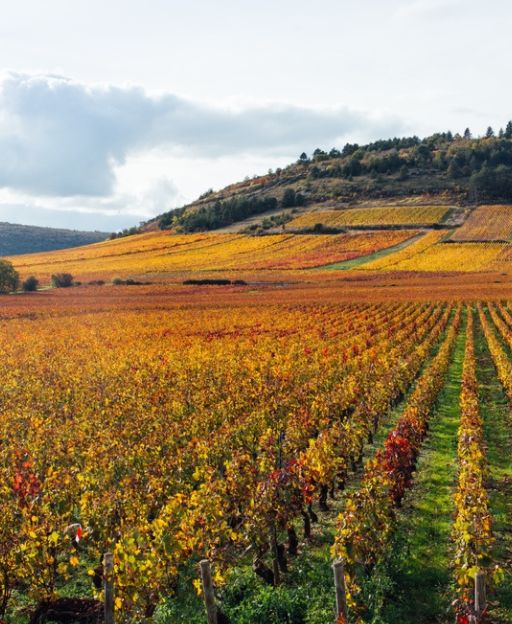
The annual harvest in this region is one of France’s great seasonal spectacles — and one most travel guides completely overlook. If you can visit in late September or October, the vineyards turn amber and gold, and the atmosphere across the whole region changes.
Burgundy Wine: What You Need to Know
Burgundy produces Pinot Noir (red) and Chardonnay (white), almost exclusively. The wines are classified by specific vineyard plots (called lieux-dits) rather than by producer or château — which is the opposite of how most wine regions work. Understanding even the basics of the classification system — village, Premier Cru, Grand Cru — transforms how you experience the region.
For a wider picture of where Burgundy sits among the great French wine regions, our guide to the best wine regions in France is an excellent starting point.
Grand Cru wines (Romanée-Conti, La Tâche, Chambertin) are priced accordingly. But village-level Burgundy can be genuinely excellent value, especially from smaller producers in less famous appellations like Maranges or Auxey-Duresses. Ask at a local cave — the advice is usually honest and the pours are generous.
When to Visit Burgundy
Spring (April–June): Mild weather, fewer crowds, the vineyards fresh and green. The best time for cycling the canal routes and walking the Morvan.
Summer (July–August): Warm and busy. Book accommodation well in advance. The canal boats and cycling routes are at their most popular. Beaune’s old town fills with visitors from late July.
Autumn (September–October): The best time for wine lovers. Harvest season transforms the Côte d’Or with colour and energy. The Hospices de Beaune wine auction in November marks the end of the season with great fanfare.
Winter (November–March): Quiet and cold, but atmospheric. Fewer tourists, fires in restaurant hearths, and the chance to taste wine in empty cellars with unhurried producers who actually want to talk.
How Many Days Do You Need?
A minimum of two full days covers Beaune and a drive along the wine route. Three to four days allows you to add Dijon and explore further. Five days or more lets you venture north into the Yonne, visit Vézelay, and take a slow boat along the Canal de Bourgogne.
Burgundy works perfectly as a stop between Paris and Lyon on a longer journey south. It’s also an ideal stand-alone destination for a long weekend from London or any major European city.
Where to Stay
Beaune is the most practical base for the wine route. It has a good range of accommodation from small family-run hotels to boutique options. Book early for harvest season (October) and the Hospices wine auction (November).
Dijon suits those who want a city base with good transport links. Day trips to the wine villages by rental car or taxi are straightforward.
Village gîtes throughout the Côte d’Or offer a more immersive experience — waking up surrounded by vines, walking to tastings before breakfast. These book out months in advance for September and October.
Burgundy Travel Guide: Practical Tips
- Hire a car: Essential for the wine villages. Most are not well served by public transport.
- Drink-driving laws: France has strict limits (0.5 mg/ml blood alcohol). If you want to taste freely, hire a private wine guide or join a tour.
- Language: English is widely spoken in Beaune and Dijon. In smaller villages, a few words of French go a long way.
- Cash: Many small domaines and village markets still prefer cash. Bring some.
- Cycling: The EuroVelo 6 route passes through Burgundy along the canal. Bike hire is available in Beaune and Dijon. The terrain along the canal is flat and suitable for all levels.
- Book cellar visits: Many top domaines require appointments. Plan ahead if you have specific producers in mind.
You Might Also Enjoy
- The Burgundy Harvest Week That No Travel Guide Ever Describes
- Best Day Trips from Paris: Eight Escapes Worth the Journey
- The Best Wine Regions in France for Visitors
Plan Your France Trip
Ready to plan your trip? Our complete France travel planning hub covers everything you need — from when to go and how to get around, to where to stay and what to eat. It’s the best place to start.
Join 7,000+ France Lovers
Three times a week, get France’s hidden gems, local recipes, and travel inspiration — the kind you won’t find in any guidebook.
Subscribe free — enter your email:
🇫🇷 Discover the France Most Tourists Never Find
Get our free guide to 25 hidden villages of France — then join 7,000+ readers for weekly stories about places most guidebooks never mention.
Get Your Free Village Guide →Free forever · · Unsubscribe anytime
🇫🇷 You Might Also Love
Tours & experiences you might love


Powered by Viator. Some links are affiliate links — we may earn a small commission at no extra cost to you.

Leave a Reply