In France, an invitation to dinner is not casual. It is not “we should get together sometime.” When a French person says “come to our house for dinner,” they mean it. And they have been thinking about saying it for quite a while.

The Invitation Takes Longer Than You Think
French friendships move slowly. Colleagues can work side by side for years and never see the inside of each other’s homes. The French keep a sharp line between public life and private life.
Work friends stay at work. Café acquaintances stay at the café. Home is different. Home is the inner circle. So when an invitation finally arrives, it means something real. You have been let in.
This is not rudeness in the months before the invitation comes. It is care. The French do not invite people home lightly, which is precisely why being invited matters so much.
Arriving — and the Art of the Apéritif
There is an unspoken rule that trips up many visitors. The French say à l’heure — on time. But they do not quite mean exactly on time. Arriving precisely at the stated hour can feel slightly abrupt. Ten or fifteen minutes late is perfectly fine.
Arriving early, however, is considered rude. Your host is still arranging the cheese or opening the wine.
When you do arrive, the apéritif comes first. Do not think of it as a hurried drink before the real evening begins. The apéritif hour has its own rhythm and rituals that can stretch to an hour or more. Conversation starts here, gently. Do not glance towards the kitchen.
What to Bring — and What to Avoid
Wine is a safe choice. Red, usually. When you hand it over, say you thought they might enjoy it — not “for tonight.” That phrase implies they should open it now. They may choose not to, and that is entirely their right.
Flowers are welcome, but never chrysanthemums. In France, chrysanthemums belong to cemeteries. They are placed on graves at La Toussaint each November. White flowers and yellow flowers can also carry awkward associations. A mixed seasonal bouquet, or something pink, is always gracious.
Do not bring a dish or dessert unless you were specifically asked to. It implies your host’s food might not be enough.
Enjoying this? 7,000 France lovers get stories like this every week. Subscribe free →
The Rhythm of the Table
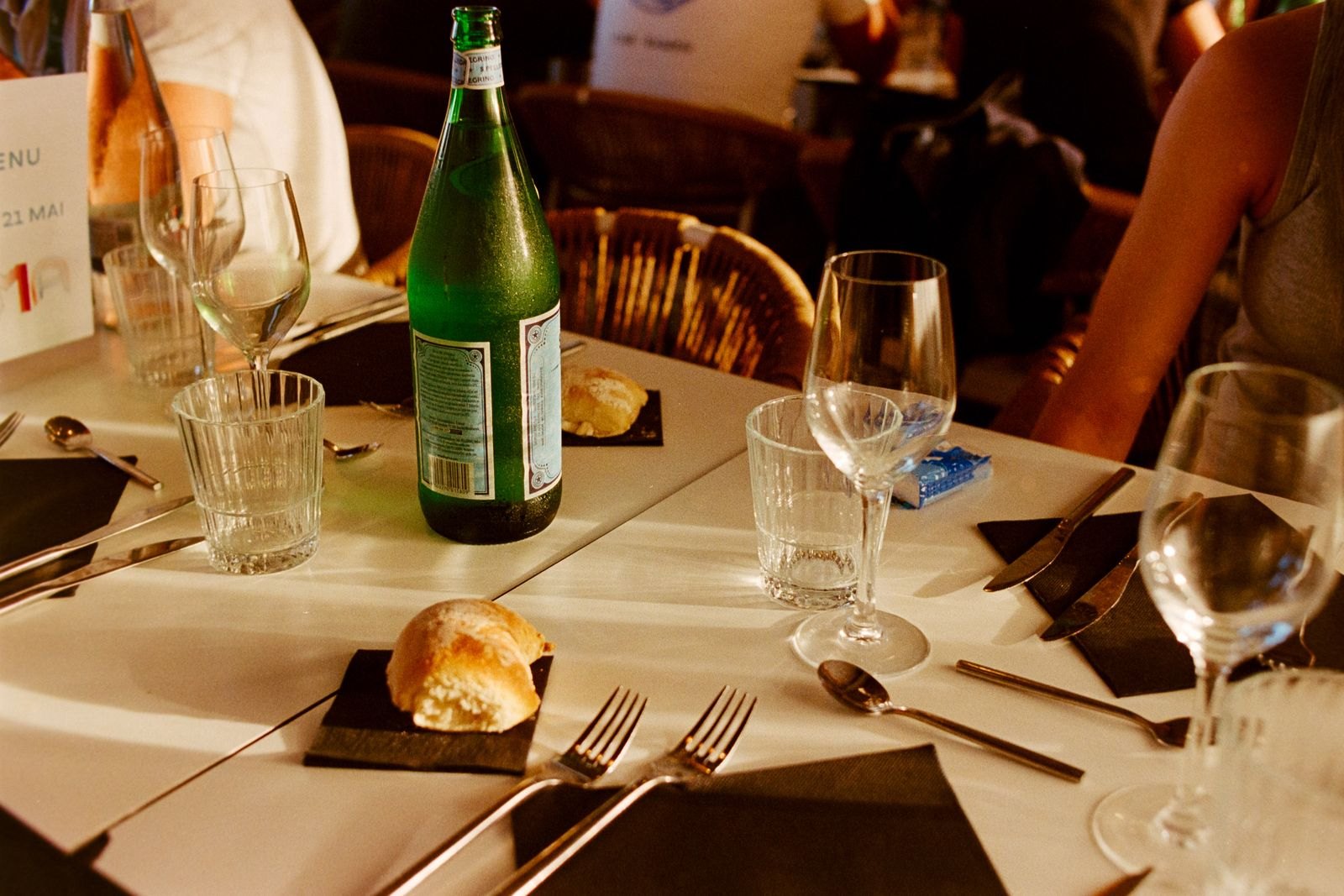
A French dinner has a pace. There is an entrée, a main course, a cheese course with its own quiet rules, and then dessert. The gaps between courses are long. The conversation fills them entirely.
You do not rush. You do not check your phone. The table is not a refuelling stop — it is the whole point of the evening.
Bread sits on the table throughout. You break it, never cut it. You place it directly on the tablecloth, not on a side plate. These small details are second nature to every French person at the table, and noticing them is part of what makes the evening feel real.
What to Talk About
Food is always a safe subject. The wine, the cheese, where the ingredients came from — these conversations are genuine and warmly received. Culture, history, art, and travel all work well.
Money is not discussed. Salary, house prices, how much things cost — these are considered deeply personal. Personal appearance is also avoided. And politics, at least in the early part of the evening, is best approached gently rather than launched into.
What you talk about matters less than how. Listen well. Ask questions. The French deeply value a person who knows how to hold a conversation, not just dominate one.
What Being Invited Actually Means
You were not chosen after one good meeting. You were chosen after months of small moments — your humour, your listening, your ease with silence. All of it was noticed, even when it appeared not to be.
If you are planning your trip to France and hoping to experience something beyond restaurants and museums, this is the kind of encounter worth working towards. It does not come quickly. But it comes.
And if, the morning after the dinner, you call — not a message, a real phone call — to say how much you enjoyed the evening, you will almost certainly be invited back.
There are many ways to see France. But few things show it as clearly as a late evening at someone’s table, when the second bottle is opened without a word and nobody moves to leave.
Join 7,000+ France Lovers
Three times a week, get France’s hidden gems, seasonal guides, local stories, and the art of la vie française — straight to your inbox.
Subscribe free — enter your email:
Free forever · Unsubscribe anytime
🇫🇷 You Might Also Love
Tours & experiences you might love


Powered by Viator. Some links are affiliate links — we may earn a small commission at no extra cost to you.

Leave a Reply