
Brittany sits in the northwest corner of France, jutting into the Atlantic with a coastline unlike anything in the south of the country. Pink granite boulders, walled corsair cities, prehistoric standing stones older than Stonehenge, and a Celtic identity that sets it firmly apart from the rest of France — this is one of Europe’s most distinctive regions, and one of the most rewarding for travellers willing to go beyond Paris and Provence.
Love France? Join 7,000+ readers on our free newsletter → lovetovisitfrance.substack.com
What Makes Brittany Different from the Rest of France
Brittany is one of the six Celtic nations. The Breton language belongs to the Brythonic family of Celtic languages — not the Latin-descended Romance family that French comes from. Traditional music here sounds more like a Celtic folk session than a Parisian cabaret. The region was an independent duchy until 1532, and that history shapes everything from the flag (black and white stripes) to the food.
The food alone justifies a visit. Brittany invented the buckwheat galette — a savoury crêpe made without wheat flour, filled with ham, egg, and cheese. It pairs with hard Breton cider, not wine. Kouign-amann, a dense caramelised butter pastry that originated in Douarnenez in 1860, is the region’s signature baked good. Oysters from the Belon and Cancale estuaries travel to the finest restaurants in Paris.
If you want to understand why the region feels so different, read why Brittany feels like a country within a country before you go.
Where to Go in Brittany
Saint-Malo: The Walled Port City
Saint-Malo is where most visitors start. The old town sits inside 12th-century granite ramparts that you can walk around in about 45 minutes. Allied bombing devastated the city in 1944, and builders reconstructed almost every street, but the lanes inside the walls feel genuinely medieval. Wide beaches stretch from the ramparts at high tide and reveal a vast flat expanse of sand when the sea retreats.
At low tide, you can walk out across the sand to the small island of Grand Bé, where Chateaubriand’s tomb faces the sea. The crossing takes about 15 minutes, but check the tide tables first — the causeway floods quickly and several visitors are caught out every year.
Saint-Malo also operates ferries to Jersey, Guernsey, and Poole on Britain’s south coast, making it a practical junction point if you are combining France with a British trip.
Dinan: Medieval Town on the Rance
Dinan sits 30 kilometres south of Saint-Malo on the Rance estuary. It has one of the best-preserved medieval districts in northern France. The old port sits below the cliff, reached by walking down steep cobbled lanes through half-timbered houses built between the 14th and 16th centuries.
The 14th-century castle keep opens to visitors and gives views over the river valley. Most people come for half a day, but Dinan rewards a full overnight stay — the town empties after the coaches leave and regains a quiet medieval atmosphere by evening.
The Pink Granite Coast
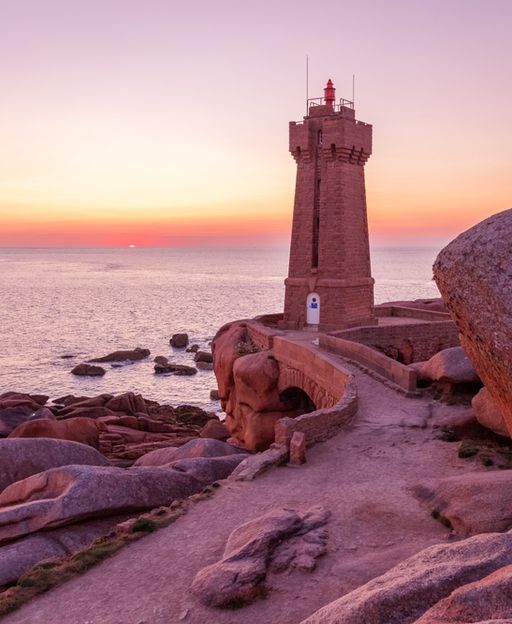
The Pink Granite Coast — Côte de Granit Rose — runs between Perros-Guirec and Trébeurden in northern Brittany. The boulders are ancient granite coloured rose-orange by iron-rich minerals. At sunset, the rocks glow. The coastal footpath (Sentier des Douaniers) takes about three hours to walk from Perros-Guirec to Ploumanac’h, passing sculpted rock formations with names like “the Turtle” and “Napoleon’s Hat.”
The Ploumanac’h lighthouse stands on a granite promontory at the path’s midpoint. It is one of the most photographed landmarks in Brittany. Outside of July and August, the path is surprisingly uncrowded.
Carnac and the Standing Stones
Carnac contains the largest collection of prehistoric standing stones in the world. More than 3,000 menhirs stand in long parallel rows across the landscape around the town. They date from roughly 3500 to 2000 BC — older than both Stonehenge and the Egyptian pyramids. No one has definitively explained why ancient people arranged them this way.
The main alignment fields close to visitors between April and September to protect the grass, but you can view them clearly from the perimeter paths at no cost. The Musée de Préhistoire in Carnac town is one of the best prehistoric museums in France. Allow at least an hour there.
Planning a France trip? Get free weekly inspiration and practical tips → Subscribe free
The Gulf of Morbihan
The Gulf of Morbihan is a shallow inland sea with more than 40 islands. Boat trips from Vannes or Auray take you out to the two main islands — Île-aux-Moines and Île-d’Arz — both car-free and ideal for cycling. The water is calmer than the Atlantic coast, and the light in late afternoon is remarkable.
Vannes itself is worth a few hours. The medieval ramparts are intact, and the half-timbered houses in the old quarter date from the 15th and 16th centuries.
Rennes: The Capital and Your Likely Arrival Point
Most high-speed trains from Paris arrive in Rennes. It is a lively university city with a good medieval quarter around Place des Lices. The Saturday market on Place des Lices is one of the largest farmers’ markets in France, running from 7am to 2pm with local producers selling everything from Breton butter to fresh oysters.
Most visitors pass through Rennes rather than lingering, but the city rewards half a day if you arrive in the morning before continuing west.
When to Visit Brittany
July and August bring the most reliable weather and the highest visitor numbers. Saint-Malo and the Pink Granite Coast fill up significantly, and accommodation books out months in advance.
May, June, and September offer a better balance. Temperatures remain comfortable — Brittany is milder than you might expect, thanks to the Gulf Stream — and visitor numbers drop noticeably. The light in early June and late September is excellent for photography.
Avoid October to March unless you specifically want dramatic winter coastline. Winds off the Atlantic can be fierce, and many smaller hotels and restaurants close seasonally. For a full month-by-month breakdown, see our guide to the best time to visit France.
How to Get to Brittany from Paris
The TGV train from Paris Montparnasse to Rennes takes 1 hour 30 minutes. Trains to Brest at the far western tip take about 3 hours 45 minutes. Multiple trains run daily, and seats in peak season sell out weeks ahead — book on SNCF.com or Ouigo well in advance.
Driving from Paris takes about 3 hours 30 minutes on the A11 motorway. A hire car makes sense if you plan to explore the rural coast and smaller towns away from the rail lines. For full advice on getting around France by rail, read how to travel France by train.
Getting Around Brittany
The main towns — Rennes, Saint-Malo, and Dinan — connect by bus and train and are manageable without a car. Reaching the Pink Granite Coast, Carnac, and the rural Gulf of Morbihan islands requires a hire car or an organised day tour from Vannes or Rennes.
If you are planning a broader France trip and weighing Brittany against other regions, our guide to the best regions in France helps you decide how to divide your time.
What to Eat and Drink in Brittany
The galette is the essential Breton meal — a savoury buckwheat crêpe filled with combinations of ham, egg, cheese, and seasonal vegetables. It is a complete meal for under €15 in most crêperies. Order it with a bowl of Breton cider (cidre brut is dry, cidre doux is sweeter).
Oysters from Cancale and the Belon estuary rank among the best in France. In Cancale, you can buy a dozen directly from market stalls at the harbour and eat them on the sea wall with lemon. No restaurant required.
Kouign-amann is the Breton pastry you should not leave without trying. Every bakery across the region makes it. Buy one in the morning while it is still warm.
Where to Stay in Brittany
Saint-Malo has the widest range of accommodation, from budget hotels inside the ramparts to larger properties on the seafront. Book three to four months ahead for July and August. Dinan has charming small hotels and B&Bs in the medieval quarter at excellent value. Vannes offers good mid-range options near the old town, with easy access to the Gulf of Morbihan.
Practical Tips for American Visitors
- Currency: Euros. Contactless cards work in most places, but carry cash for markets and smaller crêperies.
- Driving: You drive on the right side of the road, as throughout France. Saint-Malo’s old town offers very limited parking — use the car parks outside the ramparts.
- Language: French is spoken everywhere. You will see bilingual Breton signs (Breizh means Brittany), but Most people in tourist areas speak some English.
- Weather: Brittany is wetter and windier than southern France. Pack a light waterproof even in summer.
- Tipping: French restaurant bills include service. Staff appreciate small tips but never expect them.
For a full breakdown of travel costs, see our France travel budget guide.
Ready to Plan Your France Trip?
Get free weekly inspiration, hidden gems, and travel tips from Love France.
Thinking about it seriously?
If you’ve started actually planning a move, our complete our complete Moving to France guide walks through every step, every cost, and the paperwork that catches most people out.
Frequently Asked Questions About Visiting Brittany
Is Brittany worth visiting for American travellers?
Brittany rewards visitors who want something beyond the standard France itinerary. The region offers prehistoric sites, medieval towns, dramatic Atlantic coastline, and a distinct Celtic culture found nowhere else in France. It suits travellers with at least three days to explore properly.
How many days do you need in Brittany, France?
Three days gives you enough time to visit Saint-Malo, Dinan, and the nearby coast. Five days allows you to add Carnac, the Gulf of Morbihan, and the Pink Granite Coast. A full week lets you explore at a comfortable pace without rushing.
What is the best way to get to Brittany from Paris?
The TGV train from Paris Montparnasse to Rennes is the fastest option at 1 hour 30 minutes. Book tickets in advance on SNCF.com. Driving takes about 3 hours 30 minutes and is worth considering if you plan to explore the coast and smaller towns by car.
What food is Brittany known for?
Brittany is famous for buckwheat galettes, Cancale oysters, Breton cider, and kouign-amann pastry. Seafood is excellent throughout the region. The galette-and-cider combination at a local crêperie is the classic Breton dining experience.
You Might Also Enjoy
- Mont Saint-Michel Travel Guide: Everything You Need to Know
- Normandy France Travel Guide: D-Day Beaches and Beyond
- The Best Day Trips from Paris: What to See and How to Get There
Plan Your France Trip
Ready to start planning? Our France trip planning hub covers everything from when to go and how to get around to where to stay and what to pack — all in one place.
Join 7,000+ France Lovers
Every week, get France’s hidden gems, local recipes, and travel inspiration — the kind you won’t find in any guidebook.
Subscribe free — enter your email:
Love more? Join 64,000 Ireland lovers → · Join 43,000 Scotland lovers → · Join 30,000 Italy lovers →
Free forever · One email per week · Unsubscribe anytime
Tours & experiences you might love


Powered by Viator. Some links are affiliate links — we may earn a small commission at no extra cost to you.

Leave a Reply