
Loire Valley Road Trip: The Complete Guide to France’s Château Country
A Loire Valley road trip gives you access to one of the most rewarding drives in all of France. The valley stretches roughly 280 kilometres from Gien in the east to Angers in the west, threading together hundreds of châteaux, medieval towns, vineyards, and river villages that most travellers pass over entirely on their way to Paris. This guide covers the route, the châteaux worth your time, where to stay, and how to plan it without wasting a single day.
Love France? Join 7,000+ readers on our free newsletter → lovetovisitfrance.substack.com
Why the Loire Valley Is Worth a Dedicated Road Trip
The Loire Valley is a UNESCO World Heritage Site, recognised for its outstanding Renaissance architecture and the sheer concentration of royal history packed into a single river corridor. But numbers alone don’t explain the appeal. You can drive from one château to the next in under 30 minutes, stopping at a cave wine cellar or a riverside market in between. The pace is entirely yours to set.
The valley also rewards slow travel. Many visitors rush through Chambord and Chenonceau in a single day and consider the job done. Give yourself four to seven days and you’ll discover a France that feels genuinely unhurried — village boulangeries, local Vouvray wine poured at roadside domaines, and walled gardens that see almost no crowds before 10 in the morning.
🇫🇷 Free: The Perfect Provence & South of France Road Trip
A free 10-day itinerary covering Avignon, the Luberon villages (Gordes, Roussillon, Bonnieux), Marseille, Cassis, Aix-en-Provence, and the Camargue — with practical route notes most travel guides leave out.
Planning Your Loire Valley Road Trip: The Basics
How long do you need?
Four days is the minimum if you want to see the headline châteaux without feeling rushed. Seven days allows you to include the western Loire towns of Saumur and Angers, plus time to explore the vineyards properly. If you only have a weekend, focus on the central section between Amboise and Blois — it’s the most concentrated stretch for sightseeing.
When to go
Late April through June is ideal. The weather is mild, the gardens are in bloom, and the main sites haven’t yet reached their summer peak crowds. September and October are equally good and come with the added bonus of harvest season in the vineyards. July and August bring the biggest crowds to Chambord and Chenonceau, though even at peak season the valley feels far less hectic than central Paris. Avoid the Christmas and January period if you want châteaux interiors open — many close entirely in the off-season.
Do you need a car?
Yes, a car makes a significant difference. Public transport links the main towns — Tours, Blois, Amboise, Saumur — but the châteaux themselves sit outside town centres, and the smaller villages are almost impossible to reach by bus. Hiring a car in Tours or Orléans is the most practical approach. Roads are well-signposted and driving standards on the D-roads through the valley are relaxed. A satnav is useful but not essential for the main route.
The Route: Orléans to Angers
The most logical direction is east to west, starting in Orléans and finishing in Angers. This puts the wind at your back, and it lets you build from the medieval to the Renaissance as you move downstream. Pick up your hire car in Orléans or take the TGV from Paris Austerlitz in just over an hour.
Day 1 — Orléans to Blois (via Chambord)
Leave Orléans in the morning and head south to the Sologne forest before cutting west to Chambord. Château de Chambord is the largest château in the Loire Valley. The double-helix staircase attributed to Leonardo da Vinci is the headline, but the rooftop terrace — with its forest of chimneys and towers — is where most visitors linger longest. Allow two to three hours. Continue west to Cheverny for the afternoon: smaller, furnished, and gloriously liveable-feeling compared to the grandeur of Chambord. Spend the night in Blois, where the château sits right in the town centre above the river.
Day 2 — Blois to Amboise
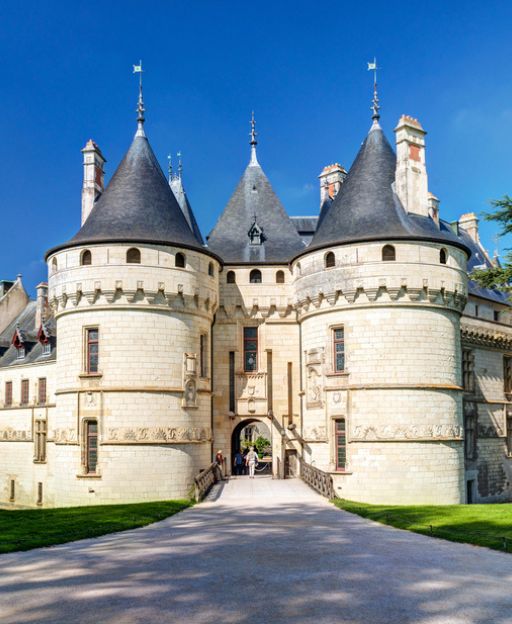
The Château Royal de Blois is excellent and undervisited compared to its neighbours. Its four wings each represent a different architectural era, giving you a compressed history of French royal building in a single courtyard. From Blois, drive east along the river to Chaumont-sur-Loire. The château sits on a promontory above the river and hosts an annual international garden festival from April to November — one of the most impressive horticultural events in France. Amboise is your destination for the night. The Clos Lucé manor house at the edge of town is where Leonardo da Vinci spent his final years and is worth at least two hours.
📬 Enjoying this? Get France travel inspiration every week —
Thinking about it seriously? If you’ve started actually planning a move, our complete our complete Moving to France guide walks through every step, every cost, and the paperwork that catches most people out.
Day 3 — Amboise to Tours and Chenonceau
Chenonceau is the most beautiful château in the Loire Valley by almost every measure. It spans the River Cher on five arches and has a gallery above the water that stretches from one bank to the other. Arrive early — before 9:30 if you can — and you’ll have the bridge gallery almost to yourself. The gardens on the approach are outstanding in spring and early summer. After Chenonceau, head into Tours for the afternoon. The old quarter around Place Plumereau is worth an hour of wandering, and there are several excellent wine bars in the lanes behind the cathedral where you can try Vouvray and Chinon side by side.
Day 4 — Tours to Saumur (via Villandry and Azay-le-Rideau)
Château de Villandry is famous for its gardens rather than its architecture. The kitchen garden, ornamental garden, and water garden together cover six hectares and are kept in immaculate condition year-round. Azay-le-Rideau, a short drive south-west, is a Renaissance jewel built on an island in the Indre — one of the most photographed châteaux in France. Saumur makes a good overnight stop: the town has a military history museum, a notable sparkling wine tradition, and a château of its own perched on the hill above the Loire.
Day 5 (optional) — Saumur to Angers
Angers marks the western end of the classic Loire road trip. The château here is different in character to the Renaissance palaces upstream — it’s a stern medieval fortress with massive striped towers. Inside, it houses the Apocalypse Tapestry, a 14th-century textile measuring 104 metres in length and considered the largest surviving medieval tapestry in the world. Angers also has a strong restaurant scene for a city of its size, making it a comfortable final night before flying home from Nantes (45 minutes away) or returning to Paris by TGV.
Loire Valley Wine: What to Drink Along the Route
The Loire Valley produces wines in every style from bone-dry whites to rich reds. The region splits broadly into several appellations, each matching the character of the landscape around it.
Vouvray and Montlouis-sur-Loire
Both appellations make Chenin Blanc wines that range from dry to sweet to sparkling. Vouvray is the better-known name and sits just east of Tours. Stop at any domaine along the D952 and you’re likely to find a tasting room open. Montlouis, on the opposite bank of the Loire, is smaller and quieter, with prices that reflect that fact.
Chinon and Bourgueil
For red wine lovers, Chinon and Bourgueil are the Loire’s answer to a light Cabernet Franc-dominant style. The wines pair naturally with the local rillettes and goat’s cheese. Chinon the town is worth visiting for its château as well as its wine — the medieval streets below the castle are some of the most atmospheric in the valley.
Sancerre and Pouilly-Fumé
If you extend your trip to include the eastern Loire, Sancerre and Pouilly-Fumé are the valley’s most famous exports. Both are made from Sauvignon Blanc and have a minerality that is closely tied to the limestone and flint soils of the upper Loire. A detour to Sancerre village, which sits on a hill overlooking the river, is worthwhile for the views as much as the wine. For more context on planning your wider France itinerary, the best time to visit France guide covers seasonal tips that apply equally well to the Loire.
Food Worth Stopping For
The Loire Valley has its own strong food culture that doesn’t get the attention it deserves. Rillettes de Tours — a coarse, fatty pork spread eaten on bread — is the regional starter of choice. Tarte Tatin, the upside-down apple tart, was invented in the Sologne region just south of the valley. Goat’s cheese in various forms (Valençay, Sainte-Maure de Touraine, Crottin de Chavignol) appears on almost every menu and pairs well with local white wine.
The weekly markets in Amboise and Loches are particularly good. Amboise market runs on Friday and Sunday mornings along the riverfront and brings in producers from the surrounding Touraine countryside. You’ll find cheesemakers, charcutiers, and seasonal produce at prices that put supermarkets to shame. For more inspiration on discovering France beyond the tourist trail, see our guide to the hidden villages of Provence — many of the same slow-travel principles apply to the Loire. If you’re considering the wider French wine landscape as part of your trip, our Burgundy travel guide pairs naturally with a Loire itinerary.
Frequently Asked Questions
What is the best time to visit the Loire Valley for a road trip?
Late April through June offers the best combination of mild weather, open châteaux, and manageable crowds. September and October are a close second and come with the added attraction of harvest season in the vineyards.
How many days do you need for a Loire Valley road trip in France?
Four to five days covers the essential châteaux between Orléans and Saumur without feeling rushed. Seven days gives you enough time to include Angers, explore the wine appellations properly, and take the pace at which the Loire Valley is best enjoyed.
Do you need a car to explore the Loire Valley?
A hire car is strongly recommended for a Loire Valley road trip. While trains connect the main towns, the châteaux themselves sit outside town centres and smaller villages are almost unreachable by public transport.
Which Loire Valley château should you visit first?
Chambord is the natural starting point for its sheer scale — nothing quite prepares you for the rooftop skyline. Follow it with Chenonceau for beauty and Azay-le-Rideau for an intimate experience without the crowds.
You Might Also Enjoy
- Best Time to Visit France: A Month-by-Month Guide for American Travellers
- The Hidden Villages of Provence (Most Tourists Drive Past Without Stopping)
- Burgundy France: A Complete Travel Guide for First-Time Visitors
Plan Your France Trip
Ready to start planning? Our complete France Trip Planning Hub covers everything from visas and transport to region-by-region guides.
Join 7,000+ France Lovers
Every week, get France’s hidden gems, local recipes, and travel inspiration — the kind you won’t find in any guidebook.
Subscribe free — enter your email:
Love more? Join 64,000 Ireland lovers → · Join 43,000 Scotland lovers → · Join 30,000 Italy lovers →
Free forever · One email per week · Unsubscribe anytime
Tours & experiences you might love


Powered by Viator. Some links are affiliate links — we may earn a small commission at no extra cost to you.

Leave a Reply