
Every Sunday in 19th-century Paris, something remarkable happened. Thousands of ordinary families packed baskets, put on their best clothes, and walked out of the city — not to church, not to the market, but to the river. They were heading to the guinguettes — open-air riverside cafés where the wine was cheap, the food was simple, and dancing was expected.
A Ritual Born on the Water
Before the railway, before the motorcar, the Marne and Seine riverbanks east of Paris were the city’s great escape. By the 1820s, a string of open-air taverns had spread along the water — places where Parisians could eat, drink, and dance without the noise or formality of the streets they lived on.
The name most likely comes from “guinguet” — a sharp, cheap wine served in earthenware jugs at these outdoor spots. Nobody came for the vintage. They came for the afternoon.
These were not luxury venues. There were wooden tables, tree shade overhead, and a view of the water. That was enough.
The Loophole That Became a Tradition
Paris had a wall. And the wall had a tax.
Wine brought into the city attracted a levy called the octroi, which pushed prices out of reach for ordinary workers. But just outside the official city limits — in villages like Joinville-le-Pont and Nogent-sur-Marne along the Marne River — no such tax applied.
Enterprising landlords began selling cheap wine in riverside gardens. Parisians began making the Sunday trip to drink it. What started as a loophole became a beloved weekly ritual that lasted generations.
What a Guinguette Sunday Looked Like
A guinguette afternoon had its own rhythm. Families arrived on foot or by boat, found a table in the shade, and ordered from whatever the kitchen offered — usually fried fish pulled from the river, moules marinières, or a slow-cooked rabbit stew.
The wine came in a carafe. An accordion started early. By mid-afternoon, people were dancing.
Not formal ballroom dancing — the kind of loose, unselfconscious movement that happens when ordinary people have no schedule and nowhere more important to be. Factory workers danced beside shopkeepers. Fishermen sat alongside office clerks. On the banks of the Marne, Sunday afternoon made everyone equal.
Enjoying this? 7,000 France lovers get stories like this every week. Subscribe free →
Renoir Kept Painting Them
Pierre-Auguste Renoir loved the guinguettes, and it shows in his work.
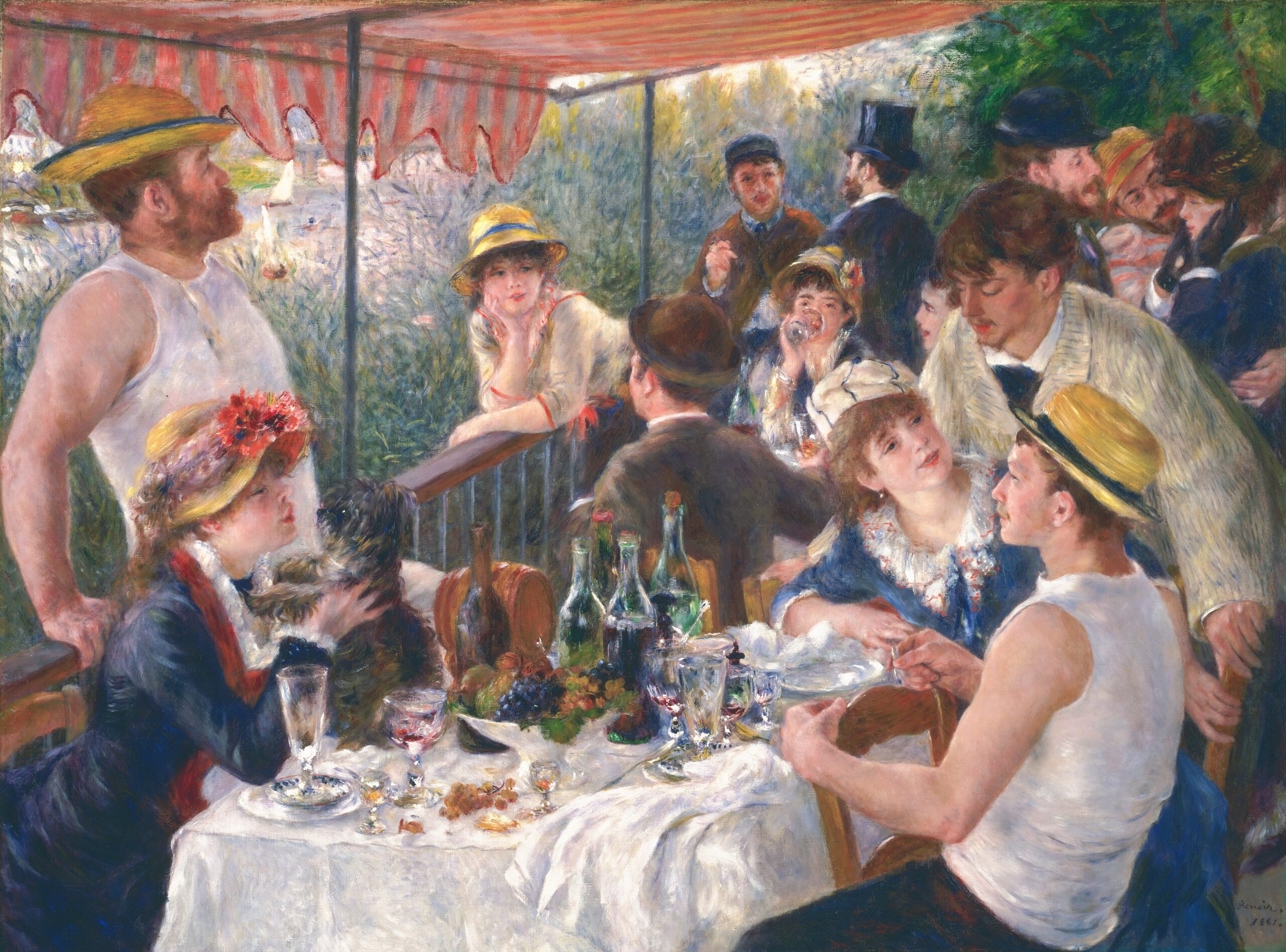
His 1881 masterpiece “Luncheon of the Boating Party” captures a riverside lunch at the Restaurant Fournaise in Chatou — friends at a terrace table, wine glasses half-empty, sunlight on the water behind them. “Dance at Le Moulin de la Galette” (1876) shows an open-air dance in Montmartre, the same spirit transferred to the city hillside.
Renoir was not documenting special occasions. He was painting an ordinary Sunday in the life of ordinary people. That was exactly the point.
The Long Disappearance
By the 1930s, the guinguettes were fading. Trains now reached the whole of France, and city families had further horizons to chase. After the Second World War, leisure habits changed entirely — television arrived, motor holidays replaced the Sunday walk to the river, and the old dancing places fell quiet.
Most of the Marne valley guinguettes closed or survived only as tired relics of a different era. A handful kept going, attended mostly by older regulars who remembered what Sundays once felt like.
The Return to the River
Then, quietly, the guinguettes came back.
Since the 1990s, open-air riverside cafés have been reviving across France — not as nostalgic museum pieces, but as genuine alternatives to indoor bars and crowded clubs. Along the Marne east of Paris, the towns of Joinville-le-Pont and Nogent-sur-Marne still host summer guinguettes with accordionists, wine by the litre, and dancing that starts in the afternoon and goes on after dark.
New guinguettes have opened in Lyon, Bordeaux, and Toulouse, along the Saône, the Garonne, and the Loire. They look different from Renoir’s paintings — fairy lights now, food trucks, and occasionally a DJ. But the impulse is the same as it has always been.
Get to the water. Eat something simple. Dance.
The best France trips always leave room for moments like this. A Sunday afternoon along the Marne — carafe on the table, accordion in the distance — goes a long way towards explaining why the French protect their Sundays so fiercely. Some things are too good to let go.
Join 7,000+ France Lovers
Three times a week, get France’s hidden gems, seasonal guides, local stories, and the art of la vie française — straight to your inbox.
Subscribe free — enter your email:
Free forever · Unsubscribe anytime
🇫🇷 You Might Also Love
Tours & experiences you might love


Powered by Viator. Some links are affiliate links — we may earn a small commission at no extra cost to you.

Leave a Reply