
Nice feels unmistakably French. The café terraces, the markets piled high with olives and lavender honey, the confident way people order their espresso and move on with their morning. But step back 165 years and this sun-drenched city on the Mediterranean was not France at all. It was Italian territory — and many of its people were not entirely sure they wanted to change.
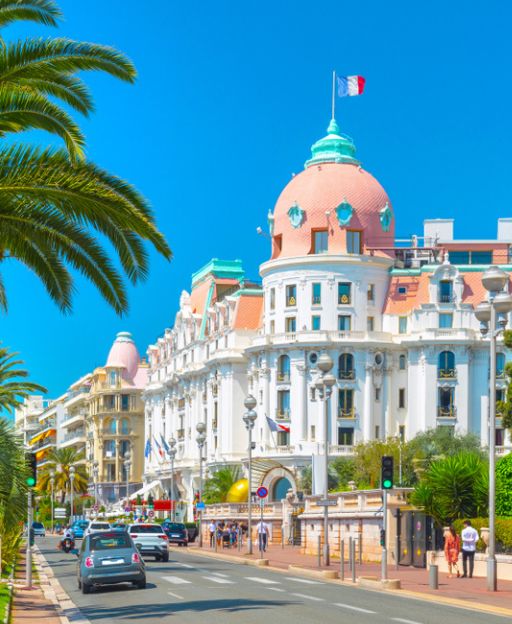
Before the French Arrived
For centuries, Nice was the capital of the County of Nice, ruled by the House of Savoy — the same dynasty that governed Sardinia and much of northern Italy. The language spoken on its streets was Niçard, a Ligurian dialect closer to Italian than French.
The food, the architecture, the street names — all of it reflected a culture that looked east, toward Genoa and Turin, not north toward Paris. The merchants who sailed into the harbour came from Liguria. The churches were built in the Italian baroque style, all gilt and drama.
When the Romans called this place Nikaia and medieval traders set up their stalls along the waterfront, nobody imagined it would one day be French. For most of its long history, it simply was not.
The Deal That Changed the Map
In April 1860, Napoleon III struck a deal with the Kingdom of Sardinia. France would support Italian unification in exchange for Nice and the region of Savoy. A referendum followed.
The official result was overwhelming: 25,743 voted to join France, just 160 against. Critics called it engineered. Ballots were prepared in advance, opponents had little means to organise, and the atmosphere in polling stations was far from neutral. Contemporary accounts describe voters being watched as they cast their ballots.
One man was particularly furious: Giuseppe Garibaldi, the legendary hero of Italian unification — who had been born on the Rue de la Préfecture in Nice, just 53 years earlier.
Garibaldi’s City
Garibaldi spent his life fighting to unite Italy. He returned from exile in South America, led armies across two continents, and became the most celebrated soldier of his age. Then he watched his birthplace handed to France as part of a political bargain — and he never forgave it.
He called the vote illegitimate. He wrote about it with barely contained fury. He refused to return to Nice.
Today, Nice has a grand square named after him: Place Garibaldi. The gesture is part acknowledgement, part apology. Italy’s greatest 19th-century hero was born in a city that became French, and his name now hangs over it in stone letters.
Enjoying this? 7,000 France lovers get stories like this every week. Subscribe free →
What the Handover Could Not Change
Culture is stubborn. The Niçard language continued to be spoken long after 1860 — and still has speakers today, nearly 166 years on. The cuisine proved even more resilient than the language.
Socca — the thin chickpea pancake cooked on a cast-iron plate over a wood fire — is pure Ligurian tradition, unchanged by any referendum. Pissaladière, the caramelised onion and anchovy tart sold in every bakery in the Old Town, has no French equivalent. The real salade niçoise, as any local will firmly tell you, contains no cooked vegetables, no lettuce, and no shortcuts.
The olive oil is pressed from Taggiasca olives, a Ligurian variety grown in the hills above the city. The Old Town’s streets follow an Italian grid, its buildings painted in terracotta, ochre, and warm yellow — the colours of the Italian Mediterranean coast, not the greyer palette of northern France.
Walking Into Something Older
On a Tuesday or Saturday morning, walk the narrow lanes of Vieux-Nice when the Cours Saleya market is in full life. Farmers sell produce from the hills. Vendors hand over paper cones of socca, hot from the griddle. The smells are olive oil, citrus, and strong coffee, mixed with the cool air coming off the sea.
Stand there long enough and you start to understand why Nice has always felt slightly apart from the rest of France. Not un-French — deeply French now, in its language, its institutions, its daily rhythms. But also something older and more layered.
If you are planning a trip to France, Nice rewards the curious visitor with more history per square metre than most cities twice its size. Our French Riviera travel guide covers how to spend your time in the region, including a morning in Vieux-Nice done the local way. For another part of France where identity runs older than the national map, the story of the French Basque Country is equally compelling.
At the socca stand on a Tuesday morning, when the vendor ladles the batter onto the hot iron and the steam rises into the blue Riviera air, something older than 1860 is still very much alive. Nice has always known where it came from.
Join 7,000+ France Lovers
Three times a week, get France’s hidden gems, seasonal guides, local stories, and the art of la vie française — straight to your inbox.
Subscribe free — enter your email:
Free forever · Unsubscribe anytime
🇫🇷 You Might Also Love
Tours & experiences you might love


Powered by Viator. Some links are affiliate links — we may earn a small commission at no extra cost to you.

Leave a Reply