
You know Cajun food. You know Cajun music. But do you know the French story behind it all?
The Cajuns of Louisiana trace their roots directly to France. Their ancestors came from the farms and fishing villages of Poitou, Brittany, Normandy, and Anjou. They crossed the Atlantic in the early 1600s. They built a new life in a colony called Acadia.
Then Britain forced them out.
What followed is one of the great survival stories of the French diaspora. A people expelled from their homes refused to vanish. They found new land in the Louisiana bayous. They kept their language and preserved their music. They built a culture so vibrant it now shapes an entire American state.
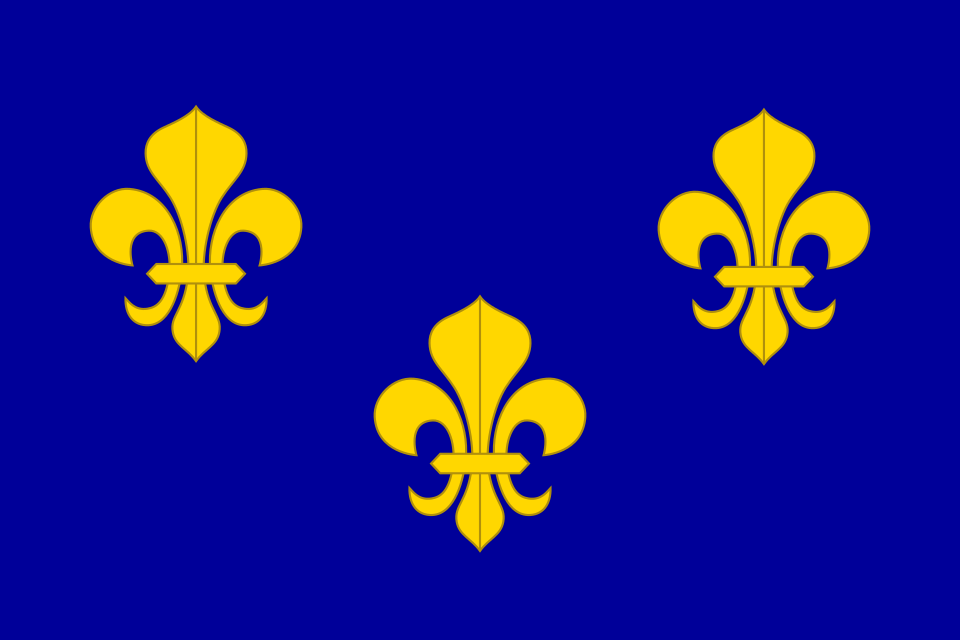
From France to Acadia: The Journey That Started Everything
The Cajun story begins in France, in the early years of the 1600s. King Henry IV wanted a French colony in the New World. He sent settlers to a territory called Acadia — now Nova Scotia, New Brunswick, and Prince Edward Island.
The first colonists arrived at Port-Royal in 1604. Most came from the Poitou region. Others arrived from Saintonge, Anjou, Brittany, and Normandy.
They were farmers, fishermen, and craftsmen. They built dykes to reclaim land from the sea. They grew wheat, raised cattle, and fished the rich Atlantic waters.
Over 150 years, they became something new. They were no longer quite French. But they were fiercely proud of their French roots. They called themselves Acadians — les Acadiens.
We explore that larger story in our guide to New France and the French empire in North America. The Acadians were one small but extraordinary part of that vast colonial adventure.
🇫🇷 Free Guide: How to Trace Your French Ancestry
Step-by-step: Archives Départementales, état civil records, parish registers, Acadian roots, DNA testing, and planning a heritage trip to France. Completely free.
Get the Free Guide → Subscribe free at the guide page to receive weekly France storiesThe France the Cajuns Left Behind
The Acadian settlers came from a specific part of France. Poitou was the dominant region. Families from the area around Poitiers and La Rochelle formed the backbone of early Acadian society.
These communities were deeply Catholic and tightly knit. They spoke an archaic form of French. It was much closer to 17th-century speech than to modern Parisian French.
Britain seized Acadia in 1713. For decades, the Acadians lived under British rule. They refused to swear an unconditional oath of loyalty to the British crown. They wanted only to remain neutral.
That neutrality would cost them everything.
Do your roots lie in these very villages? Look for names like Broussard, Hébert, Thibodaux, Boudreaux, Landry, or Arceneaux. Our guide to tracing your French ancestry shows you exactly how to find the records.
Le Grand Dérangement: The Great Expulsion of 1755
In the summer of 1755, British Governor Charles Lawrence made a brutal decision. He ordered the complete expulsion of all Acadians from Nova Scotia.
British soldiers rounded up entire communities. They burned farmhouses and crops. They forced families onto ships without allowing them to pack their belongings.
Between 1755 and 1763, approximately 10,000 Acadians were deported. Families were torn apart. Ships were overcrowded and disease spread quickly. Many people died at sea.
The Acadians called this event Le Grand Dérangement — The Great Upheaval.
Some were sent to France, but felt like strangers there. Their homeland had changed in 150 years. Others scattered to the Caribbean and the American colonies. Some found their way to the few remaining French territories in North America.
A significant group eventually found their way to Louisiana. And that is where the Cajun story truly begins.
We explore the full story of the Acadian expulsion in our dedicated article: The Acadians: Expelled from Nova Scotia, Forever French.
A New Home in the Louisiana Bayous
Louisiana had been a French colony since 1699. France had ceded Louisiana to Spain before the first Acadians arrived in the 1760s. But the culture was still deeply French-speaking.
The Spanish governor welcomed the Acadians warmly. They settled in the region west and south of New Orleans. The land was flat, marshy, and cut through by slow-moving bayous.
The climate was nothing like Nova Scotia. Summers were hot and humid. Alligators lurked in the waterways. The landscape was foreign and difficult.
The Acadians adapted. They learned to trap and fish in new ways. They built raised houses suited to the flood-prone land. They grew sugar cane and raised cattle on the prairies.
And slowly, the word Acadien changed on English-speaking lips. It became Cadien, then Cajun.
🇫🇷 Enjoying this? 7,000 France lovers get stories like this every week. Subscribe free →
Cajun French: A Language Frozen in Time
The Cajuns kept their French. But it evolved in isolation over 200 years. It absorbed words from Spanish, English, Native American languages, and the African languages of enslaved people brought to Louisiana.
The result is Cajun French — a living language quite different from modern French. Native French speakers can often understand it. But it takes effort.
Words like savane (prairie) and bayou (from the Choctaw word for slow-moving water) entered daily Cajun speech. So did lagniappe — a little extra — borrowed from Spanish.
In the early 20th century, Louisiana schools banned French entirely. Many Cajun parents stopped teaching the language. They wanted their children to succeed in English-speaking America.
By the 1960s, Cajun French seemed close to extinction. Then came the revival.
The Food That Made Louisiana Famous
Ask anyone about Cajun culture and they will mention the food first. Cajun cuisine is the direct child of French country cooking — transformed by Louisiana’s unique ingredients.
A roux forms the base of most Cajun dishes. You make it by cooking fat and flour together until dark and rich. From there, Louisiana takes over.
Crawfish étouffée. Boudin sausage. Dirty rice. Gumbo. These dishes use French cooking methods with local ingredients. The base is crawfish, andouille sausage, filé powder from sassafras, and the Cajun Holy Trinity: onion, celery, and bell pepper.
Cajun food was peasant food. It was filling, flavourful, and built for people who worked hard with their hands. That French peasant tradition is alive and well in Louisiana today.
Louisiana’s sister culture, the Creoles, developed a different but related cuisine in New Orleans. We explore that story in our guide to the Creoles of Louisiana and their French heritage.
Cajun Music: The Sound of French Survival
Cajun music began as French folk music from Poitou and Brittany. Early settlers played fiddles and sang in French around their fires at night.
Then something unexpected happened. German immigrants settled near the Cajun communities in the 18th century. They brought the diatonic accordion — a compact instrument built for dance music.
The Cajuns adopted it completely.
The accordion became the heart of Cajun music. Combined with the fiddle and French-language vocals, Cajun music developed a driving, joyful sound unique in the world. The frottoir — a washboard worn on the body — added the rhythm.
Songs like Jolie Blonde — the unofficial Cajun anthem — trace directly back to French folk traditions. You can hear the same melodic shapes in the folk music of Poitou and Brittany today.
Closely related is zydeco — music developed by Louisiana’s Black Creole community. It blends Cajun sounds with blues and rhythm and blues. The two traditions have shaped each other deeply over generations.
Mardi Gras the Cajun Way
Most people picture New Orleans when they think of Mardi Gras. But the Cajun Mardi Gras — the Courir de Mardi Gras — is something entirely different.
In rural Cajun communities, Mardi Gras involves masked riders on horseback. They travel from farm to farm, singing and dancing. They beg for ingredients — especially live chickens — to make a communal gumbo at day’s end.
This tradition traces directly to medieval French practices. Similar customs existed in rural France during the pre-Lent season. It is one of the clearest links between modern Cajun culture and its French roots.
The Cajun Cultural Revival
By the 1960s, many feared Cajun culture was dying. The language was fading fast. Young people moved to cities. American mass culture replaced local traditions.
Then came the fight back.
In 1968, the Louisiana state government created CODOFIL — the Council for the Development of French in Louisiana. The group worked to restore French-language education. They wanted to preserve Cajun heritage for future generations.
The Festival International de Louisiane, held in Lafayette each April, celebrates the region’s French heritage every year. It draws hundreds of thousands of visitors and features French, Cajun, and world music on outdoor stages.
Today, around 150,000 people in Louisiana still speak Cajun French. The number is smaller than a generation ago. But younger Cajuns are learning it deliberately — as an act of cultural pride and family memory.
French culture has always survived far from France’s borders. We tell a similar story of French cultural resilience in our article on the Filles du Roi — the 800 French women who built Canada.
Tracing Your Cajun and Acadian Roots
If you have Cajun or Acadian heritage, the records are among the best-preserved of any diaspora group in North America. Many Cajun families descend from a small number of original settlers. This makes DNA testing a powerful tool for Cajun researchers.
Here are the key resources to start with:
- FamilySearch.org — holds a large collection of Acadian church records from Nova Scotia and Louisiana. Many are free to access online.
- The Drouin Collection — contains Quebec and Acadian birth, marriage, and death records from the 1600s onwards.
- The Centre d’études acadiennes at the University of Moncton — holds extensive Acadian genealogical records and the BALSAC population database.
- Louisiana State Archives — holds early Louisiana settlement records, including land grants and church records from the 1760s–1800s.
- Acadian-Cajun Genealogy & History (acadian-cajun.com) — a community resource for Acadian family researchers.
Core Cajun surnames to look for: Broussard, Thibodaux, Boudreaux, Hébert, Arceneaux, Landry, Melancon, Guidry, Fontenot, Lejeune, Bourgeois, Comeaux. Nearly all of these names trace back to the original Acadian settlers of the 1600s and 1700s.
Our complete guide to tracing French ancestry covers all the tools and archives you need — including the Archives Départementales in France, where you may find records of the very villages your Acadian ancestors left behind.
The France Your Cajun Ancestors Left Behind
Here is something remarkable. You can still visit the regions of France where the first Acadian settlers were born.
The Poitou region (now part of Nouvelle-Aquitaine) centres on the city of Poitiers. It has quiet farmland, Romanesque churches, and medieval villages that have changed little in centuries.
Brittany, on France’s Atlantic coast, still has a strong culture of its own. Its Celtic heritage, its seafaring traditions, and its proud regional identity all echo in the Cajun character.
Stand in a village square in Poitou or on the cliffs of Brittany. Think of the families who left this landscape in the 1600s, crossed the Atlantic, survived expulsion, and built something extraordinary in the Louisiana bayous. That is the Cajun story.
And if you want to explore how other French communities shaped the New World, read our article on New France: how French explorers built an empire across North America.
Frequently Asked Questions
Where did the original Acadian settlers come from in France?
Most came from the Poitou region, near Poitiers and La Rochelle. Others came from Saintonge, Anjou, Brittany, and Normandy. The majority arrived in Acadia between 1604 and 1720.
How did “Acadian” become “Cajun”?
English speakers shortened “Acadians” to “Cadians” and then to “Cajuns.” The shift happened gradually over generations as the French settlers in Louisiana mixed with English-speaking neighbours. The word “Cajun” first appeared in written records in the early 19th century.
Can you still hear Cajun French spoken today?
Yes. Around 150,000 people in Louisiana still speak Cajun French. The language is strongest in rural southwestern Louisiana, in the Acadiana region. It sounds distinct from modern French — more musical, with archaic words and phrases from 17th-century French.
What is the difference between Cajun and Creole culture?
Cajun culture developed among the rural Acadian settlers in southwestern Louisiana — it is rooted in French-Canadian peasant traditions. Creole culture developed in urban New Orleans among a more mixed population of French, Spanish, African, and Native American heritage. Both are deeply rooted in French Louisiana history. We explore Creole culture in our article on the Creoles of Louisiana.
When is the best time to visit Acadiana in Louisiana?
Spring is the best season to visit Acadiana. The weather is warm but not yet brutally hot. The Festival International de Louisiane takes place in Lafayette in late April. Mardi Gras season in February brings the traditional Courir de Mardi Gras to rural Cajun communities — a unique and moving experience rooted directly in medieval French tradition.
You Might Also Enjoy
- The Acadians: Expelled from Nova Scotia, Forever French — the full story of Le Grand Dérangement
- The Creoles of Louisiana: The French Heritage That Survived — the sister culture to the Cajuns in New Orleans
- New France: How French Explorers Built an Empire Across North America — the broader story of France in the New World
Plan Your France Trip
Curious about visiting Poitou, Brittany, or other regions that shaped the Cajun story? Our France travel planning guide is the best place to start — with practical advice on regions, seasons, itineraries, and getting off the tourist trail.
Join 7,000+ France Lovers
Every week, get France’s hidden gems, seasonal guides, local stories, and the art of la vie française — straight to your inbox.
Subscribe free — enter your email:
Love more? Join 64,000 Ireland lovers → · Join 43,000 Scotland lovers → · Join 30,000 Italy lovers →
Free forever · One email per week · Unsubscribe anytime
Tours & experiences you might love


Powered by Viator. Some links are affiliate links — we may earn a small commission at no extra cost to you.

Leave a Reply