
Paris was furious. A petition arrived at City Hall signed by 300 of France’s greatest artists, writers, and musicians. They called the half-built tower on the Champ de Mars “an odious column of bolted metal”.
Guy de Maupassant signed it. Alexandre Dumas fils signed it. Composer Charles Gounod signed it. Some of France’s most celebrated creative minds united against a single iron structure.
Today, the Eiffel Tower is the most visited paid monument in the world. Seven million people see it every year. It appears on more photographs than any other structure on Earth.
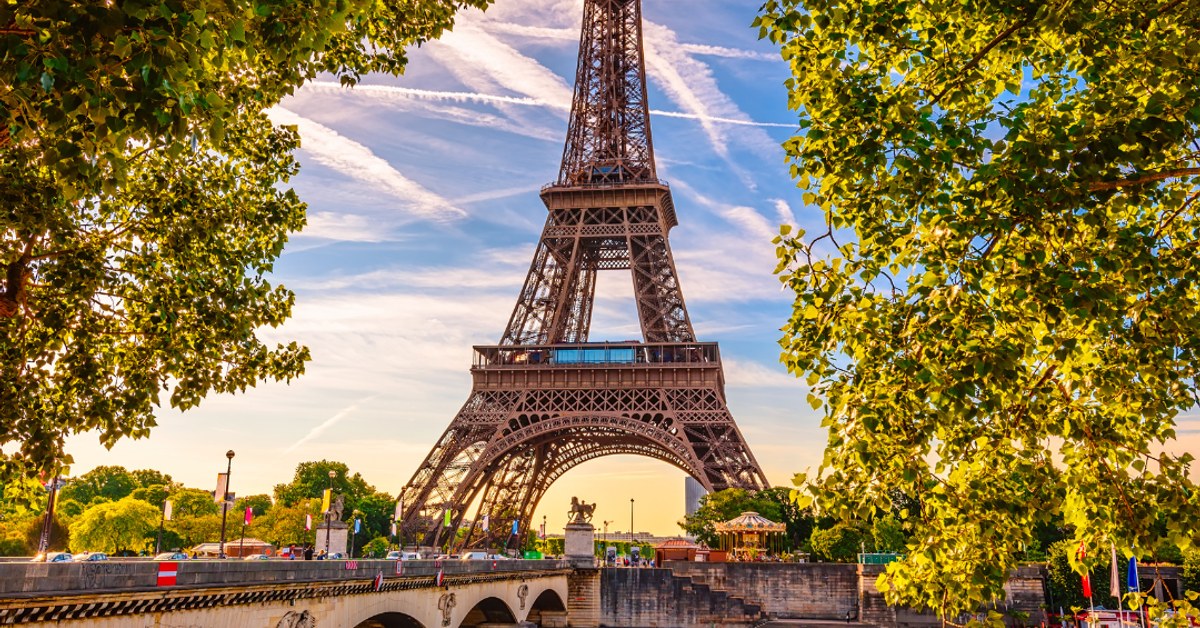
The World’s Fair That Needed a Monument
In 1885, the French government launched a design competition. France planned a great World’s Fair for 1889 — the Exposition Universelle. The fair would mark 100 years since the French Revolution. It would show the world what modern France could achieve.
The brief was simple but bold. Build a 300-metre iron tower on the Champ de Mars. It had to stand safely and come down easily when the fair ended. No permanent structure was planned.
Over 100 engineers and architects submitted designs. Many were bizarre. One proposal featured a giant water sprinkler. Another imagined a guillotine tower to mark the Revolution. A third proposed a structure covered in enormous advertisements.
Gustave Eiffel won the contract in 1886. He was already famous. His firm had built the iron skeleton inside the Statue of Liberty. His Paris tower would push iron engineering to a new level.
“An Odious Column of Bolted Metal”
The backlash began immediately. The “Protest of Three Hundred” called the planned tower “a blot on the Paris skyline”. Critics invented many unflattering nicknames. “The Metal Asparagus.” “The Giant Umbrella Stand.” “The Hollow Candlestick.”
One Parisian newspaper predicted it would look like “a giant black factory chimney”. The artist William Bouguereau called it an insult to French taste. Architects complained that iron had no place among the stone monuments of Paris.
Guy de Maupassant ate lunch in the tower’s restaurant every day during the 1889 fair. From there, he said, he did not have to look at the tower. It was the one place in Paris that kept it out of view.
🇫🇷 Enjoying this? 7,000 France lovers get stories like this every week. Subscribe free →
300 Workers and 2.5 Million Rivets
Construction started on 28 January 1887. Gustave Eiffel employed 300 workers on site at any one time. The project required 18,038 pieces of puddled iron and 2.5 million rivets.
Eiffel’s factory in Levallois-Perret made every piece in advance. Workers delivered them ready to fit. Each piece matched the others with precision — never more than one millimetre off specification.
Safety mattered deeply to Eiffel. He installed wooden walkways and guard rails for his workers. He designed the scaffolding carefully to reduce falls. Only one worker died during the entire build — remarkable for a project of that scale.
Gustave Eiffel personally climbed to the top on 31 March 1889. He planted a French tricolour at 300 metres. Construction had taken exactly two years, two months, and five days.
The tower stood 300 metres tall. For 41 years, it was the tallest man-made structure on Earth. The Chrysler Building in New York finally surpassed it in 1930.
The Tower That Refused to Be Demolished
The original plan was clear. The tower would come down in 1909 — twenty years after the fair. The land would return to Paris. The iron eyesore would disappear.
But the tower proved unexpectedly useful. Its height made it perfect for wireless radio. In 1898, physicist Eugène Ducretet sent a signal between the tower and the Panthéon. It was the first wireless message ever transmitted in Paris.
In 1910, the tower broadcast the first radio time signal in history. Ships and clocks around the world used it to set the correct time. Suddenly the tower was indispensable.
France quietly cancelled the demolition order in 1909. Paris made the tower permanent. France’s most hated structure had found its purpose.
The Tower That Helped Win Two World Wars
French military engineers used the tower as a radio station during the First World War. In September 1914, it jammed German communications during the Battle of the Marne. This helped stop the German advance on Paris.
That same year, signals intercepted at the tower helped expose the spy Mata Hari. The Dutch dancer had been passing French military secrets to Germany. Evidence from the tower’s radio station helped convict her. She was executed in October 1917.
During the Second World War, the tower survived Nazi occupation. Adolf Hitler visited Paris in June 1940 after German forces took the city. He ordered the tower demolished. French engineers secretly cut the elevator cables so Hitler never climbed it.
As Paris’s liberation approached in August 1944, Hitler ordered the city destroyed. German general Dietrich von Choltitz refused. He surrendered Paris intact. The Eiffel Tower stood untouched.
Parisians restored the elevator cables before the Allied troops even entered the city. When de Gaulle marched through Paris on 25 August 1944, the tower was already gleaming.
Why Seven Million People Visit Every Year
Workers repaint the tower every seven years. The job takes 60 tonnes of paint. The colour is called “Eiffel Tower Brown” — an ochre tone created specifically for the structure. It comes in three shades, darkest at the base and lightest at the top. This makes the tower look even in colour from the ground.
The iron responds to heat and cold. On very hot days, the tower grows up to 17 centimetres taller. In strong winds, the top can sway up to nine centimetres. Engineers designed the structure to absorb all of these movements safely.
Every evening after dark, 20,000 bulbs illuminate the tower. Each hour on the hour, it sparkles for five minutes. Eighteen technicians work full-time on the lighting alone.
The tower generates around 100 million euros in annual revenue. It funds its own upkeep entirely. It is the most financially successful monument in France.
Visiting the Eiffel Tower in 2026
The tower has three levels open to visitors. Lifts or stairs reach the first and second floors. A separate lift reaches the summit at 276 metres.
Book tickets online well in advance. The queue at the ticket desk can run three to four hours in peak season. Summit tickets sell out first — book at least a week ahead.
Visit early in the morning for the smallest crowds. The views from the second floor satisfy most visitors. The summit adds height but not always better visibility on busy days.
For the best photograph of the tower, go to the Trocadéro gardens. They face the tower directly across the Seine. This is the most photographed viewpoint in France.
If your family has French roots, our guide to tracing French ancestry can help you connect this history with your own family story. Our France travel planning hub covers where to stay in Paris, the best regions to explore, and how to get around.
Frequently Asked Questions
When was the Eiffel Tower built?
Construction started in January 1887 and finished on 31 March 1889. Workers completed the tower in two years, two months, and five days — ready for the 1889 Paris World’s Fair.
How tall is the Eiffel Tower?
The tower stands 300 metres tall. Including the broadcast antenna, the total height is 330 metres. It was the world’s tallest man-made structure from 1889 until 1930, when New York’s Chrysler Building surpassed it.
Why did France build the Eiffel Tower?
France built the tower as the centrepiece of the 1889 Exposition Universelle. This World’s Fair celebrated 100 years since the French Revolution. The tower showed the world what French engineering could achieve.
Who designed the Eiffel Tower?
Gustave Eiffel, a structural engineer from Dijon, designed the tower. His firm was already famous for building the iron framework inside the Statue of Liberty. The tower bears his name.
Was the Eiffel Tower always meant to be permanent?
No. The original plan called for demolition in 1909, twenty years after the fair. France kept it because it became a vital radio transmission station. The tower went permanent in 1909 when the demolition order was cancelled.
You Might Also Enjoy
- The Belle Époque: When Paris Was the Capital of the World
- The French Revolution: How France Changed the World Forever
- The French Renaissance: How Italy Transformed France
Plan Your France Trip
Ready to visit France? Our France travel planning guide covers where to stay in Paris, the best regions to explore, and how to get around. Start planning your trip today.
Join 7,000+ France Lovers
Every week, get France’s hidden gems, seasonal guides, local stories, and the art of la vie française — straight to your inbox.
Subscribe free — enter your email:
Love more? Join 64,000 Ireland lovers → · Join 43,000 Scotland lovers → · Join 30,000 Italy lovers →
Free forever · One email per week · Unsubscribe anytime
Tours & experiences you might love


Powered by Viator. Some links are affiliate links — we may earn a small commission at no extra cost to you.

Leave a Reply