
Dordogne France Travel Guide: Castles, Caves and the Real French Countryside
The Dordogne region in southwest France is one of those places that feels almost too beautiful to be real. Golden limestone cliffs drop to a winding river, medieval châteaux crown every hilltop, and villages that look unchanged for centuries line the valley below. If you are planning a trip to France and want to experience a slower, more authentic side of the country, the Dordogne travel guide starts here — this is rural France at its very best, and it is well within reach for first-time and returning visitors alike.
Love France? Join 7,000+ readers on our free newsletter → lovetovisitfrance.substack.com
What Makes the Dordogne So Special?
The Dordogne is named after the river that cuts through its heart. The wider administrative area is called the Dordogne department, but travellers often use the word loosely to describe the Périgord — a historic region divided into four colour-coded areas: Périgord Noir (Black), Blanc (White), Vert (Green), and Pourpre (Purple). Each has its own character, and together they make up one of France’s most rewarding destinations.
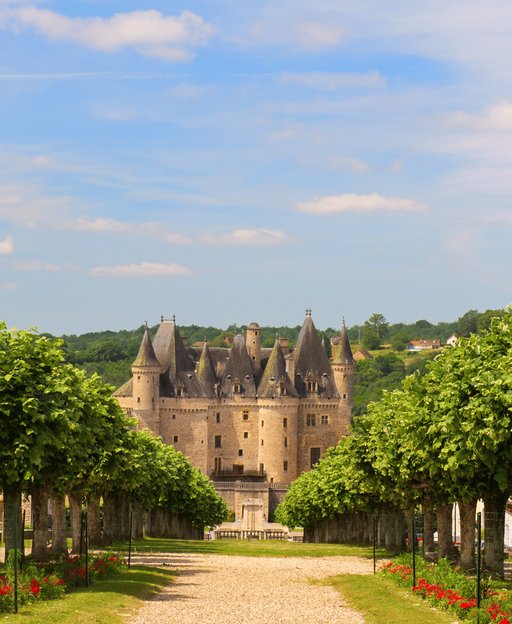
What draws people here is the sheer concentration of things worth seeing. You will find more prehistoric cave art here than anywhere else in France, including the famous Lascaux caves. There are around 1,000 châteaux scattered across the landscape — an astonishing number for a single French department. The food is outstanding: the Dordogne is the spiritual home of foie gras, duck confit, walnut oil, and black truffles. And the villages — Beynac, La Roque-Gageac, Domme, Rocamadour — appear on every list of France’s most beautiful.
The region is popular but not overrun. Unlike the Côte d’Azur or central Paris, you can still find quiet corners, empty river banks, and markets that exist for locals rather than tourists.
Planning a trip to France?
Join 7,000+ France lovers for weekly travel inspiration, hidden gems, and local tips — free.
Thinking about it seriously? If you’ve started actually planning a move, our complete our complete Moving to France guide walks through every step, every cost, and the paperwork that catches most people out.
Where to Stay in the Dordogne
Sarlat-la-Canéda is the obvious base and for good reason. This medieval market town has one of the best-preserved old quarters in France, with golden stone buildings, covered archways, and a lively Saturday market that fills the entire town centre. Staying in Sarlat puts you within easy reach of the main river villages and most of the key sites. It is particularly good for those without a car who want to use taxis or bike hire to explore.
If you prefer something quieter, the villages along the Dordogne River are worth considering. Beynac-et-Cazenac is a dramatic option — a small village built into a cliff face, topped by a 12th-century château that appears to grow from the rock itself. La Roque-Gageac, further along the river, is a gentler choice: a long strip of old buildings backed by a towering cliff, with flat-bottomed boats called gabares moored at the water’s edge.
Types of Accommodation
The Dordogne offers everything from basic campsites on the river to luxury châteaux hotels. Gîtes — self-catering cottages — are the most popular option for families and groups. They are usually converted farmhouses or stone barns, set in their own grounds, and far more spacious than a hotel room for the same price. Book well ahead for July and August: this region fills up quickly in summer.
Bed and breakfast stays (chambres d’hôtes) give you a more personal experience. Owners often offer evening meals using local produce — a chance to eat duck confit prepared the way it has been made in this region for generations.
The Best Things to Do in the Dordogne
The Dordogne rewards slow travel. A good approach is to pick one or two things each day rather than trying to see everything at once. The region is compact enough that you can cover a lot in four or five days, but most visitors wish they had stayed longer.
Visit the Prehistoric Caves
The cave art of the Vézère Valley is extraordinary. The original Lascaux cave, discovered in 1940, contains 17,000-year-old paintings of bulls, horses, and deer so detailed and vivid that they stopped experts in their tracks. The cave is closed to protect the art, but Lascaux IV — a full-scale recreation built into the hillside near Montignac — is genuinely impressive. Take a guided tour and allow at least two hours.
The Font-de-Gaume cave near Les Eyzies still contains original polychrome paintings, one of the last remaining sites in France open to visitors. Numbers are strictly limited, so book tickets weeks in advance if you are visiting between April and October.
Explore the Châteaux
The three most visited châteaux form a natural circuit along the river. Château de Beynac stands on a rock above the village, with sweeping views over the valley and the original medieval great hall largely intact. Château de Castelnaud, directly across the river, houses an excellent medieval warfare museum. Château des Milandes is a Renaissance manor that served as the home of Josephine Baker, the American-born entertainer who became a French Resistance hero — her story alone makes it worth a visit.
If you prefer something off the main tourist trail, the hidden villages of Provence show how France rewards travellers who leave the well-worn path — a similar spirit of discovery applies in the Dordogne’s quieter northern reaches.
The Beautiful Villages
Domme is a bastide town — a planned medieval settlement built on a defensive hilltop — with a famous view over the Dordogne River from its clifftop terrace. It is busy in summer but worth the crowds for that view alone. Rocamadour, though technically in the Lot department just to the south, is close enough to include on any Dordogne itinerary. This pilgrimage town clings to a sheer rockface above a gorge, its chapels and houses stacked in layers up the cliff. It is genuinely unlike anything else in France.
La Roque-Gageac regularly appears on lists of France’s most beautiful villages, and a gabare boat trip on the river at dusk — looking back at the village lit by the setting sun — is one of the most memorable experiences the region offers.
Eating and Drinking in the Dordogne
Food is central to any trip to the Dordogne. The region is the heartland of cuisine du terroir — cooking rooted in local ingredients and tradition. Duck is everywhere: confit de canard (preserved duck legs cooked in their own fat), magret de canard (duck breast), and duck rillettes spread on bread as a starter. Foie gras appears on almost every restaurant menu, as a starter, in salads, or sliced and seared briefly over high heat.
Black truffles from the area around Périgueux and Sarlat are used throughout the region, most famously in scrambled eggs cooked with thin slices of truffle — a dish that sounds simple and costs accordingly. Walnut oil dresses salads and gives the local bread a distinctive flavour. Walnut liqueur, served as a digestif, is worth trying if you see it on a menu.
Markets and Where to Buy Local Produce
Sarlat’s Saturday market is the largest and most atmospheric in the region, taking over most of the old town from early morning. You will find foie gras producers, cheese stalls, honey sellers, walnut products, and seasonal vegetables. The market in Le Bugue on Tuesday mornings is smaller and less touristy — a better option if you want a more local atmosphere.
Périgueux, the departmental capital, has daily covered markets and a good range of restaurants catering to French visitors rather than international tourists. It is underrated as a base and worth at least a half-day visit to see its Roman ruins and medieval cathedral.
For a sense of how deeply food is woven into French daily life, the French boulangerie morning ritual captures that spirit perfectly — a good read before you arrive.
Getting to and Around the Dordogne
The Dordogne is straightforward to reach from several major airports. Bergerac Airport (EGC) is the closest option, with regular flights from the UK and some European cities. Bordeaux-Mérignac (BOD) is around 90 minutes from Sarlat by car and has the widest choice of international connections, including direct flights from North America with onward connections via Paris. Limoges Airport (LIG) is another option, particularly for the northern part of the department.
A car is strongly recommended. The Dordogne has a good network of small roads linking its villages and châteaux, but public transport between them is very limited. You can hire a car at any of the three airports, and driving is genuinely enjoyable here — the roads are quiet, the scenery is beautiful, and parking is rarely a problem outside Sarlat’s old town in July and August.
Getting Around Without a Car
It is possible to base yourself in Sarlat and explore on foot, by bike, or by taking guided tours that pick up from the town centre. Several companies run day trips to the key caves and châteaux from Sarlat. Canoe hire on the Dordogne River is another good option — paddling downstream from Carlux to La Roque-Gageac takes around four hours and passes several châteaux along the way.
The Dordogne connects naturally with other parts of southwest France. A Loire Valley road trip is a natural complement if you are spending two or more weeks in France, and the Bordeaux wine region is close enough for a day trip from the southern Dordogne.
When to Visit the Dordogne
Late spring and early autumn are the best times to visit. May, June, and September offer warm weather, long days, and far smaller crowds than July and August. The river villages and cave sites are busy in summer — Lascaux IV can sell out weeks in advance in August — but manageable in shoulder season.
Winter has its own appeal. The truffle season runs from December to March, and Périgueux hosts a dedicated truffle market in January. Many restaurants and some smaller châteaux close between November and March, but Sarlat and the main sites remain open. Prices drop significantly and you will often have places to yourself.
Spring brings wildflowers across the limestone plateaus and the return of migratory birds to the river. The walnut harvest runs through October and early November — a good time to buy fresh walnuts and newly pressed walnut oil direct from farms.
For a broader look at planning your time in France, see our complete France trip planning guide — it covers everything from transport to accommodation to the best regions to visit based on your interests.
Frequently Asked Questions
What is the best time to visit the Dordogne?
May, June, and September are the ideal months — the weather is warm, the countryside is at its most attractive, and you avoid the peak summer crowds. July and August are busy but still enjoyable if you book cave tickets and accommodation well in advance.
How do I get to the Dordogne from Paris?
The fastest option is to fly from Paris Orly or Charles de Gaulle to Bergerac or Bordeaux airports, then hire a car. You can also take a TGV train from Paris Gare de Lyon to Bordeaux in under two hours, with onward regional train connections to Périgueux or Sarlat.
How many days do I need to explore the Dordogne?
Four to five days gives you enough time to visit the main caves, two or three châteaux, and the key river villages without feeling rushed. A week is better if you want to include day trips to Rocamadour, Périgueux, and the truffle heartland around Sarlat.
Is the Dordogne suitable for families?
The Dordogne is an excellent family destination. The prehistoric caves captivate children of all ages, the river is ideal for swimming and canoeing, and gîte accommodation gives families space and flexibility. Most of the region is easy to explore by car without long drives between sites.
You Might Also Enjoy
- Gorges du Verdon Travel Guide: France’s Grand Canyon and How to Explore It
- Burgundy France: A Complete Travel Guide for First-Time Visitors
- The French Pyrénées: Mountains, Villages and What to See
Plan Your France Trip
Ready to start planning? Our complete France trip planning guide covers everything you need — how to get around, where to stay, what to budget, and the best regions to visit based on your interests and travel style.
Join 7,000+ France Lovers
Every week, get France’s hidden gems, local recipes, and travel inspiration — the kind you won’t find in any guidebook.
Subscribe free — enter your email:
Love more? Join 64,000 Ireland lovers → · Join 43,000 Scotland lovers → · Join 30,000 Italy lovers →
Free forever · One email per week · Unsubscribe anytime
Tours & experiences you might love


Powered by Viator. Some links are affiliate links — we may earn a small commission at no extra cost to you.

Leave a Reply