
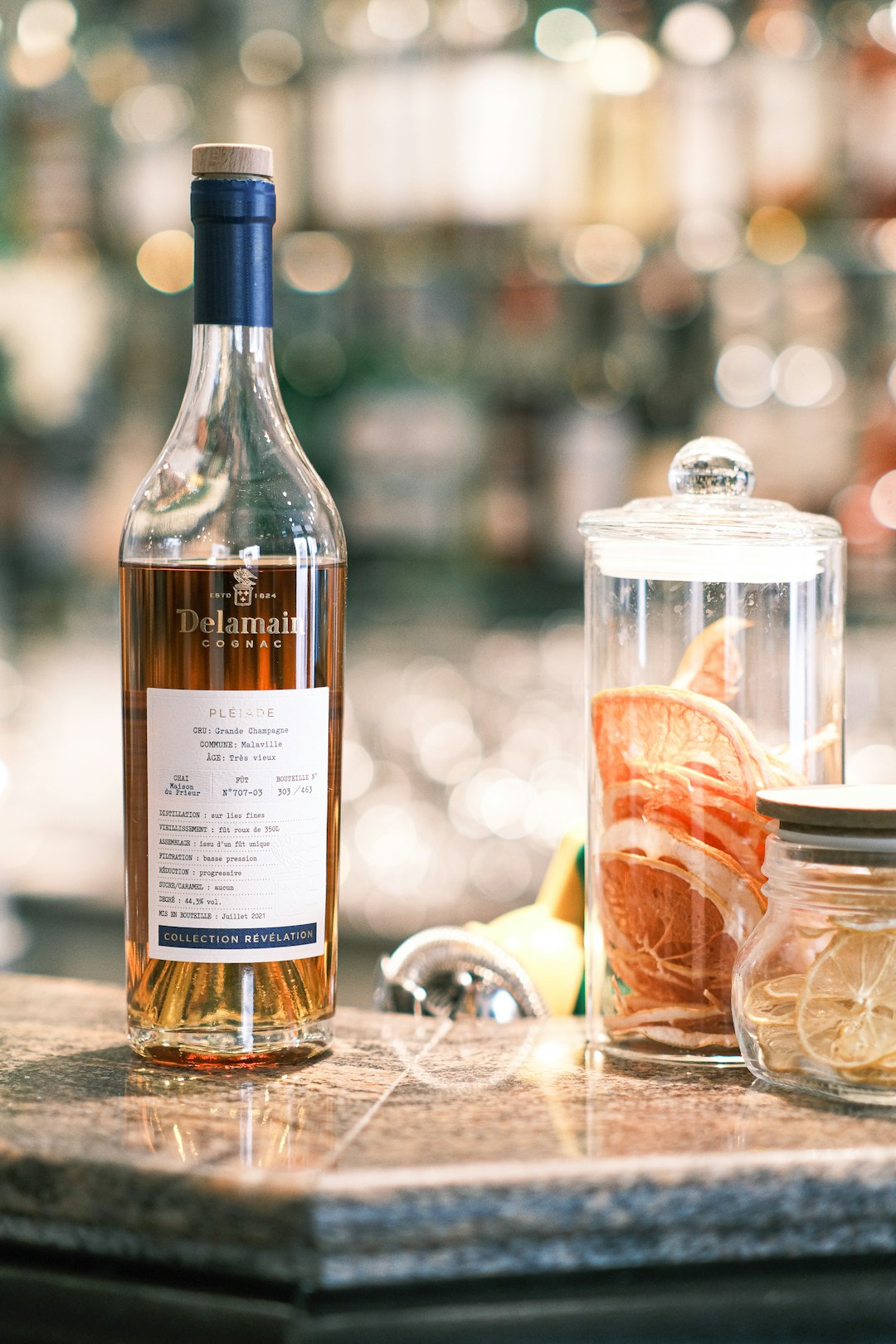
Every year the warehouses of Cognac lose the equivalent of roughly twenty million bottles of spirit to evaporation — the vapour that seeps through oak barrels, feeding a black fungus called Torula compniacensis that stains the town’s rooftops dark. Locals call the lost liquid la part des anges, the angels’ share. Cognac and its older, earthier cousin Armagnac are both grape brandies from South-West France, yet they are made differently, aged differently, and taste worlds apart. This is Guide № 007 in The Love France Guide series.
Two Brandies, Not One
Both spirits are distilled from white wine, but they come from separate regions with separate rules. Cognac is produced in the Charente and Charente-Maritime around the town of Cognac, governed by the Bureau National Interprofessionnel du Cognac. Armagnac comes from Gascony, further south in the Gers, and is overseen by the Bureau National Interprofessionnel de l’Armagnac. Armagnac is generally reckoned the older of the two, with distillation records reaching back to the early fifteenth century — well before Cognac’s trade took off in the seventeenth century on the back of Dutch and English shipping.
Both are protected appellations, meaning the name is tied by law to the place, the grapes and the method. The dominant grape for each is Ugni Blanc (known in Italy as Trebbiano), a high-acid, low-alcohol white that makes thin, sharp wine — poor for drinking, ideal for distilling.
How They Are Actually Made
The clearest technical difference is the still. Cognac is double-distilled in a copper pot still, the alambic charentais, in two separate passes that concentrate and refine the spirit to a clean, floral distillate. Armagnac is traditionally made in a continuous column still, the alambic armagnacais, which distils in a single pass to a lower strength — leaving more of the grape’s rustic, robust character in the glass.
After distillation both are aged in French oak, often from the forests of Limousin or Tronçais. Time in barrel pulls colour, tannin and vanilla notes from the wood, and the slow evaporation of the angels’ share concentrates what remains. Cognac is frequently blended from many vintages and crus by a cellar master; Armagnac, by contrast, is more likely to be released as a single vintage bearing one year on the label — a Gascon speciality that makes birth-year bottles a popular gift.
Reading the Label: VS, VSOP, XO
The age classifications are shared and worth learning. VS (Very Special) means the youngest eau-de-vie in the blend has aged at least two years. VSOP (Very Superior Old Pale) requires a minimum of four years. XO (Extra Old) required six years historically, but for Cognac the minimum was raised to ten years in 2018. Above XO sit terms like Napoléon, Hors d’Âge and, for Cognac, the newer XXO category.
The four big Cognac houses dominate global sales: Hennessy, Rémy Martin, Martell and Courvoisier, alongside independent family firms such as Camus. Armagnac’s producers are smaller and more artisanal — estates like Château de Laubade in the Bas-Armagnac bottle much of their output from their own vineyards.
The Crus That Matter
Cognac is divided into six growth zones, or crus, ranked roughly by the chalk content of their soil. Grande Champagne and Petite Champagne are the most prized (the word “Champagne” here means chalky open country, nothing to do with the sparkling wine). A blend drawn solely from those two, with at least half from Grande Champagne, may be labelled Fine Champagne.
Armagnac has three zones: Bas-Armagnac, whose sandy soils are widely considered to give the finest, fruitiest spirit; Armagnac-Ténarèze, which produces firmer brandies that need longer ageing; and Haut-Armagnac, the largest but least planted area.
Visiting the Regions
Both regions welcome visitors, and the experiences differ as much as the spirits. In the town of Cognac the great houses run polished tours of their cellars along the river Charente. In Gascony the appeal is more agricultural — small family estates where you may be poured a vintage from your birth year straight from the cask. The BNIA lists producers and tasting stops across the Gers, and Gascony’s wider draw of markets, foie gras and Armagnac-country cooking makes the drink hard to separate from the table it belongs on.
Myths Worth Retiring
Myth: Cognac and brandy are different things. Cognac is brandy — specifically, brandy made to strict rules in the Cognac region. All Cognac is brandy, but only brandy from that appellation may be called Cognac. The same logic applies to Armagnac.
Myth: Older always means better. Age adds complexity, but a well-made VSOP can outshine a tired older bottle. Balance and the quality of the base eaux-de-vie matter more than the number of years alone.
Myth: You must warm the glass over a flame. The dramatic snifter-over-a-candle ritual is largely theatre and can scorch off delicate aromatics. Most producers today recommend a tulip glass at room temperature.
Frequently Asked Questions
What is the main difference between Cognac and Armagnac?
Region and method. Cognac comes from the Charente and is double-distilled in a pot still, giving a refined, floral spirit usually blended across years. Armagnac comes from Gascony, is typically single-distilled in a column still, and is often sold as a single vintage — bolder and more rustic in character.
What does “the angels’ share” mean?
It is the portion of spirit lost to evaporation through the oak barrels during ageing — la part des anges in French. Over years of maturation a significant volume simply disappears into the air, which is part of why long-aged brandies cost more.
How should you drink Cognac or Armagnac?
Traditionally neat, at room temperature, in a tulip-shaped glass that funnels the aromas. Younger VS and VSOP grades also work well in cocktails and long drinks, while XO and older bottles are usually sipped slowly on their own, often after a meal.
More The Love France Guides
The Love France Guide is a numbered series — one tightly focused subject at a time, each with its own downloadable collectible edition. Guide № 001 is The Croissant, Guide № 002 is Bastille Day, Guide № 003 is The Béret, Guide № 004 is French Wine & Terroir, Guide № 005 is Café & Bistro Etiquette, Guide № 006 is French Slang & Verlan, This is Guide № 007. More editions are on the way.
🇫🇷 Join 7,000+ France Lovers
Every week, get hidden stories, local secrets, and travel inspiration from people who live and love it.
Subscribe free — enter your email:
Tours & experiences you might love


Powered by Viator. Some links are affiliate links — we may earn a small commission at no extra cost to you.

Leave a Reply