
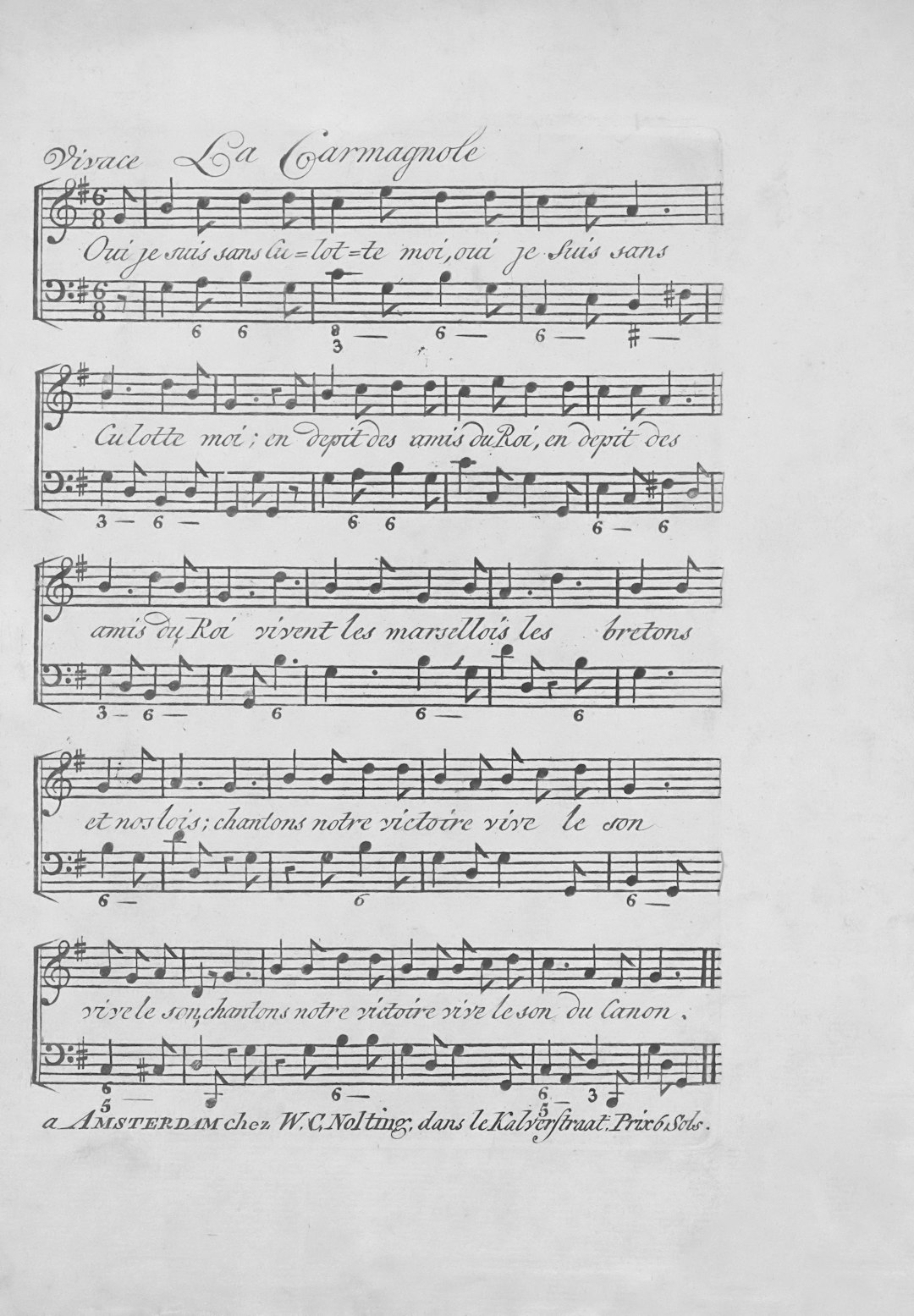
In 1993 the French parliament did something that still shapes what comes out of car radios in Lyon and Lille: it passed a law forcing private music stations to fill at least 40 percent of their airtime with songs in French. Chanson française is not only a genre — it is a tradition the state actively protects, built on words first and melody second, where the lyric carries the weight a guitar solo might elsewhere. This is Guide № 008 in The Love France Guide series.
What “Chanson” Actually Means
In French, chanson simply means “song,” but as a cultural label it points to something specific: a tradition in which the text is king. The chanson à texte — the “song with a text” — prizes clever, literary, often poetic lyrics delivered so that every word lands. Where much Anglo-American pop leans on the hook and the beat, classic chanson treats the songwriter as an author, closer to a poet with a melody than to a rock star. Georges Brassens set the poems of Villon and Hugo to music; Léo Ferré did the same with Baudelaire and Rimbaud.
That emphasis on words is why chanson travels less easily than other French exports. The pleasure is in the pun, the rhyme, the double meaning — exactly the parts that evaporate in translation. It is also why singers who could barely be called vocal virtuosos, from Serge Gainsbourg to Jacques Brel in his talk-sung climaxes, are revered: delivery and intention mattered more than a perfect note.
From Cabaret to the Music Hall
The modern tradition grew out of the late-19th-century Paris cabarets of Montmartre, where performers sang satirical and sentimental numbers to intimate rooms. By the 20th century the form moved onto the grand stages of the music hall, and no address matters more than L’Olympia on the Boulevard des Capucines, opened in 1893 and reborn as a music hall under Bruno Coquatrix in 1954. An Olympia concert became a rite of passage; Édith Piaf, Jacques Brel and Barbara all built their legends on that stage, and a recording “live at the Olympia” remains a mark of arrival.
The post-war decades are often called the golden age. Charles Trenet, nicknamed “the singing fool,” wrote “La Mer” and “Douce France”; Piaf gave the world “La Vie en rose” and “Non, je ne regrette rien.” Brel, a Belgian who made his name in Paris, poured a near-theatrical intensity into “Ne me quitte pas.” Their work set a template that later singer-songwriters — and the whole idea of the auteur-compositeur-interprète, the writer-composer-performer — would measure themselves against.
How the Tradition Is Protected
France treats its songs as part of the national patrimony, and the machinery behind that is real. Composers and lyricists collect their royalties through SACEM, the society founded in 1851 that licenses music for radio, venues and streaming. The French-language radio quota introduced by the 1994 Toubon-era rules is monitored today by the media regulator Arcom, which absorbed the former broadcasting authority CSA in 2022. Decades of broadcasts and recordings are preserved and digitised by the INA, the national audiovisual institute, whose archives are the memory of French television and radio.
Public broadcasting carries the living tradition forward, too. The stations of Radio France, among them France Inter, give new French-language artists airtime, while the annual Victoires de la Musique awards, overseen under the eye of the Ministry of Culture, crown the year’s standout performers.
Where to Hear It Today
Chanson is not a museum piece. The Francofolies de La Rochelle, held each July on the Atlantic coast, is devoted to French-language music old and new, while the Printemps de Bourges each April has launched emerging acts since 1977. A newer generation — Stromae, Zaz, Clara Luciani, Pomme — keeps the chanson à texte instinct alive while borrowing freely from pop, hip-hop and electronic music.
For the history, travellers can go to the source. In Brussels the Fondation Brel, created by Jacques Brel’s daughter in 1981, tells the singer’s story in his own words and recordings. And in any French town, the surest way to hear the tradition is still a small concert hall or a café with a Friday-night singer, microphone and a room that has come to listen.
Myths Worth Retiring
Myth: Édith Piaf wrote “La Vie en rose” and most of her hits. Piaf did write the lyrics to “La Vie en rose,” but the melody is credited to Louiguy, and much of her repertoire came from other composers and lyricists. She was a supreme interpreter — the French tradition honours the interprète as much as the author.
Myth: The French-language radio quota is an old folk custom. It is recent and legal, dating from the mid-1990s, and it is actively enforced on private stations by the regulator, not a vague patriotic habit.
Myth: Chanson means slow, mournful accordion ballads. The accordion belongs more to the older musette dance style. Chanson spans the comic, the political, the sensual and the upbeat — Trenet swung, Gainsbourg went funk and reggae, Brel could be furious.
Frequently Asked Questions
Is chanson française the same as French pop?
Not quite. “Chanson française” classically describes the lyric-driven, author-centred tradition of Brel, Brassens, Piaf and Barbara. “Variété française” is the broader term for mainstream French pop. The two overlap, and many modern artists sit comfortably in both.
Do I need to understand French to enjoy it?
You can enjoy the melodies and the famous voices without a word of French, but because the lyrics carry so much of the meaning, a translation or lyric sheet opens up a great deal. Starting with widely covered songs such as “La Vie en rose” or “Ne me quitte pas” makes the leap easier.
Where should a first-timer start listening?
A good entry path runs from the golden-age icons — Piaf, Trenet, Brel, Brassens, Barbara, Gainsbourg — toward today’s artists like Stromae and Zaz. Live recordings from L’Olympia are a reliable way to hear performers at their peak.
More The Love France Guides
The Love France Guide is a numbered series — one tightly focused subject at a time, each with its own downloadable collectible edition. Guide № 001 is The Croissant, Guide № 002 is Bastille Day, Guide № 003 is The Béret, Guide № 004 is French Wine & Terroir, Guide № 005 is Café & Bistro Etiquette, Guide № 006 is French Slang & Verlan, Guide № 007 is Cognac & Armagnac, This is Guide № 008. More editions are on the way.
🇫🇷 Join 7,000+ France Lovers
Every week, get hidden stories, local secrets, and travel inspiration from people who live and love it.
Subscribe free — enter your email:
Tours & experiences you might love


Powered by Viator. Some links are affiliate links — we may earn a small commission at no extra cost to you.

Leave a Reply