
On Saturday mornings in Sarlat-la-Canéda, the medieval stone squares fill with market stalls before the sun clears the rooftops. Locals argue over the best walnuts. The smell of roasting duck drifts down alleyways that haven’t changed shape since the 14th century.
This is a town where the past is still the present.
A Town That Refused to Modernise
Sarlat sits deep in the Dordogne valley in southwest France. For centuries, poverty and geographic isolation kept it away from major trade routes. That turned out to be the town’s greatest gift.
While other French towns demolished their medieval centres to build wider roads, Sarlat kept everything intact. Today, the old town is a UNESCO World Heritage Site. It doesn’t feel like a museum. It feels like history never left.
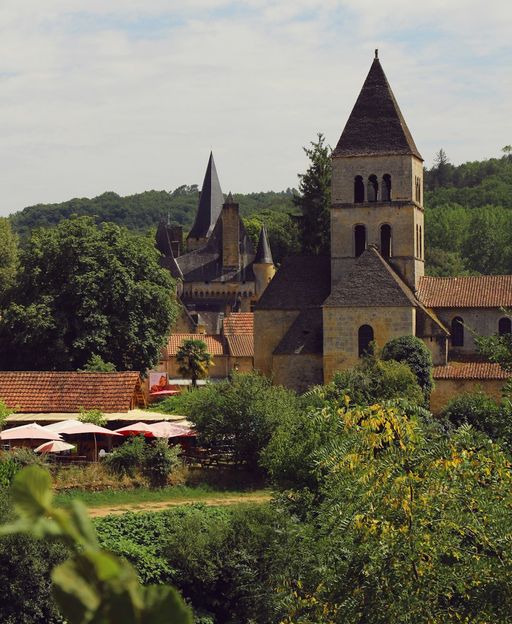
The honey-coloured limestone buildings glow in the late afternoon sun. Towers and turrets appear above rooflines. Narrow lanes lead into unexpected courtyards.
The Saturday Market
Every Saturday, the Place de la Liberté transforms before sunrise. Farmers bring foie gras, duck confit, walnuts, dried mushrooms, and Cabécou cheese. The stall holders know their regulars by name. Grandmothers squeeze fruit. Children sneak tastes of honey.
This is not a tourist market. Local families do their weekly shop here. The noise builds slowly, then suddenly fills every corner of the square.
In season — November through March — black Périgord truffles appear at the stalls. Sellers display them in shallow baskets. Buyers lean in close to smell each one. Prices run high, but nobody seems to mind.
Enjoying this? 7,000 France lovers get stories like this every week. Subscribe free →
Getting Lost in the Stone Maze
Step off the main square and the streets narrow to single file. Honey-coloured walls rise on both sides. Stairways cut between buildings without warning. Archways frame sudden views of church spires and tiered rooftops.
The old town takes about an hour to walk through. Most visitors spend a full afternoon exploring it. Each turn brings something new — a hidden courtyard, a Renaissance doorway, or a garden tucked behind a wall.
The Lanterne des Morts
At the edge of the old town stands one of France’s strangest monuments. The Lanterne des Morts is a 12th-century stone tower, roughly 11 metres tall, with a pointed cap. Nobody knows exactly what it was for.
Some historians say families lit lanterns at the top to honour the dead. Others believe it marked the spot where Saint Bernard of Clairvaux performed a miracle in 1147. The town keeps it as it found it — unexplained, in a quiet cemetery, surrounded by old graves.
Food That Defines the Dordogne
The Dordogne is Périgord country, and duck is everywhere. Duck confit, duck rillettes, duck magret, and duck fat on almost everything. Locals treat it as an everyday staple. Foie gras appears at market stalls sold whole, sliced, or potted in small jars.
In season, the black Périgord truffle makes its entrance — in omelettes, on toast, and tucked into dishes across every menu in town.
Sit down for lunch at one of the restaurants around the main square. Order the set menu. Nobody in Sarlat eats lunch standing up, and you quickly understand why. For a complete guide to planning your time in the region, explore our Dordogne travel guide.
A Base for the Wider Dordogne
A short drive from Sarlat, the Dordogne river winds between limestone cliffs and river beaches. The prehistoric caves at Font-de-Gaume contain 15,000-year-old paintings. The villages of Beynac and La Roque-Gageac cling to the riverbanks like something from a medieval illustration.
The Dordogne has more listed historic monuments per square kilometre than anywhere else in France. If you’re already planning your trip to France, this region deserves more than a day trip. The cliff villages of the Dordogne are equally astonishing and sit within easy reach of Sarlat.
When is the best time to visit Sarlat?
Late spring (May to June) and early autumn (September to October) offer warm weather with smaller crowds. The Saturday market runs year-round. For black truffles at the stalls, visit between November and March.
Where is Sarlat-la-Canéda in France?
Sarlat sits in the Périgord Noir area of the Dordogne department in southwest France, around 80 kilometres east of Périgueux. The nearest airports are Bergerac and Brive-la-Gaillarde.
What should I buy at the Sarlat market?
Duck confit, foie gras, local walnuts, and Cabécou goat’s cheese are the highlights. In season, look for black Périgord truffles — they travel well in a sealed jar. Walnut oil makes an excellent gift and captures the flavour of the whole region.
How long should I spend in Sarlat?
Two to three days is ideal. One full day covers the old town and Saturday market. The surrounding caves, river villages, and châteaux fill another two days easily.
Sarlat is the kind of place you arrive at for a quick look and leave three days later. The streets keep giving you something new to find. The market keeps giving you something new to taste.
Join 7,000+ France Lovers
Three times a week, get France’s hidden gems, seasonal guides, local stories, and the art of la vie française — straight to your inbox.
Subscribe free — enter your email:
🇫🇷 Discover the France Most Tourists Never Find
Get our free guide to 25 hidden villages of France — then join 7,000+ readers for weekly stories about places most guidebooks never mention.
Get Your Free Village Guide →Free forever · Unsubscribe anytime
🇫🇷 You Might Also Love
Tours & experiences you might love


Powered by Viator. Some links are affiliate links — we may earn a small commission at no extra cost to you.

Leave a Reply