
Step inside Chartres Cathedral on a sunny morning, and the walls dissolve into blue. Not any blue — a medieval blue that glows from floor to ceiling and fills the air like light underwater. Scientists have studied it for decades. No one has managed to copy it.
A Cathedral Built at Extraordinary Speed
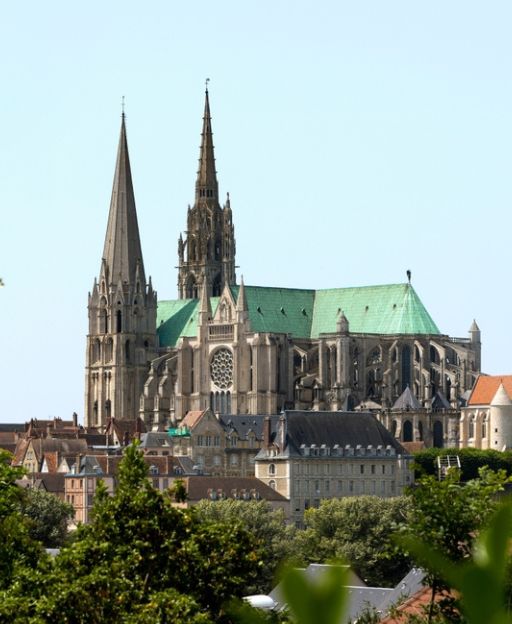
Builders completed most of Chartres Cathedral in just 26 years, between 1194 and 1220. That is extraordinary speed for the Middle Ages. They rebuilt after a fire destroyed much of an earlier church, and left France one of the best-preserved Gothic cathedrals in Europe.
UNESCO added it to the World Heritage list in 1979. Over a million people visit every year. Most, however, walk straight past the thing that makes Chartres truly unlike anywhere else in France.
The Colour That No One Has Reproduced
Medieval craftsmen created Chartres blue using manganese and copper compounds baked deep into the glass. The formula gave the colour a luminosity that shifts throughout the day as the sun moves across the sky.
Modern glassmakers have tried to recreate it. The closest attempts still look flat against the real thing. Something in the thickness, the minerals, or the firing temperature produced a result no modern workshop has matched.
Chartres holds over 10,000 square metres of medieval stained glass. Walking beneath it feels like standing inside a jewel. The cathedral preserves the largest collection of medieval glass in the world.
The Labyrinth Most Visitors Never Notice
Most visitors walk straight over it without glancing down. Medieval craftsmen set a stone labyrinth into the cathedral floor — 13 metres across, with a path that twists and doubles back before reaching the centre.
Pilgrims who could not afford the journey to Jerusalem walked its path on their knees instead. That symbolic pilgrimage took around an hour. They treated it as a journey in miniature, moving through the same turns and reversals that the real road to Jerusalem demanded.
Today, the cathedral opens the labyrinth for walking on certain Fridays between April and October. People travel from across the world specifically for this. They walk slowly, following the stone path in silence.
Enjoying this? 7,000 France lovers get stories like this every week. Subscribe free →
Two Towers That Tell Two Stories
Look at Chartres from outside and something unusual stands out. The two towers do not match. Masons completed the south tower in the 12th century with a plain Romanesque spire. Workers added the north tower in the 16th century in elaborate Flamboyant Gothic style.
Three centuries of architectural change stand side by side. The contrast is not an accident or an error. It reflects how long French medieval builders kept returning to improve and expand the cathedral.
The mismatch tells the entire history of French Gothic architecture in a single glance. No other building in France puts those two styles in such direct comparison.
For more stories from France’s great medieval religious buildings, read about the island abbey in Normandy that no army ever managed to take.
Getting to Chartres from Paris
Direct trains run from Paris Montparnasse to Chartres in about an hour. The journey crosses the flat wheat plains of the Beauce — the agricultural heartland of northern France.
Arrive in the morning when the rising sun hits the eastern windows and the blue glass reaches full intensity. The town rewards an afternoon of wandering. Old tannery buildings line the banks of the Eure river below the cathedral. Medieval streets climb back up to the main square.
Chartres works perfectly as a day trip from Paris, and it sits within easy reach of the Loire Valley to the south. If you are planning a wider trip, our France planning guide covers the best routes and base cities for exploring this region.
What is the best time to visit Chartres Cathedral?
Morning visits give the best light for the stained glass. The sun comes from the east and hits the blue windows directly, bringing out their full depth and luminosity. Arriving before 10am on a clear day gives you the most striking experience of the glass.
How do you get from Paris to Chartres?
Take a direct SNCF train from Paris Montparnasse to Chartres. The journey takes approximately one hour, with trains running regularly throughout the day. The cathedral stands a ten-minute walk from Chartres station.
Is Chartres Cathedral free to enter?
Entry to the main cathedral is free. Guided tours and access to the crypt carry a small charge. The labyrinth opens for walking on certain Fridays from April through October — check the cathedral website for current dates before your visit.
What makes Chartres blue so special?
Medieval craftsmen used manganese and copper compounds to create the deep blue stained glass at Chartres. The formula produced a luminosity that modern glassmakers have not replicated despite repeated attempts. The windows date from the 12th and 13th centuries and cover over 10,000 square metres.
The light inside Chartres does something no description quite captures. It changes. Watch the floor shift from grey to deep cobalt as a cloud passes overhead. That is 800 years of blue, still doing exactly what it was made to do.
Join 7,000+ France Lovers
Three times a week, get France’s hidden gems, seasonal guides, local stories, and the art of la vie française — straight to your inbox.
Subscribe free — enter your email:
Free forever · Unsubscribe anytime
🇫🇷 You Might Also Love
Tours & experiences you might love


Powered by Viator. Some links are affiliate links — we may earn a small commission at no extra cost to you.

Leave a Reply