
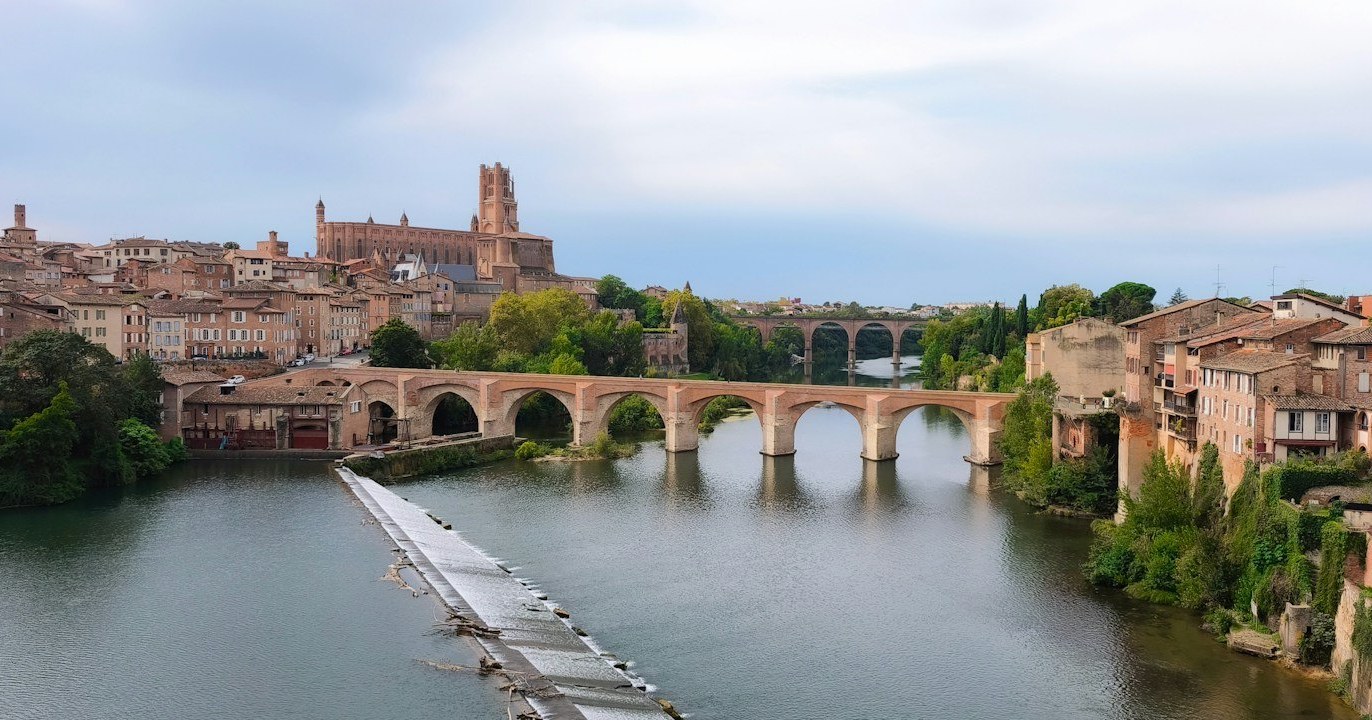
This Albi travel guide shows you how to see the red-brick city in the south of France in a day or a weekend. Albi sits on the river Tarn, about 85 km north-east of Toulouse. Its huge brick cathedral, riverside palace and medieval bridge make it one of the most striking small cities in the south-west. Most visitors never stop here, so you can enjoy it without the crowds.
Love France? Join 7,000+ readers on our free newsletter → lovetovisitfrance.substack.com
Why Visit Albi?
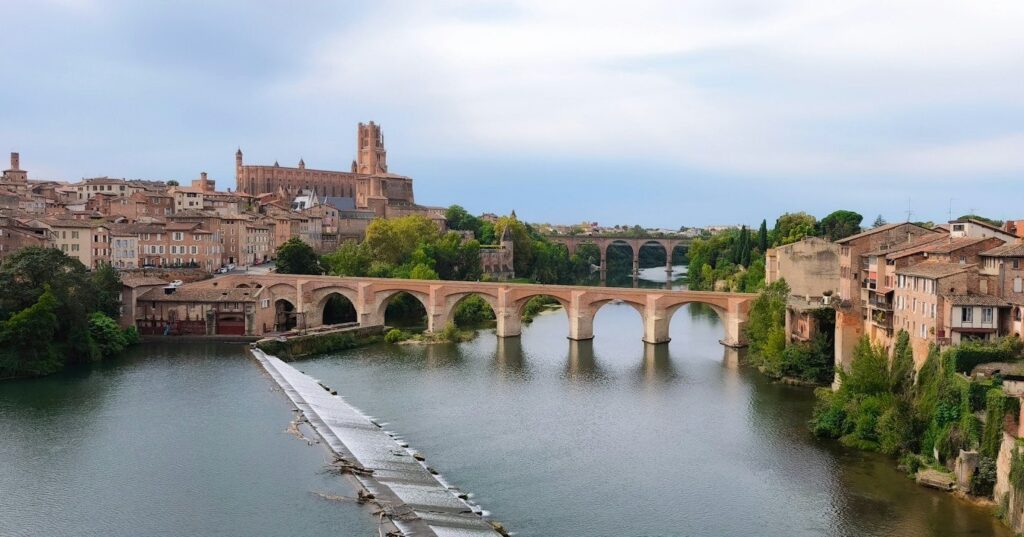
Albi is a city built from brick. Locals call it the red city, and the colour changes through the day. In the morning the walls look pink. At sunset they turn deep orange. If you have seen our guide to Toulouse, the pink city, Albi makes a perfect day trip or quiet add-on.
The city is compact. You can walk from the cathedral to the river in about ten minutes. Cafés line the old streets, and the pace stays calm even in summer. It also sits in a region full of history, so it pairs well with our Languedoc travel guide.
Sainte-Cécile Cathedral: The Fortress of Faith
Start with the cathedral, because nothing else in Albi comes close. Builders began Sainte-Cécile in 1282, and the work lasted around 200 years. From outside, it looks more like a castle than a church. Plain brick walls, tall buttresses and round towers rise above the old town. People often describe it as one of the largest brick buildings in the world.
Look Inside
The inside surprises almost everyone. After the bare exterior, you step into a hall covered in blue and gold paint. A carved stone screen runs around the choir, and its lacework detail seems almost too delicate for stone. A monumental organ fills one wall. Give yourself at least an hour, and look up often.
The cathedral stands close to the Cathar story, which shaped this whole region. Read our guide to the Cathars of Languedoc to understand why the church here looks so defensive.
Palais de la Berbie and the Toulouse-Lautrec Museum
Next to the cathedral stands the Palais de la Berbie. Bishops built it as a fortress-palace above the river. Today it houses the Toulouse-Lautrec Museum. The painter Henri de Toulouse-Lautrec was born in Albi in 1864. The museum holds one of the largest collections of his work anywhere, including his famous Paris nightlife posters.
Leave time for the gardens too. Formal hedges and flower beds sit on terraces above the Tarn. They give you a quiet place to sit, and the view across the water is one of the best in the city. Check the museum site for opening hours before you go.
Planning a south-west France trip? Get one hidden-gem guide a week in our free newsletter → Join Love France
The Pont Vieux and the Riverside
Cross the Pont Vieux for the classic view of Albi. This brick bridge dates from the 11th century, which makes it one of the oldest still standing in France. From the far bank, you see the cathedral and the Berbie palace stacked above the water. Photographers arrive here at sunrise and sunset.
Walk along the river after you cross. Old mills and tanneries once lined these banks, and some of their brick walls remain. The official city website lists events and walking routes.
Where to Wander in the Old Town
The streets between the cathedral and the river reward slow walking. Half-timbered houses lean over narrow lanes, and small courtyards open off the main routes. Shops sell local wine, nougat and handmade gifts. Many vineyards of the Gaillac wine region lie within easy reach, so a bottle from a nearby estate makes a good souvenir. The Tarn tourism site lists wine routes and village trips across the department.
Practical Tips
- Arrive early. The cathedral looks its best in morning light, and the lanes stay quiet.
- Wear comfortable shoes. The old streets use cobbles, and the cathedral square slopes.
- Take the train from Toulouse. The journey takes roughly an hour, but check timetables before you travel.
- Pause at lunch. Many restaurants stop serving by early afternoon.
- Stay the night. The brick glows after dark, and the streets feel empty and calm.
What to Eat and Drink in Albi
The Tarn countryside shapes the menu. Look for dishes built around duck, local sausage and slow-cooked beans, which fit the hearty cooking of the south-west. Pink garlic from the village of Lautrec is a regional favourite, and cooks use it in sauces and salads. Bakeries sell gimblettes, crisp almond biscuits shaped like small rings. They keep well, so they make an easy gift to carry home.
Pair your meal with a glass of Gaillac. Winemakers have grown grapes around this area for centuries, and many estates welcome visitors. Ask your waiter for a local red or a crisp white, and let them choose.
Getting to Albi and Moving Around
Albi has a train station, and regional trains link it to Toulouse. Drivers can use the car parks at the edge of the centre. The old town is small, so you can skip the car once you arrive. Most sights sit within a ten to fifteen minute walk of each other. Taxis cover the few longer trips, for example to a vineyard.
When to Visit Albi
Spring and early autumn work best. Days stay warm, and the light on the brick looks rich. July and August can run hot, so plan your walking for early morning and evening. Winter is quiet, and the cathedral stays a good escape from the cold. Our season-by-season planning guide compares every month.
A Simple One-Day Plan
Begin at the cathedral as soon as it opens. Move to the Toulouse-Lautrec Museum by late morning. Eat lunch in the old town, then walk the gardens above the river. Cross the Pont Vieux in the late afternoon for the sunset view. If you want a longer trip, combine Albi with the walled city in our Carcassonne guide.
Frequently Asked Questions About Albi
Is Albi worth visiting?
Yes, Albi is worth a full day. Its brick cathedral, river views and Toulouse-Lautrec Museum make it one of the best small cities in south-west France.
How far is Albi from Toulouse?
Albi lies about 85 km north-east of Toulouse. The trip takes roughly an hour by train or car, so it works well as a day trip.
How long do you need in Albi?
One day covers the cathedral, the museum and the old bridge. Stay two days if you want to visit nearby vineyards or villages.
Why is Albi called the red city?
Builders used local brick for most of the old town. The brick gives the streets and the cathedral a warm red colour.
You Might Also Enjoy
- Toulouse Travel Guide: The Pink City
- Carcassonne: A Guide to the Double Walls
- Languedoc Travel Guide
Plan Your France Trip
Ready to turn these ideas into a route? Start with our France trip planning hub. It links every region guide, season tip and planning checklist in one place.
Join 7,000+ France Lovers
Every week, get France’s hidden gems, local recipes, and travel inspiration — the kind you won’t find in any guidebook.
Subscribe free — enter your email:
Prefer a direct link? Join Love France here →
Free forever · One email per week · Unsubscribe anytime

Leave a Reply