Every love song you have ever heard owes something to southern France. Around the year 1100, poets there began to sing about longing and devotion in a new way. We call them the troubadours.
They wrote in Occitan, the old language of the south. They sang at the courts of dukes, counts and ladies. Their ideas spread across Europe and shaped the way the West talks about love. This is the story of the troubadours. It is also a guide to the places where their world lives on.
Who Were the Troubadours?
A troubadour was a poet and composer. He (or she) wrote words and music together. The name comes from the Occitan verb trobar, which means “to find” or “to invent”.
The troubadours worked from about 1100 to about 1300. Roughly 450 of them are known by name. About 2,500 of their poems survive. Only a few hundred of the melodies made it down to us.
They came from every rank of society. Some were dukes and knights. Some were the sons of merchants or craftsmen. A few were churchmen. What they shared was a gift for verse. They also shared a taste for the courts that paid for it.
Their language was the langue d’oc, from oc, the Occitan word for “yes”. It was the speech of a wide southern region, from Aquitaine to Provence. Northern France spoke the langue d’oïl, the ancestor of modern French. Our page on the language of France tells how the two spoken worlds drifted apart.
The First Troubadour: Guilhem IX of Aquitaine
The earliest troubadour we know by name was a duke. Guilhem IX was Duke of Aquitaine and Count of Poitiers. He lived from 1071 to 1126. His lands were larger than those the French king held directly.
About eleven of his poems survive. Some are tender. Some are bawdy and funny. He mocked rivals, boasted of his conquests and joked about monks. He also wrote verses of real longing.
Guilhem set a model. A noble could be a poet, and poetry could be a form of power. His court at Poitiers became a centre for song.
His granddaughter was Eleanor of Aquitaine. She grew up in this world of music and verse. You can read her story in our article on Eleanor of Aquitaine. Later writers link her court with the spread of troubadour song to the north.
Fin’amor: The New Idea of Love
The troubadours gave us a new idea. They called it fin’amor, or “refined love”. Modern writers often call it courtly love.
The pattern was simple. A poet loved a lady of higher rank. He served her with devotion. He praised her beauty and her virtue. He often asked for little in return.
This love was meant to improve the lover. It made him braver, kinder and more skilled. Desire became a kind of discipline.
That idea sounds familiar today. Think of the knight who suffers for love in a tale or a film. Think of a song about longing from afar. Much of that language began in the south of France.
Scholars still argue about how far real life matched the poems. Many songs were games played for an audience. Even so, the poems shaped how people spoke and felt.
The Great Voices
A few names rise above the rest.
Bernart de Ventadorn
Bernart wrote in the middle of the 1100s. He came from Ventadour, in the Limousin. Many readers think his songs are the most musical of all. His famous lark poem describes a heart that rises like a bird towards the sun.
Jaufre Rudel
Jaufre Rudel was Prince of Blaye. He wrote about amor de lonh, or “love from afar”. His poems praise a lady he has never met. Later legend said he sailed to see her and died in her arms.
Arnaut Daniel
Arnaut Daniel loved hard, rare words and tight forms. He is credited with the sestina, a poem built on six repeating end words. The Italian poet Dante praised him in the Purgatorio.
The Trobairitz
Women also wrote songs. They are called the trobairitz. About twenty are known by name. The best known is Beatritz de Dia, who lived around 1200. One of her songs, A chantar, survives with its melody. It is a rare gift. We can still hear a woman’s voice from over eight centuries ago.
How the Songs Were Made and Shared
A troubadour wrote the words and the tune. A joglar, or minstrel, often performed them. The joglar played an instrument such as a vielle, a small bowed fiddle. Songs moved from court to court by memory.
Later, scribes gathered the songs into big manuscripts called chansonniers. Many were copied long after the poets died. The Bibliothèque nationale de France is one of the libraries that keep such songbooks.
Some songs came with a short prose biography, called a vida. These lives mix fact with legend. Treat them as stories, not as records.
🇫🇷 Enjoying this? 7,000 France lovers get stories like this every week. Subscribe free →
The End of the Golden Age
The great age of troubadour song ran for about two centuries. Then it faded. The southern courts that paid the poets lost power in the 1200s. Wars in the south scattered many of the patrons and the singers. Our article on the Cathars of Languedoc describes that period.
Some poets moved to Spain and Italy. Their style lived on there. In the north of France, poets called trouvères borrowed the form. In Germany, the Minnesänger did the same. Dante and Petrarch in Italy took up the same themes.
The Occitan tradition never died completely. In 1323, a group of poets in Toulouse formed a society to keep the art alive. It grew into the Académie des Jeux floraux, which traces its roots to that date.
In the 1800s, the poet Frédéric Mistral led a revival of Provençal writing. He won the Nobel Prize in Literature in 1904. You can read about him on the Nobel Prize website.
Where to Find the Troubadours Today
You cannot visit a troubadour’s concert hall. But you can walk through the world that made them.
- Poitiers. This was the seat of Guilhem IX. It is a good starting point for the story of Aquitaine and its dukes.
- Ventadour, in the Corrèze. The ruined castle of Ventadour is linked with Bernart. It stands in green hill country in the Limousin.
- Toulouse. This was a great centre of Occitan culture. See our Toulouse travel guide, and the official Toulouse tourism site.
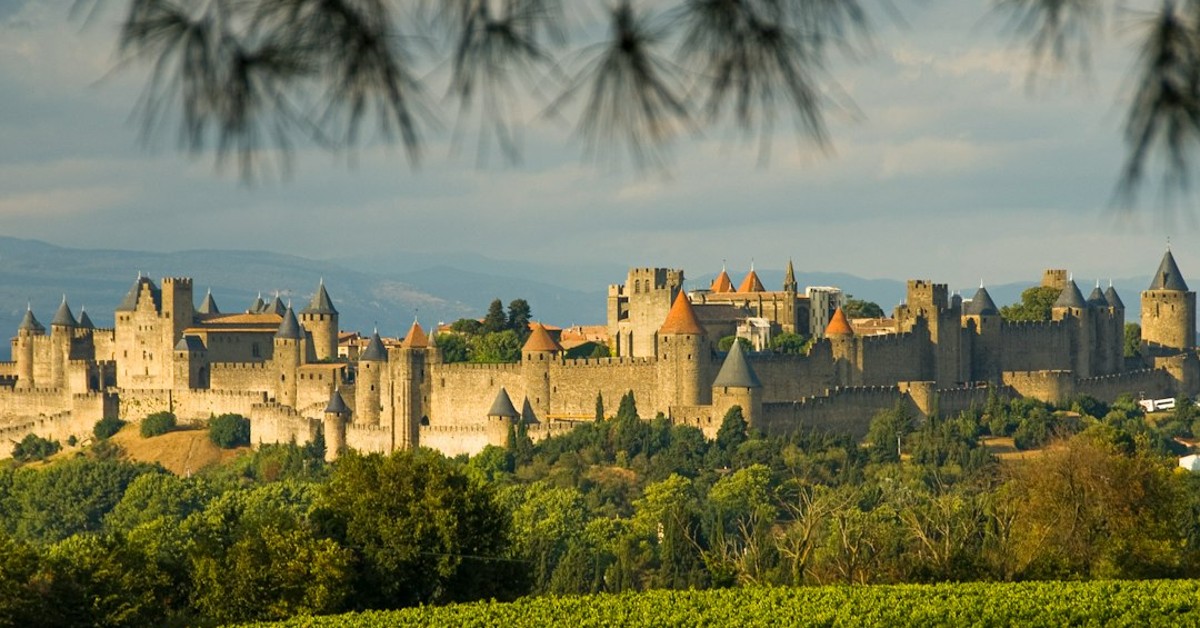
- Carcassonne. The walled Cité belonged to the Trencavel family, lords of the region. Poets frequented courts like theirs. Read our Carcassonne travel guide and the official Carcassonne tourism site before you go.
Check opening times with each site before you travel. They change from season to season.
If your family comes from the south of France, the troubadours are part of your heritage too. Their language, their songs and their love of verse belong to the whole region. Many people who trace their roots to Occitania find this a moving thing to discover.
For more on medieval France, try our guide to the Gothic cathedrals. And if you are planning a trip, start with our France trip planning hub.
Frequently Asked Questions
What is a troubadour?
A troubadour was a medieval poet and composer from southern France. He or she wrote songs in Occitan, mostly about love, between about 1100 and 1300.
Who was the first troubadour?
The earliest known troubadour is Guilhem IX, Duke of Aquitaine. He lived from 1071 to 1126. About eleven of his poems survive.
What language did the troubadours use?
They used Occitan, also called the langue d’oc. It was spoken across southern France. Northern France spoke a different language, the langue d’oïl.
Were there women troubadours?
Yes. Female poets are known as trobairitz. About twenty are known by name. Beatritz de Dia is the best known. One of her songs survives with its melody.
What is courtly love?
Courtly love, or fin’amor, is the troubadours’ ideal of devoted, refined love. A poet serves a lady of higher rank and is made better by his longing.
You Might Also Enjoy
- Eleanor of Aquitaine: The Duchess Who Became Queen Twice
- Carcassonne Travel Guide: How to Visit France’s Greatest Medieval Fortress
- The Cathars of Languedoc: France’s Forgotten Heresy
Plan Your France Trip
Ready to see the south for yourself? Our France trip planning hub brings together every guide you need.
Join 7,000+ France Lovers
Every week, get France’s hidden gems, seasonal guides, local stories, and the art of la vie française — straight to your inbox.
Subscribe free — enter your email:
Free forever · One email per week · Unsubscribe anytime
Tours & experiences you might love


Powered by Viator. Some links are affiliate links — we may earn a small commission at no extra cost to you.

Leave a Reply