
Cluny Abbey once ruled the medieval church from a quiet Burgundy town. Its monks prayed for the dead every day. Its abbots advised popes and kings. Its great church was the largest in Christendom.
Little of that church stands today. Yet what remains still stops visitors in their tracks. One stone tower rises above the rooftops. It carries a thousand years of story.
How Cluny Abbey Began
The story starts in 910. William, Duke of Aquitaine, gave his estate at Cluny to a small group of monks. He did more than hand over land. His charter set the monks free from local lords and bishops.
The monks answered only to the pope in Rome. In an age of private feuds, that freedom mattered. It let them choose their own abbots. It kept them out of the quarrels of the day.
Berno was the first abbot. Cluny then had a run of long-serving, gifted leaders. Odo, Odilo and Hugh each guided the abbey for decades. Their steady rule gave Cluny its power.
The Monks Who Prayed for the Dead
Prayer was the daily work of Cluny. The monks sang long services by day and by night. Nobles gave land to the abbey. In return, they asked the monks to pray for their souls.
Around 998, Abbot Odilo set aside one day to remember all the dead. This was the start of All Souls’ Day on 2 November. The custom spread from Cluny’s houses to the wider church. Our guide to La Toussaint shows how France keeps that season today.
Cluniac houses also kept lists of their dead. They read the names aloud. A name spoken in prayer was a name remembered. Anyone who researches a family tree will feel the pull of that idea.
The Largest Church in Christendom
Hugh of Semur became abbot in 1049. He led Cluny for sixty years. In 1088 he began a vast new abbey church, known today as Cluny III.
Pope Urban II blessed the high altar in 1095. He knew the place well, for he had once been a Cluny monk. The church grew for decades more. It reached about 187 metres in length.
Five aisles ran down the nave. The vaults rose close to 30 metres. Builders used pointed arches here, long before Gothic style took hold. For centuries, no church in Christendom matched its size. Our story of the Gothic cathedrals of France picks up where Cluny left off.
The rule of Cluny also spread far beyond Burgundy. Well over a thousand monasteries and priories followed its customs. They stood from Spain to England. The abbot of Cluny stood at the head of them all.
Learning, Art and Music
Cluny was more than a house of prayer. Its monks rose before dawn and filled the day with services. They also copied books and taught the young. Their chant rang through the vast church. Carvers shaped fine capitals for the choir, and some of them survive.
In the 12th century, Peter the Venerable led the abbey. He welcomed the scholar Peter Abelard in his last years. Abelard died in 1142 at a Cluniac priory near Chalon-sur-Saône. Peter wrote a kind letter to Héloïse about his friend’s final days. That small act shows the human side of the great abbey.
🇫🇷 Enjoying this? 7,000 France lovers get stories like this every week. Subscribe free →
Why Cluny Lost Its Grip
Success brought its own trouble. Critics said Cluny had grown rich and grand. New orders, such as the Cistercians, promised a plainer life. Many pious families turned to them instead.
Power also drifted to the French crown. In time, outside men took charge of the abbey. Soldiers looted it in 1562, during the religious wars. By then, the great age of Cluny was long over.
What Survives Today
The end came in the 1790s. The state sold the abbey as national property. Later, builders pulled the great church apart for its stone. Within a few decades, most of it was gone.
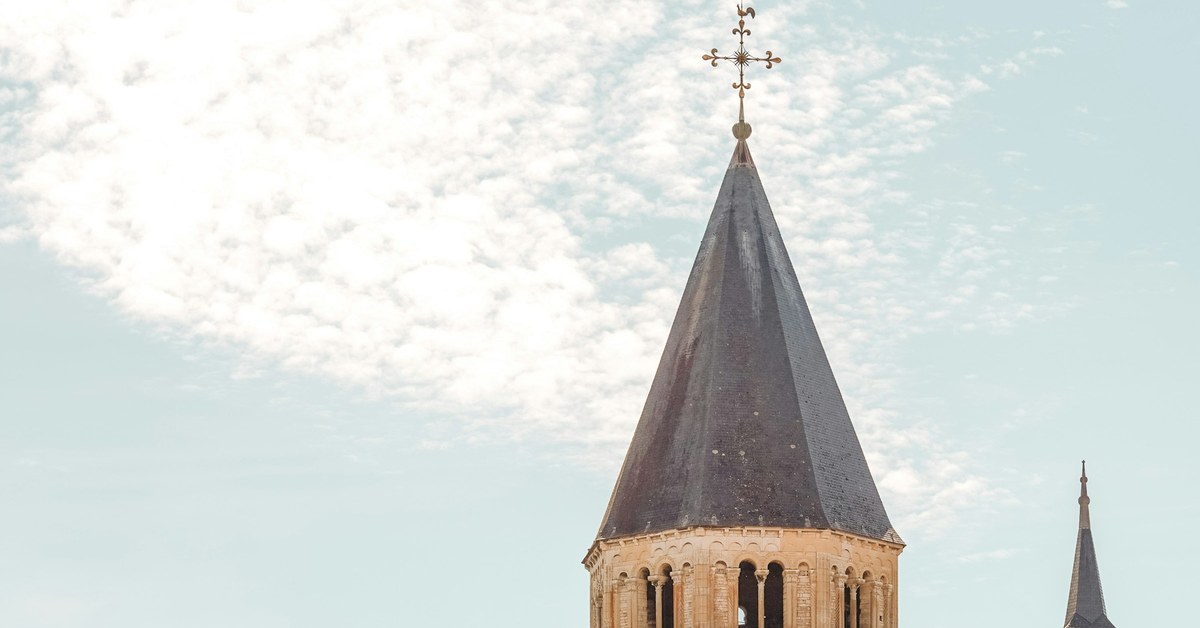
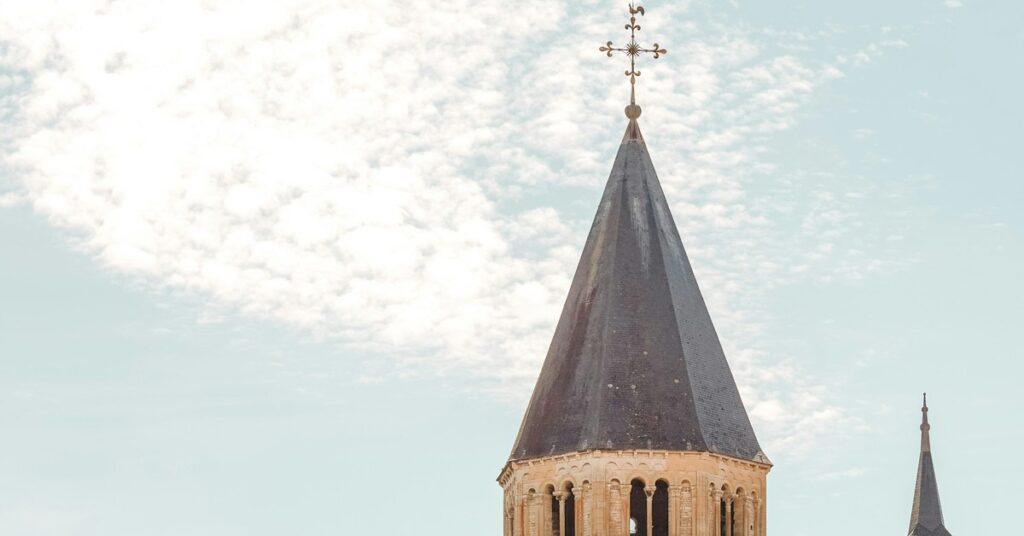
Only a fraction survives. The south transept still stands, with its octagonal bell tower. That tower is the one in our photograph. A 13th-century granary, the Farinier, also remains, along with other abbey buildings. A national stud farm opened in the old precinct in 1806.
Walk the site and you can feel the scale. Floor lines show where the nave once ran. Stand at the foot of the tower and look along them. The missing church fills the sky in your mind.
Visiting Cluny
Cluny lies in the Saône-et-Loire, in southern Burgundy. Mâcon is the nearest large town, about 25 kilometres away. Most visitors arrive by car. If you rely on public transport, check the local bus options first.
The abbey is a national monument. Check opening times and ticket details on the official abbey website before you go. The Cluny tourist office can help with the town and nearby sites.
Plan a half day in the abbey and a few hours in town. The small streets hold medieval houses and quiet cafés. Nearby, the priory at Berzé-la-Ville keeps Romanesque wall paintings from the Cluny age. Check its visiting hours before you set out.
Pair Cluny with other Burgundy stops. Our guide to Vézelay covers another great Romanesque church. Our Burgundy travel guide helps you link the region together.
Cluny and Your Family Roots
Cluny owned land across Burgundy. Its monks recorded gifts, sales and rents in charters. Many of those charters survive, and scholars have published them. A family from the region may well appear in them.
Your own search will rely on later records. Start with parish and civil registers for the village. Then move to the departmental archives. Our step-by-step guide to tracing French ancestry shows how.
A Burgundy village can anchor a family story. Visit the church. Look at the old stones. Ask who prayed there, and whom the village still remembers.
Cluny Abbey FAQ
Who founded Cluny Abbey?
William I, Duke of Aquitaine, founded Cluny in 910. He gave his estate to a group of monks. His charter placed them under the pope’s protection.
Why was Cluny so important?
Cluny led a network of more than a thousand houses across Europe. Its monks set the pattern for prayer and church life. Its abbey church was the largest of its age.
How much of Cluny Abbey survives?
Only a small part of the great church remains. The south transept and its octagonal tower still stand. Other abbey buildings, such as the granary, also survive.
Where is Cluny Abbey?
Cluny is in Saône-et-Loire, in southern Burgundy. It lies about 25 kilometres north-west of Mâcon. Most visitors come by car.
Can I visit Cluny Abbey?
Yes, you can visit the abbey site. Opening times and tickets change. Check the official abbey website before you travel.
You Might Also Enjoy
- Vézelay: the hilltop basilica
- Fontevraud Abbey and the Plantagenet tombs
- Gothic cathedrals of France
Plan Your France Trip
Ready to turn history into a trip? Our planning hub, Start Here: Planning Your Trip to France, brings the key guides together in one place.
Join 7,000+ France Lovers
Every week, get France’s hidden gems, seasonal guides, local stories, and the art of la vie française — straight to your inbox.
Subscribe free — enter your email:
Free forever · One email per week · Unsubscribe anytime

Leave a Reply