
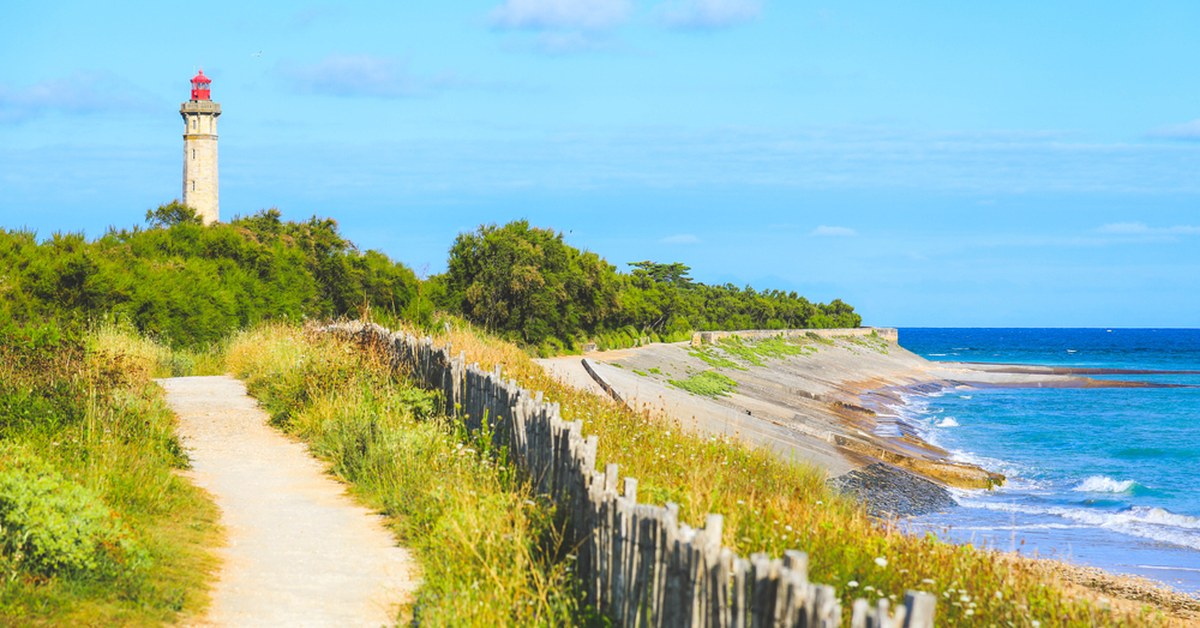
The Île de Ré is a low, bright island off France’s Atlantic coast. White houses line its lanes. Salt marshes shine in the sun. A tall stone lighthouse guards its western tip.
Many visitors come for the beaches and bikes. Fewer know the island’s story. Kings, sailors, salt workers and soldiers all shaped it. This guide tells that story and shows you where to find it.
Where the Île de Ré Sits
The island lies just off the coast near La Rochelle. A long bridge links it to the mainland. It is about 30 kilometres from end to end. In places it is barely a few hundred metres wide.
That slim shape explains much of its history. The sea is never far away. Boats, tides and winds set the pace of life here. Fishing, salt and wine fed island families for centuries.
Today the island is known for cycling. Flat paths run through villages, vines and marsh. You can ride from one end to the other in a day. Our guide to France’s best coastal towns for seafood shows what to eat along the way.
The Lighthouse of the Whales
The Phare des Baleines stands at the island’s north-west tip. Its name means “Lighthouse of the Whales”. Whales were once seen and washed ashore near this coast. Locals took the name from them.
Ships have needed a light here for a long time. The coast is full of rocks and shallows. A first stone tower rose in the 1680s. Vauban’s orders led to its building. It still stands beside the later tower.
The tall lighthouse you see in our photograph came later. Builders began it in 1849. It first shone in 1854. It rises to about 57 metres. A spiral stair of 257 steps leads to the top.
The climb is steep. The reward is a wide view over sea and marsh. On a clear day, the whole island lies below you like a map. Check the official Île de Ré page for the lighthouse before you go. It lists current opening and visiting details.
Salt, Marshes and Hard Work
Salt made the island rich. For centuries, families worked shallow pools on the marsh. Seawater flowed in and the sun dried it. Workers then raked the salt by hand.
The work was slow and skilled. It also needed the right weather. A wet summer meant a poor harvest. Some of the best salt forms as a thin crust on the surface. This is the fleur de sel, or “flower of salt”.
Many pools are still worked today. You can walk beside them. Some producers welcome visitors and sell their salt at the gate. It makes a good gift to carry home.
Look out for the island’s donkeys too. In the past, islanders dressed donkeys in striped trousers. The trousers kept biting insects away while the animals worked on the marsh. Donkeys in trousers now appear on local souvenirs.
Vauban’s Island Fortress
The island also had a military job. It guarded the sea road to La Rochelle. Rulers feared attack from the sea. So they built walls.
Saint-Martin-de-Ré is the island’s main port town. Vauban, Louis XIV’s great military engineer, redesigned its defences from the 1680s. His star-shaped walls still ring the harbour. You can stroll along the ramparts and watch boats come in.
Later, the citadel held prisoners. Some waited there for ships that carried them to penal colonies overseas. The grim history sits close to the pretty harbour cafés. It adds depth to a walk through the town.
Vauban’s work appears across France. Our story of the Gothic cathedrals of France covers an earlier age of builders. Vauban belongs to a very different one.
🇫🇷 Enjoying this? 7,000 France lovers get stories like this every week. Subscribe free →
La Rochelle and the Road to New France
The island’s story ties in with the port across the water. La Rochelle was a major Atlantic port. Ships left it for the New World for generations. Many settlers who built French Canada set out from this stretch of coast.
Our guide to the Filles du Roi tells how young women crossed the ocean to start new lives. Our story of New France follows the wider journey. If your family came from Quebec, this coast may be part of your own roots.
La Rochelle was also a Protestant stronghold. It stood against the crown in a long siege in the 1620s. Many Huguenots later left France. Our article on the Huguenots traces where they went.
Records from ports like these can help family historians. Passenger lists and parish books may name your ancestors. Start with the departmental archives for the Charente-Maritime area. Many hold records that you can search online.
Planning Your Visit
Spring and early autumn suit most visitors. The roads and paths are quieter then. Summer brings crowds, and the bridge can back up. Book rooms early if you plan to visit in July or August.
Bring a bike, or hire one on arrival. The paths are flat and well marked. Plan time for four stops. See the lighthouse. Walk the ramparts of Saint-Martin. Visit a salt marsh. Finish with oysters or a plate of local seafood.
Check the official Île de Ré tourism site for the latest travel details. Prices, bridge fees and opening times change. Always confirm them before you set off. For wider trip ideas, see our France trip planning hub.
Your ancestors may have sailed from this coast. Or they may simply have loved the sea. Either way, the Île de Ré offers a quiet, human-sized France. Take your time. Let the island set the pace.
You Might Also Enjoy
- France’s Best Coastal Towns for Seafood
- Brittany Travel Guide: What to See, Eat and Do
- The Filles du Roi: The 800 French Women Who Built Canada
Plan Your France Trip
Ready to plan? Our France trip planning hub gathers our best guides in one place.
Île de Ré FAQs
Where is the Île de Ré?
It lies off France’s Atlantic coast, near La Rochelle. A road bridge links it to the mainland.
How many steps are there in the Phare des Baleines?
The tall lighthouse has 257 steps. It rises to about 57 metres.
Why is it called the Lighthouse of the Whales?
The name comes from the whales once seen and washed ashore near this coast. Locals named the headland after them.
What is the island famous for?
It is known for its lighthouse, salt marshes, fleur de sel, cycling paths and the Vauban-built port of Saint-Martin-de-Ré.
When is the best time to visit the Île de Ré?
Spring and early autumn are quieter and mild. Summer is busy, so book ahead.
Join 7,000+ France Lovers
Every week, get France’s hidden gems, seasonal guides, local stories, and the art of la vie française — straight to your inbox.
Subscribe free — enter your email:
Free forever · One email per week · Unsubscribe anytime
Tours & experiences you might love


Powered by Viator. Some links are affiliate links — we may earn a small commission at no extra cost to you.

Leave a Reply