
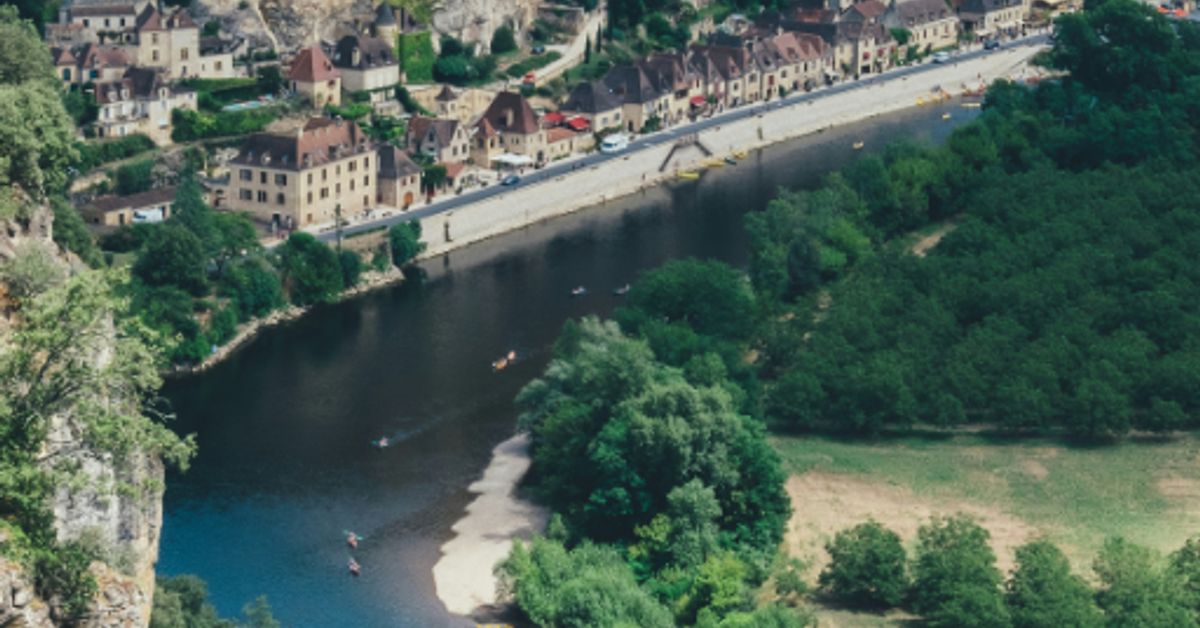
This Dordogne travel guide covers everything you need to plan a trip to one of France’s most rewarding regions. The Dordogne sits in southwest France — a land of golden limestone villages, prehistoric cave paintings, medieval châteaux, and slow river mornings. It is not a region that shouts for attention. It is a place you find, and then wonder how you missed it for so long.
Love France? Join 7,000+ readers on our free newsletter → lovetovisitfrance.substack.com
Why the Dordogne Belongs on Your France Itinerary
The Dordogne does several things better than anywhere else in France. The prehistoric history here is extraordinary — this valley holds some of the most significant cave art in the world. The medieval architecture is near-perfect, preserved by centuries of rural quiet. And the food is seriously good: duck confit, foie gras, walnuts, and local wine made from grapes grown in the same soil as the châteaux.
It is also one of the few French regions where you can genuinely escape the crowds. The Dordogne attracts visitors, but it remains a working rural landscape. The villages are lived in. The Saturday markets are for local people as much as tourists. The pace is unhurried in a way that feels increasingly rare in popular European destinations.
Where Is the Dordogne?
The Dordogne is a department in southwest France, roughly 500 kilometres south of Paris and 90 minutes east of Bordeaux. The River Dordogne runs through its heart, carving a wide valley of limestone cliffs and green forest between rolling hills.
The main hub for visitors is Sarlat-la-Canéda, a medieval market town in the Périgord Noir sub-region. Most of the famous villages and châteaux are within 30 minutes of Sarlat by car. The Dordogne shares borders with the Lot department to the south and Corrèze to the north.
Dordogne Travel Guide: Planning Essentials
🇫🇷 Discover the France Most Tourists Never Find
Get our free guide to 25 hidden villages of France — then join 7,000+ readers for weekly stories about places most guidebooks never mention.
Get Your Free Village Guide →A car is essential. The Dordogne has no significant rail infrastructure for tourists, and the villages, caves, and châteaux that make the region special are spread across a wide rural area. Without a car, you will see a fraction of what is possible.
English is widely understood in tourist areas, particularly in Sarlat. French remains useful in smaller villages and markets. The currency is euros throughout. The main tourist season runs from April to October, with July and August the busiest months. Cave sites, particularly Font-de-Gaume, require advance booking in peak season.
The Dordogne uses Central European Time (CET), which is six hours ahead of US Eastern Time. Mobile signal is generally good in towns and along the main valley roads; more remote areas can be patchy.
Getting to the Dordogne from the US
The nearest major airport to the Dordogne is Bordeaux-Mérignac (BOD). Most US visitors fly into Paris Charles de Gaulle or London Heathrow and connect to Bordeaux, which takes around 90 minutes by direct flight. Some routes also connect via Amsterdam or Frankfurt.
From Bordeaux airport, hire a car and drive east. The journey to Sarlat takes about two hours on the A89 motorway, passing through attractive countryside as you enter the Périgord.
Combining Bordeaux with the Dordogne is a natural and excellent pairing. Fly into Bordeaux, spend two or three days exploring the city and surrounding wine country, then drive east into the valley. Our Bordeaux travel guide covers the city in detail.
Alternatively, train from Paris Montparnasse to Périgueux takes around three hours (with connections), and from Périgueux you can hire a car. The TGV also runs to Bordeaux from Paris in two hours, making the Bordeaux fly-in or train-in equally viable.
Driving in the Dordogne
The roads in the Dordogne are quiet, well-maintained, and genuinely beautiful. The D703 road that runs along the river between Souillac and Lalinde is one of the most scenic drives in France. Plan to stop often — there are viewpoints, villages, and picnic spots throughout the valley.
Speed limits in France are strictly enforced. The default limit on rural roads is 80 km/h. Speed cameras are common and fines are issued to foreign-registered vehicles. Our guide to driving in France for Americans covers everything you need to know before getting behind the wheel.
Parking in Sarlat can be tight in July and August. The main car parks on the edge of the old town fill quickly by mid-morning. Arriving before 9am or after 5pm makes parking considerably easier in peak season.
The Best Villages in the Dordogne
The Dordogne has more entries on the official list of France’s most beautiful villages than any other department. These are the ones worth prioritising.
La Roque-Gageac
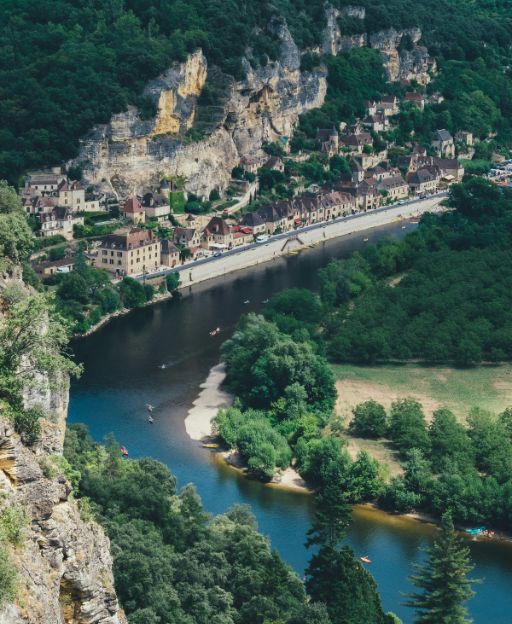
La Roque-Gageac clings to a limestone cliff face above the river, its stone houses stacked in a narrow band between the rock and the water. The village is visually striking from every angle, particularly from across the river or from a gabare — the traditional flat-bottomed river boat that still runs excursion trips along this stretch of the Dordogne.
Visiting early morning, before the tour coaches arrive, gives you the village in near-silence. By mid-morning in summer it fills quickly. The small lanes behind the main riverside road lead up into the cliff gardens, which are worth climbing for the views.
Beynac-et-Cazenac
Beynac is dominated by its 12th-century château, which sits on a sheer cliff directly above the village and river. The fortress is one of the best-preserved medieval châteaux in France, and the views from the battlements are exceptional — a sweep of river valley, forest, and the rooftops of the village below.
The village itself is small, with a handful of restaurants and a stone river beach at the base of the cliff. It is quieter than La Roque-Gageac and all the better for it.
Sarlat-la-Canéda
Sarlat is the Dordogne’s main market town and the obvious base for exploring the region. The medieval centre is compact, walkable, and almost entirely intact — a warren of golden limestone streets, Renaissance facades, and shaded squares. The architecture alone justifies a visit.
The Saturday market is one of the finest in France, filling the old town centre with local produce: duck confit, dried walnuts, truffle-infused oils, aged cheeses, and seasonal vegetables. It starts early and the best stalls sell out by noon. The Wednesday morning market is smaller but less crowded.
Domme
Domme is a bastide town — a medieval planned settlement built on a high plateau above the river. The views from the ramparts take in the full width of the Dordogne valley: river, forest, and the rooftops of villages far below. The town is small and easy to explore in an hour. The cave system beneath the central square is open for guided visits.
Prehistoric Caves and Rock Art
The Dordogne valley is the world’s most concentrated zone of prehistoric cave art. The caves here were painted by Cro-Magnon humans between 17,000 and 35,000 years ago. Visiting them is one of the most extraordinary cultural experiences in Europe.
Lascaux IV
The original Lascaux cave was closed to the public in 1963 after visitor breath introduced fungi that began damaging the 17,000-year-old paintings. Lascaux IV, opened in 2016 near Montignac, is a complete full-scale replica of the original cave complex. The reproduction is produced to scientific precision, with pigment matching and surface texture identical to the original.
Even knowing it is a replica, the experience is powerful. The animal paintings — horses, aurochs, stags — are extraordinary in their confidence and scale. Allow at least two hours for the full visit including the digital experience rooms.
Font-de-Gaume
Font-de-Gaume, near Les Eyzies, is the last cave in Europe with authentic polychrome prehistoric paintings open to the public. Visitor numbers are strictly limited to protect the paintings. Book as far ahead as possible — tickets in July and August sell out weeks in advance.
The paintings include mammoths, bison, and reindeer rendered in red ochre and black manganese. The experience of standing inside the original cave, in front of paintings made 14,000 years ago, is unlike anything a replica can replicate.
Châteaux of the Dordogne
The Dordogne was a contested frontier during the Hundred Years’ War between England and France, which explains the density of medieval fortifications throughout the valley. Many are open to visitors.
The Château de Castelnaud sits opposite Beynac on the southern bank of the river and houses an extensive museum of medieval warfare, with original armour, weapons, and siege equipment. The Château des Milandes was home to Josephine Baker — the American entertainer who became a French Resistance heroine — and presents her remarkable life story alongside well-preserved interiors. The Château de Commarque, in the forest near Les Eyzies, is a dramatic ruin set into a limestone cliff above a prehistoric cave.
Food and Wine in the Dordogne
The Dordogne sits within the Périgord culinary heartland, and the food here is some of the richest in France. Duck is central to the local kitchen: confit de canard, magret de canard (duck breast), and foie gras appear on nearly every restaurant menu. Périgord black truffles appear in season from November to March and are incorporated into everything from scrambled eggs to pasta.
Walnuts are the other defining ingredient — walnut oil, walnut cake, and walnut liqueur (vin de noix) are local specialities. The local Bergerac wines, produced in the appellation just west of the Dordogne, are underrated and excellent value, particularly the red wines and the sweet white Monbazillac, which pairs perfectly with foie gras.
For a wider survey of French wine, our guide to the best wine regions in France covers Bordeaux, Burgundy, and beyond. The Bordeaux vineyards are close enough to the Dordogne for a day trip, which pairs well with a visit to the city.
When to Visit the Dordogne
Late spring and early autumn are the best times. May and June offer warm weather, long daylight hours, and manageable crowds. September and October bring golden light, harvested walnut orchards, and the start of the truffle season. Most sites are fully open and prices are lower than peak summer.
July and August are busy. The Dordogne is enormously popular with British, Dutch, and German visitors in summer, and accommodation books up fast. If you are visiting in peak season, book accommodation, cave tickets (especially Font-de-Gaume), and popular restaurants well in advance.
Winter visits are quiet and atmospheric. Many tourism businesses close from November to March, but the truffle markets in January and February — particularly in Sarlat and Périgueux — are a specific reason to visit in the colder months.
How Many Days Do You Need?
Three days is a reasonable minimum to see the key villages and visit one or two cave sites. Five days gives you enough time to explore at a proper pace, take a gabare river trip, spend a morning at Lascaux IV, and have a full day in Sarlat for the market and the old town.
A week allows you to combine the Dordogne with Bordeaux or the Lot valley immediately to the south, which has its own exceptional medieval villages and cave sites (including Pech Merle, one of the most remarkable prehistoric caves in France).
The Dordogne rewards a slower pace. Lunches stretch. Village squares invite sitting. The river road at dusk is worth driving for its own sake. Do not plan it like a checklist destination.
Where to Stay in the Dordogne
Sarlat-la-Canéda is the most practical base for first-time visitors: the widest range of hotels and restaurants, easy access to the main valley sites, and a superb market town in its own right. Les Eyzies-de-Tayac is the best base if prehistoric caves are your primary focus — Font-de-Gaume and several other cave sites are within walking distance or a short drive.
Renting a gîte (rural holiday home) is a particularly good option for families or groups. The rental market across the Dordogne is extensive, with well-priced farmhouses and converted barns that place you directly in the countryside. Properties often come with private pools and outdoor cooking facilities, which suits the long summer evenings.
You Might Also Enjoy
- Bordeaux Travel Guide — Just 90 minutes west of the Dordogne, Bordeaux pairs beautifully with a valley trip.
- Best Wine Regions in France to Visit — From Bordeaux to Burgundy, a complete guide to France’s great wine appellations.
- How to Drive in France: A Guide for Americans — Everything you need to know before hiring a car in France.
Plan Your France Trip
Ready to start planning your trip to France? Our France trip planning hub brings together everything you need — from choosing a region to budgeting, transport, and the best time to travel.
Love France? So do 7,000 of us.
Every week, our free newsletter delivers hidden gems, seasonal guides, local stories, French recipes, and the art of la vie française — straight to your inbox. Join the community that loves France as much as you do.
Subscribe Free — Get the Newsletter →
Love Ireland too? Join 65,000 Ireland lovers → · Love Scotland? Join 43,000 readers → · Love Italy? Join 30,000 readers →
Love France? So Do We.
Join our free newsletter and get the best of France — travel tips, hidden villages, food traditions, and cultural stories — straight to your inbox every week.
Thinking about it seriously?
If you’ve started actually planning a move, our complete our complete Moving to France guide walks through every step, every cost, and the paperwork that catches most people out.
Free. No spam. Unsubscribe anytime.
📥 Free Download: France Travel Planning Guide
Itineraries, insider tips, and the places you must not miss on your next trip to France.
🇫🇷 You Might Also Love
Tours & experiences you might love


Powered by Viator. Some links are affiliate links — we may earn a small commission at no extra cost to you.

Leave a Reply